rise International’s Innovative Use of Shipping Containers for Sustainable Community Spaces
In its continued pursuit of sustainable design and community empowerment, rise International has pioneered an innovative approach to construction — repurposing shipping containers into functional, affordable, and eco-friendly spaces of impact. Over the past year, this method has come to life through three remarkable community projects across Lesotho, each addressing critical social needs while showcasing the transformative power of sustainable architecture.
1. The Hub Morija Library – Creating Access to Knowledge through Innovation
Completed and officially opened in March 2024, the Hub Morija Library stands as a creative example of how design can fuel education and community engagement. Constructed using two repurposed shipping containers, the project was envisioned to offer a library, learning, and storage space for the Morija community.
What makes this initiative unique is not only its low-cost and resource-efficient design but also the collaborative process behind it. By transforming used shipping containers into an inviting learning hub, rise International and its partners have demonstrated that sustainability can go hand in hand with creativity and community development.
2. Mapholaneng Community Youth Center – A Model for Sustainable Architecture in Rural Lesotho
Further north in the Mokhotlong District, rise International completed the Mapholaneng Community Youth Center in March 2025 — a project that embodies both innovation and social impact. Built entirely from converted shipping containers, the center provides a safe, dynamic, and multifunctional space for young people to gather, learn, and grow.
This approach to construction offers multiple advantages: it significantly reduces environmental impact, minimizes material waste, and lowers overall construction costs. The result is a durable, adaptable structure that can withstand local climate conditions while remaining flexible to meet the evolving needs of the community. The Youth Center is a shining example of how modern sustainability principles can be applied to rural development without compromising on quality or purpose.
3. Makoanyane Primary School ECCD Center – Building a Bright Future for Young Learners
The third initiative showcasing this sustainable model is the Early Childhood Care and Development (ECCD) Center at Makoanyane Primary School. Here, two shipping containers were transformed into a healthy, safe, and stimulating environment for early learners.
The design emphasizes natural lighting, ventilation, and child-friendly interiors, creating a nurturing atmosphere where young children can thrive. By reimagining discarded materials into meaningful spaces, rise International continues to champion a circular economy — one that gives new life to old resources while directly benefiting the next generation.
A Sustainable Path Forward
These three projects highlight how rise International is redefining what sustainable construction means in the African context. By combining innovative design, community participation, and environmental responsibility, rise demonstrates that impactful infrastructure doesn’t have to come at a high financial or ecological cost.
Each shipping container project tells a story — of transformation, creativity, and hope. What was once industrial waste has become a vessel for learning, growth, and opportunity. Through initiatives like these, rise International continues to build not just structures, but the foundations of a more sustainable and empowered future for Lesotho.
In Partnership With: AIT— Action Ireland Trust and Quinn Family Foundation
Date: 30/09/2025
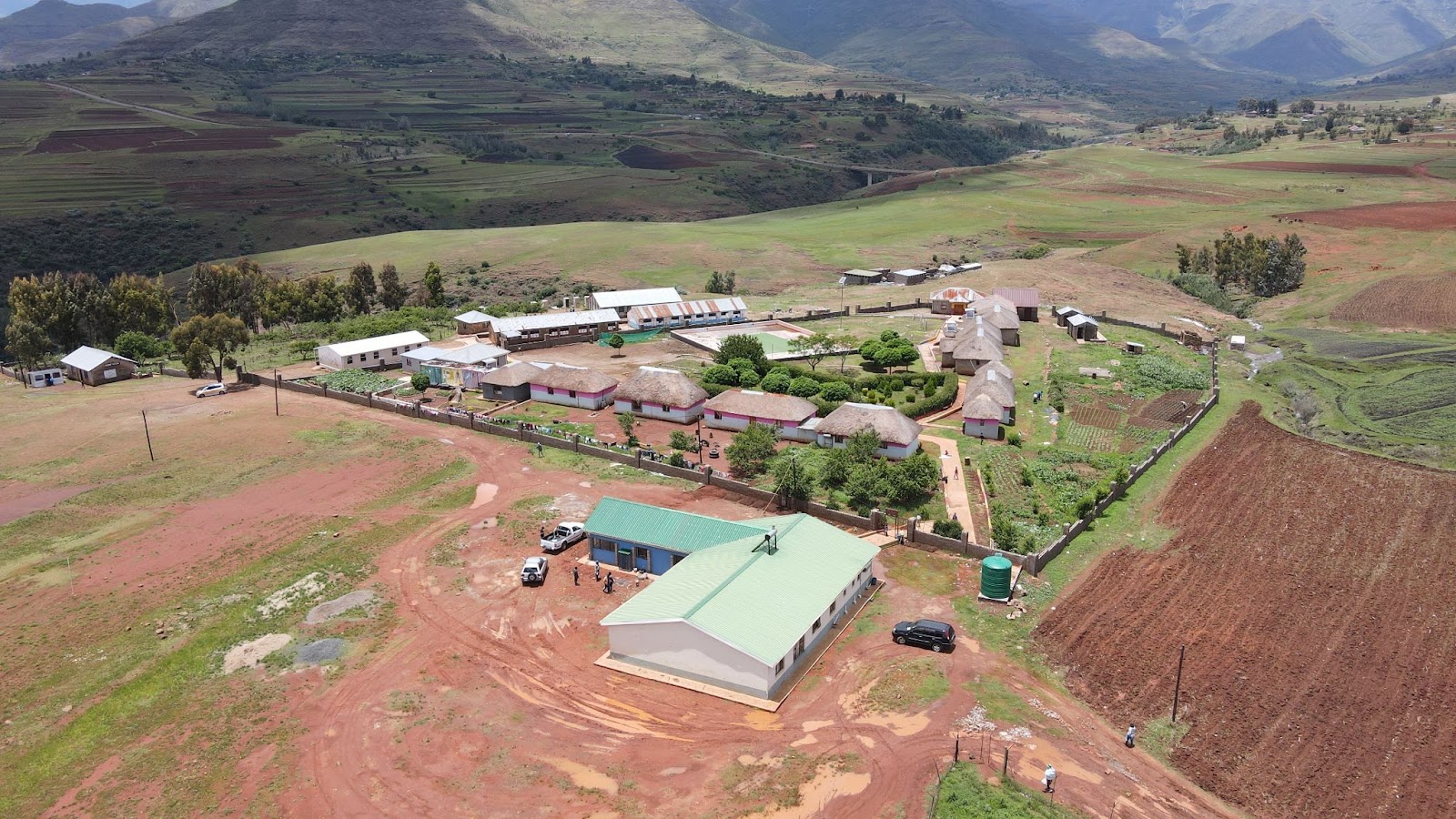
Full View of Seboka Primary School
Full View of Seboka Primary SchoolWritten By: Minah Lekau & Pusetso Booi
Background: A Community’s Hope, Challenged by Reality
Nestled in the heart of Ha Matala, a peri-urban area on the outskirts of Maseru, Lesotho, Seboka Primary School stands as a vital centre of education and hope. Serving more than 700 children from neighbouring villages, the school is more than just a place to learn; it’s a lifeline for hundreds of families who dream of a brighter future for their children. But for years, the daily reality inside Seboka’s gates painted a different, troubling picture.
Everyday Struggles: The Hidden Crisis
Despite the dedication of its teachers and the determination of its students, Seboka Primary School was plagued by unsafe and undignified learning conditions:
Nutritional Deficiency: For many learners, the school meal is the only food they receive all day, yet the lack of vegetables and balanced nutrition means it often fails to meet their basic dietary needs. This not only affects their physical development but also their ability to concentrate and learn.
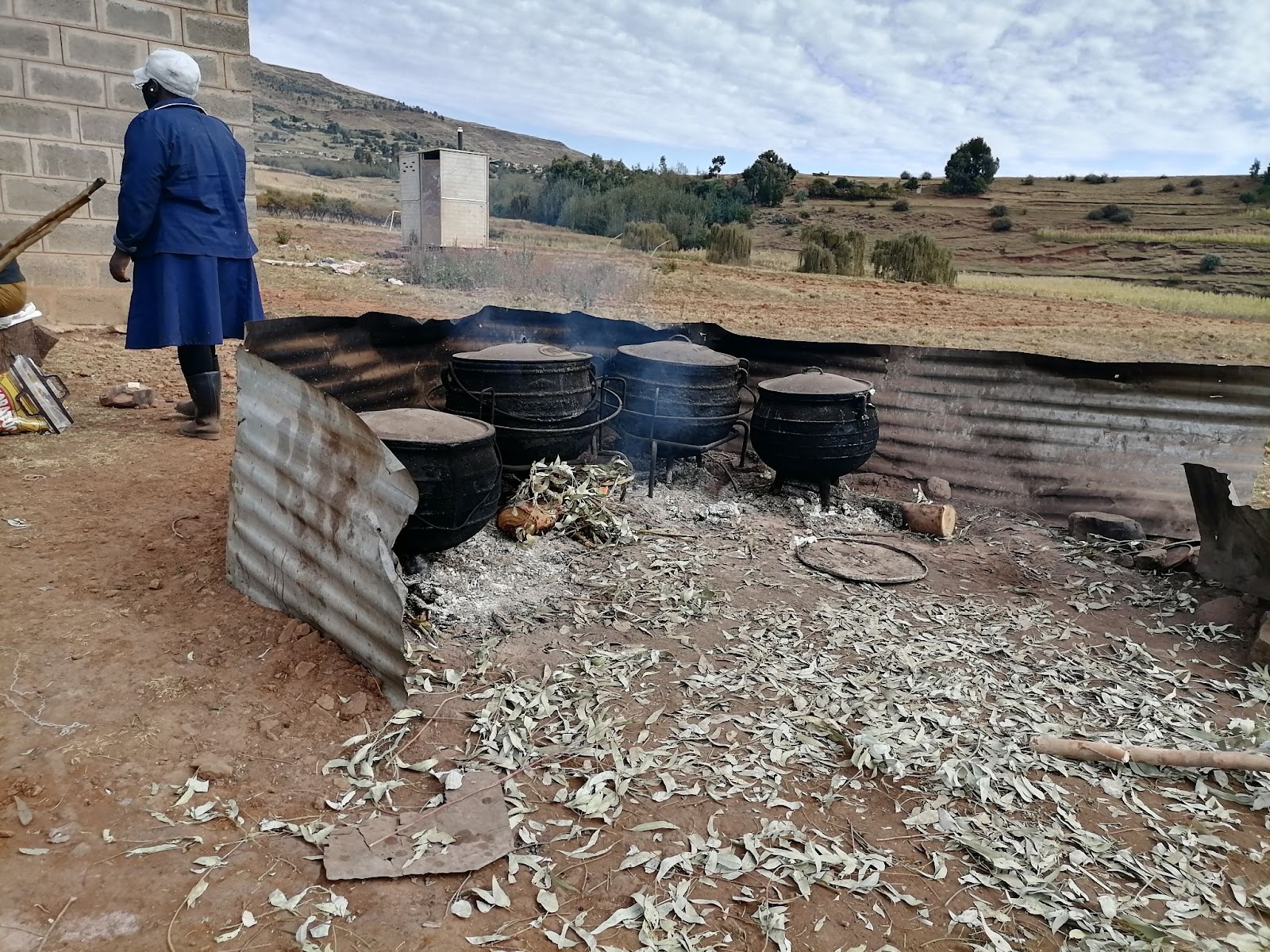
Unsafe Kitchen: Meals, essential for young learners’ health and focus, were prepared in an open, unsanitary space exposed to the elements. Rain or strong winds often brought meal preparation to a halt, leaving students hungry or forcing them to eat late, interrupting their studies and sapping their energy. Beyond these immediate challenges, the cooks themselves suffered from constant smoke inhalation due to the reliance on open wood fires, a serious health hazard, such as chronic respiratory issues, eye irritation, and long-term lung damage. This method of cooking also had environmental consequences, requiring the regular cutting down of trees for firewood and contributing to air pollution and deforestation.
BeforeAfter
Seboka Primary School kitchen
Lack of Sanitation: The school’s few old pit latrines were overcrowded, unsafe, and lacked even the most basic privacy. Long queues formed at break time, and many children, especially girls, were forced to sacrifice their dignity or miss school during menstruation due to the lack of running water, privacy, and secure toilets.
BeforeCurrent
Seboka Primary School toilets
Basic Needs Unmet: Every day, students arrived at Seboka without the guarantee of clean water, safe sanitation, or a reliable meal. These daily hardships not only affected their health and learning but also eroded their self-worth and hope for the future.
These conditions created a vicious cycle: unsafe facilities led to poor attendance and disengagement, further straining the school’s limited resources. Yet, throughout it all, Seboka’s staff and learners showed incredible resilience, refusing to give up on their right to a safe, nurturing environment. View the video here.
Turning the Page: A Call for Change
Seboka Primary School’s story is not unique—many schools across Lesotho face similar challenges. But it’s also a story of a community ready for transformation. At rise International, we believe that every child deserves to learn in safety and dignity.
What did we do next?
Discover how the Seboka story turned from neglect to hope—and how partnership, innovation, and community action made a difference.
Methodology: Needs-Based Implementation
The Seboka Primary School project used a rigorous, evidence-driven methodology focused on real needs, community participation, and sustainable change.
Needs Assessment: On-site evaluation identified urgent health, safety, and dignity gaps for 700+ students.
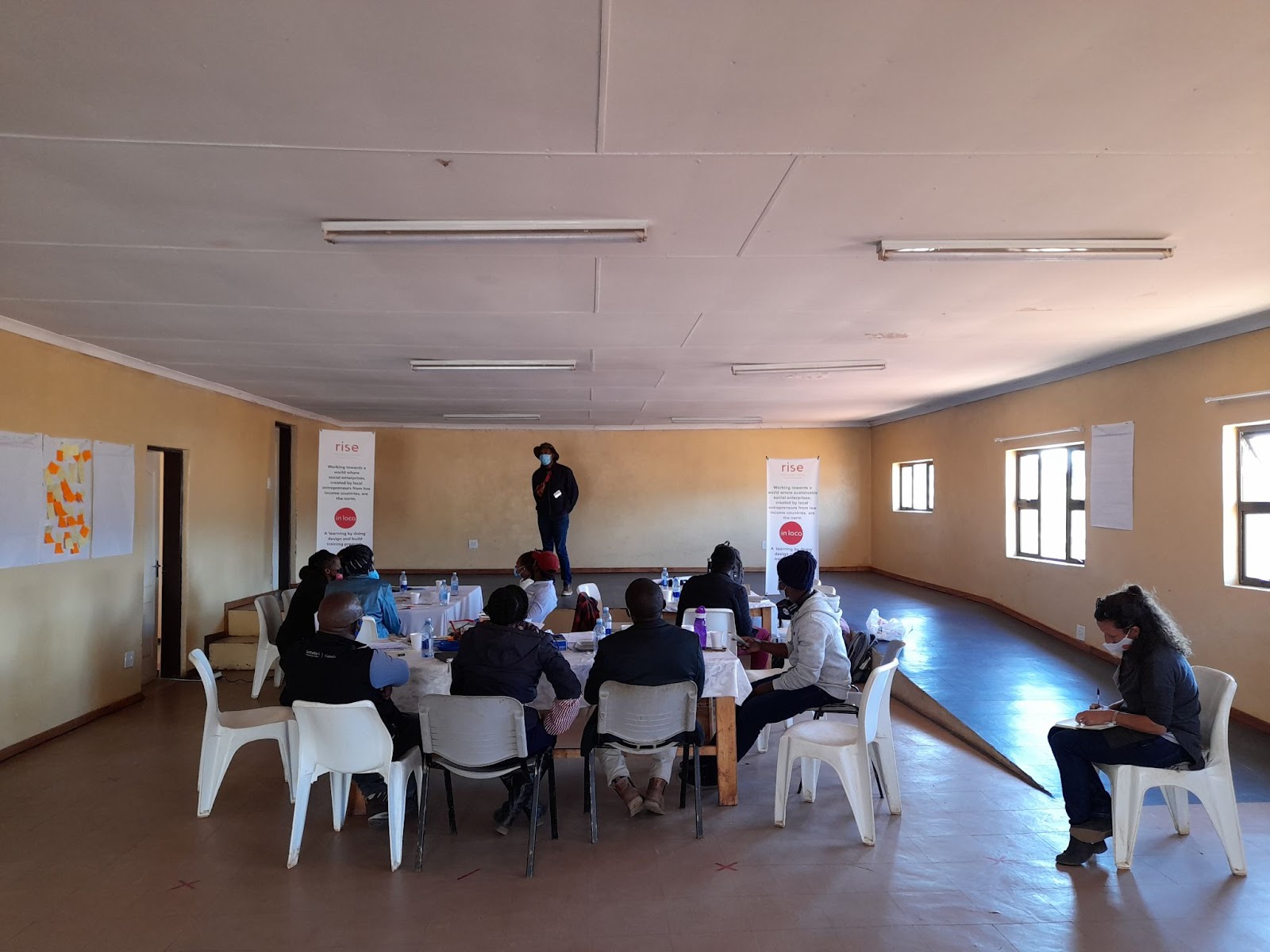
Participatory Design: Teachers, parents, students, and technical experts co-designed every solution, ensuring practical results and local ownership.
Evidence-Based Planning: Facilities were fully designed for durability, accessibility, and hygiene before construction.
Sustainable Implementation: Eco-friendly building methods and local capacity ensured long-term benefit.
Policy Alignment: The project advances Lesotho Ministry of Education’s National Guidelines for WASH in Schools (2022), School Health and Nutrition Policy (2019), and Education Sector Plan (2016–2026)—delivering on national goals for safe, healthy, and inclusive learning environments.
SDG Impact: Seboka’s upgrade directly supports the United Nations Sustainable Development Goals:
Participatory design workshop held before project implementation
The Solution: School Infrastructure Upgrade
Action Ireland Trust – AIT at Seboka Primary School
Recognising the urgent need, rise International, thanks to the support of Action Ireland Trust and the Quinn Family Foundation, delivered a holistic infrastructure upgrade for Seboka Primary School. The project focused on sustainable, practical, and high-impact solutions to restore dignity and safety for every learner.
Key Upgrades Delivered:
✅ A New Kitchen
A modern kitchen was built using sustainable sandbag construction methods, was designed and constructed by the in loco fellows in collaboration with Ubu, a leading sandbag construction company from South Africa. This new facility now allows for safe, clean, and efficient food preparation for all students.
Kitchen built with sandbags
🚻 Flushing Toilets with Handwashing Stations
Three new toilet blocks—separate facilities for boys, girls, and teachers—were constructed. Each block is equipped with flushing toilets and handwashing stations, finally providing safe, private, dignified, and hygienic sanitation for all.
💧 Reliable Borehole Water System
A borehole water system was installed, ensuring a reliable and clean water supply for drinking, sanitation, and daily school operations. This is a foundational shift for health, hygiene, and overall school functioning.
Borehole water system
💧Rainwater harvesting System
A rainwater harvesting system was implemented to promote water sustainability on site. Collected rainwater is used for everyday needs such as hand washing, cleaning, and watering plants, reducing reliance on external water sources and supporting a more self-sufficient and eco-friendly environment.
🌱 Greenhouse Food Garden
Two new greenhouses and food gardens now support the school’s feeding program, providing fresh vegetables for meals. Excess produce is sold in local markets, raising some income for the school. Beyond nutrition and generating some income for the school, the garden serves as a practical, hands-on educational tool—teaching students about sustainability, agriculture, and environmental stewardship.
Impact Highlight
🌟Number of Lives Impacted;
Over 700 students and staff now benefit from improved school infrastructure, including access to safe sanitation, clean water, and hygienic food preparation facilities, and a food garden that supports nutrition and learning
The kitchen contributes to improved efficiency and reduced food insecurity by streamlining food preparation and ensuring better resource utilisation
“The kitchen has completely changed the way we serve our students. Meals are now clean, safe, and always ready on time. It’s such a relief to know our children are eating healthy food every day, it gives them the strength to focus, learn, and grow without the constant worry of hunger.”
Teacher, Victor Mosheoa
🪑 Improved Health, Hygiene, and Dignity
The construction of new separate toilet blocks and handwash station facilities for girls, boys, and teachers has dramatically improved sanitation and privacy at Seboka Primary School. They are hygienic, safe, and accessible for all students.
“Thanks to your support, our new toilets have changed everything! I feel safe, comfortable, and proud to be at school every day. Your help has made my school a place where I want to be, thank you, Student, Ts’epo Molise
🍽️ Financial Impact
The school’s new greenhouse food garden is transforming lives. Fresh vegetables like cabbage and peppers not only boost our school feeding program, but also generate over M1,000/$60 per month in income each month through community sales.
📈 Infrastructure Resilience
The kitchen is fully functional and structurally sound; however, high electricity costs pose a challenge to its regular use. Similarly, while the toilets are in good condition, the borehole does not yield enough water to support daily use. As a result, the toilets are only usable when sufficient rainwater is collected through the harvesting system.
“I want to express my deepest gratitude to Rise International, AIT, and the Quinn Family Foundation for the incredible transformation they’ve brought to our school. The new kitchen, toilets, borehole, and greenhouse have changed our daily lives, giving us dignity, safety, and hope. What you have given us is so much more than infrastructure; you’ve given our children a real chance to learn, grow, and dream. We are truly thankful for your support.”Principal Mafaesa Mosia
What’s Next?
While Seboka Primary School’s transformation is a powerful example of what’s possible, hundreds of schools across Lesotho remain in urgent need of similar support.
Out of approximately 1,478 primary schools in Lesotho, at least 15% still lack basic toilet facilities, and many more operate without reliable water or safe, hygienic kitchens.
Large-scale initiatives are underway, but the gap remains significant, especially for schools in rural and underserved communities. rise International is committed to scaling this impact.
Our Next Steps:
Expanding Reach: We aim to replicate Seboka’s success by upgrading infrastructure at more schools most in need, with a focus on safe sanitation, clean water, and resilient kitchens.
Strengthening Partnerships: Working with Lesotho’s Ministry of Education, local communities, and committed partners, as we seek to leverage resources and expertise for greater, lasting change.
Ensuring Sustainability: Training local teams and embedding maintenance plans to keep new facilities in excellent condition for years to come.
Measuring Impact: Ongoing monitoring and feedback will help us continually improve and demonstrate real, long-term benefits for learners.
With your support, we can help ensure that every child in Lesotho learns in safety and dignity—one school at a time.
As we continue our journey of building sustainable communities and empowering entrepreneurs, we’re excited to share some of our most recent milestones and updates with you. From global recognition to local impact, these highlights remind us of the power of collaboration and innovation.
rise International is proud to announce that one of the biggest projects we have worked on, the Kick4Life ‘Stadium of Life’ project has been shortlisted for the prestigious 2025 Built by Nature Award. This recognition celebrates projects around the world that use nature-based solutions in construction to create a positive climate and social impact. Being among the shortlisted organizations is a true testament to the dedication of our team and partners.
Biodiversity Stand Featured in SA Landscape
The Biodiversity Stand, a key feature of the Stadium of Life by Kick4Life has been highlighted in SA Landscape Magazine. The feature showcases how this innovative timber structure not only provides seating but also celebrates environmental stewardship through its unique design and materials. The ‘Theatre of Life’, is an outdoor amphitheater which forms part of the FSC Stadium of Life’s Biodiversity Stand, designed by Park Associati and constructed by rise. This exciting feature – connecting sport, art, education and nature – will enable us to deliver a wide range of community programmes and cultural activities, surrounded by indigenous plants and with the 11-a-side football pitch providing a unique backdrop!
Makoanyane ECCD Centre – Handover
We were delighted to officially handed over the newly completed Early Childhood Care and Development (ECCD) Centre at Makoanyane Primary School Maseru | Lesotho . This facility provides young learners with a safe, nurturing space to learn and grow. Made possible by the generous support of Action Ireland Trust, this initiative under the 5 Hub Schools -AIT Project, will provide a safe and nurturing learning environment for young learners and it forms part of our collective effort to improve education infrastructure and early learning outcomes.
rise at the Sebabatso Conference
Our team recently participated in the Sebabatso Youth and Entrepreneurship Conference, where we engaged with thought leaders, entrepreneurs, and change-makers. The event provided a platform to showcase our work in sustainable construction and social enterprise, while also learning from inspiring voices across sectors.
Thank you for being part of our journey! Whether you’re a donor, partner, pioneer, or supporter, YOU make these stories of hope, growth, and transformation possible.
At rise International we have been moving steadily forward, improving, inspiring, building, learning, and growing. Has it been tiring? At times, yes. But more than anything, it has been energizing and deeply rewarding.
We invite you to pour yourself a warm cup of coffee or tea and join us on a journey through the highlights of 2024 through the Annual Report.
Building Better Futures at Leqele, Makoanyane Primary Schools
August brought exciting progress at Makoanyane and Leqele Primary Schools, where new toilet blocks are well underway. Led by rise International Pioneers PRO Construction and XYZ Contractors, these facilities are more than just buildings, they are a promise of dignity, safety, and a healthier school environment for hundreds of learners.
Thanks to the generous funding by Action Ireland Trust (AIT) these are the last schools of the 5hub Schools project which has seen 5 schools get new flushing toilets, food gardens, rain water harvesting and kitchens with pressure cookers.
“We are excited to see the toilets taking shape. Our learners will finally have the safe facilities they deserve, which will give them dignity and proper sanitation” shared a teacher at Leqele Primary School.
Motimposo Primary School Celebrates New Urinals
A major highlight during this month was the completion of new urinals at Motimposo Primary School, built as part of our International Workshop Project.
The 2025 International Workshop came to a conclusion having successfully constructed a much needed urinal at Motimposo Primary School in the beginning of August!
Participants from ARUP,University International Catalonia (UIC Barcelona), local volunteers, and the rise team came together to construct new urinals for the boys, using eco-friendly Interlocking Compressed Earth Blocks (ICEBs). This initiative not only will improve sanitation infrastructure but also promote sustainable and community-led development.
Designed to serve nearly 900 boys, the urinals address a long-standing need for proper sanitation at the school. The spirit of teamwork culminated in a joyful handover ceremony, where students, teachers, and community members came together to celebrate this milestone.
“These new facilities will change the daily lives of our boys,” said Principal Mabokang Lehoeleha.
INSPIRING LECTURE ON HOLISTIC SUSTAINABILITY
During this month, we were so honored to host a special lecture by one of our international interns from the University International Catalonia in Barcelona, Spain ‘Nafeesa Clarke’. The session was held in partnership with Limkokwing University of Creative Technology (Lesotho), focused on holistic sustainability — how architecture can weave together environmental responsibility, social inclusion, and community empowerment.
The lecture sparked lively discussions and fresh ideas among our fellows, students, and local practitioners, strengthening rise’s commitment to learning and knowledge exchange that goes beyond borders.
The work doesn’t stop here. From new school facilities to sustainable innovation, we’re excited about what lies ahead. Thank you for standing with us as we build futures of dignity and opportunity.
Empowering Communities Through Action – Our July rise Recap As we move through the heart of the year, we’re excited to share some of the incredible progress and activities that took place in July across our projects in Lesotho and Zambia. From groundbreaking workshops to cross-border collaborations, July has been a month of action, learning, and impact.
Progress on the Play it Forward Project – Zambia
We’re proud to announce that the Masterplan and Concept Design for the Play it Forward (PIF) project in Zambia have been successfully completed. This marks a significant milestone in our cross-border collaboration. We now await the appointment of a Zambian architect by PIF for the official design handover and presentation, which will usher in the next exciting phase of this transformative community project.
“We are growing together” – Peter from PRO Construction Shares His Testimony
This month, we had the pleasure of capturing a heartfelt testimonial video from Peter Makhetha, founder of PRO Construction and one of our dedicated in loco alumni. His powerful story speaks to the growth, skills, and confidence he’s gained through his partnership with rise:
“Through rise, I’ve been able to grow my business, expand my team, and take on bigger projects with purpose. We are not just building structures—we’re building livelihoods.” – Peter, PRO Construction.
International Workshop Launches at Motimposo Primary School The 2025 International Workshop officially kicked off at Motimposo Primary School this July! Participants from ARUP, University International Catalonia (UIC Barcelona), local volunteers, and the rise team came together to construct new urinals for the boys, using eco-friendly Interlocking Compressed Earth Blocks (ICEBs). This initiative not only improves sanitation infrastructure but also promotes sustainable and community-led development.
ICEB Training for Fired Brick Manufacturers To advance our mission of sustainable building, rise International hosted an introductory ICEB training for 30 fired brick manufacturers this month. Facilitated by Thato Nkikana, rise’s Project and Construction Manager, the session focused on how ICEB machinery works and how traditional brickmakers can adopt more eco-friendly and cost-effective practices in their work. It was an eye-opening experience for many, laying the groundwork for more sustainable construction practices across the sector.
ICEB Certification at Motimposo Primary School
As part of our commitment to promoting sustainable and innovative building methodologies, we also concluded an intensive training week focused on Interlocking Compressed Earth Block (ICEB) production. The training took place at Motimposo Primary School, where 14 participants of our International Workshop received their Certificates of Completion after successfully completing the program.
The participants engaged in a comprehensive learning experience that combined theoretical instruction, hands-on practical training, and collaborative knowledge sharing. From understanding the science behind earth-based construction to manufacturing and laying ICEBs, the workshop provided a robust foundation in this sustainable building technique.
We are proud to share the progress of the ongoing construction of new school toilet blocks at Leqele and Makoanyane Primary Schools, in Maseru as part of the 5 Hub Schools Project. This essential infrastructure was made possible through a generous donation by Action Ireland Trust and its partners. The contractors on the ground working on the project are two of rise Pioneers XYZ Collaborative and PRO Construction, driving community transformation. These safe, clean sanitation facilities are expected to significantly improve the learning environment for hundreds of students, especially young girls.
VOICES OF IMPACT:
Pioneer Incubation Program beneficiary Seabata Motanya’s Journey
In our latest testimonial video, rise Pioneer Seabata Motanya of XYZ Collaborative shares how the in loco and Pioneer Incubation Program has transformed his life and career. His inspiring journey reflects the true spirit of rise: building people, not just projects.
Through generous donations to rise International, Seabata received vital mentorship, training, workspace, access to the internet, and tools to grow his construction business which continues to employ other job seeking young people.
rise IN KENYA: EMPLOYABILITY PROGRAM
June marked a major milestone in our expansion across Africa with the largest cohort to date of our Employability Program in Kenya (East Africa). A vibrant group of 14 participants (12 young women and 2 young men) from Jacaranda and Watamu joined the program to gain practical skills and hands-on experience through rise’s “learning-by-doing” model.
The Employability Program equips youth with CV writing skills, time management skills, interview skills, and getting ready for the workplace. All this before they begin internships across Watamu and Jacaranda for 1 – 3 months.
DESIGNING THE FUTURE:
UCL Students Present Affordable Housing Solutions
Architecture students from University College London (UCL) recently delivered their second presentation of sustainable affordable housing designs tailored to the contexts of Maseru (urban) and Mokhotlong (rural).In collaboration with rise, the students explored innovative approaches that incorporate local materials, eco-friendly technologies, and community-centric designs to tackle Lesotho’s housing challenges. This designs will help in the way we approach sustainable construction going forward in our efforts of community projects.
Thank you for being part of our journey! Whether you’re a donor, partner, pioneer, or supporter, YOU make these stories of hope, growth, and transformation possible.
Implemented by: rise International | Funded by Sentebale Project
🏡 Background: A Community Rooted in Resilience
Phelisanong Children’s Centre, located in the remote mountains of Pitseng, Northern Lesotho, Southern Africa, was founded in 2001 by a group of villagers living with disabilities and HIV/AIDS. Their vision was bold: to create a safe, inclusive space for orphans, children with disabilities, and those affected by chronic illness. Today, the centre provides care and support to over 200 vulnerable children with disabilities and their families.
Despite its inspiring mission, the centre faced critical infrastructure challenges. Meals for hundreds of children residing at the centre and learners at the school on site, were prepared outdoors, every day, rain, snow, or shine! Caregivers woke at 4 a.m. to collect firewood and cook under harsh conditions, placing immense strain on already overburdened staff. Moreover, the centre’s main water supply was cut off, forcing children to bathe in basins and rendering bathroom facilities unusable.
The situation compromised not only operational efficiency but also the hygiene, dignity, and well-being of the children.
Cooking station: Before
🛠️ The Solution: Dignity Through Design
In 2019, an NGO called Sentebale commissioned rise International, to undertake a comprehensive infrastructure upgrade tailored to Phelisanong’s needs.
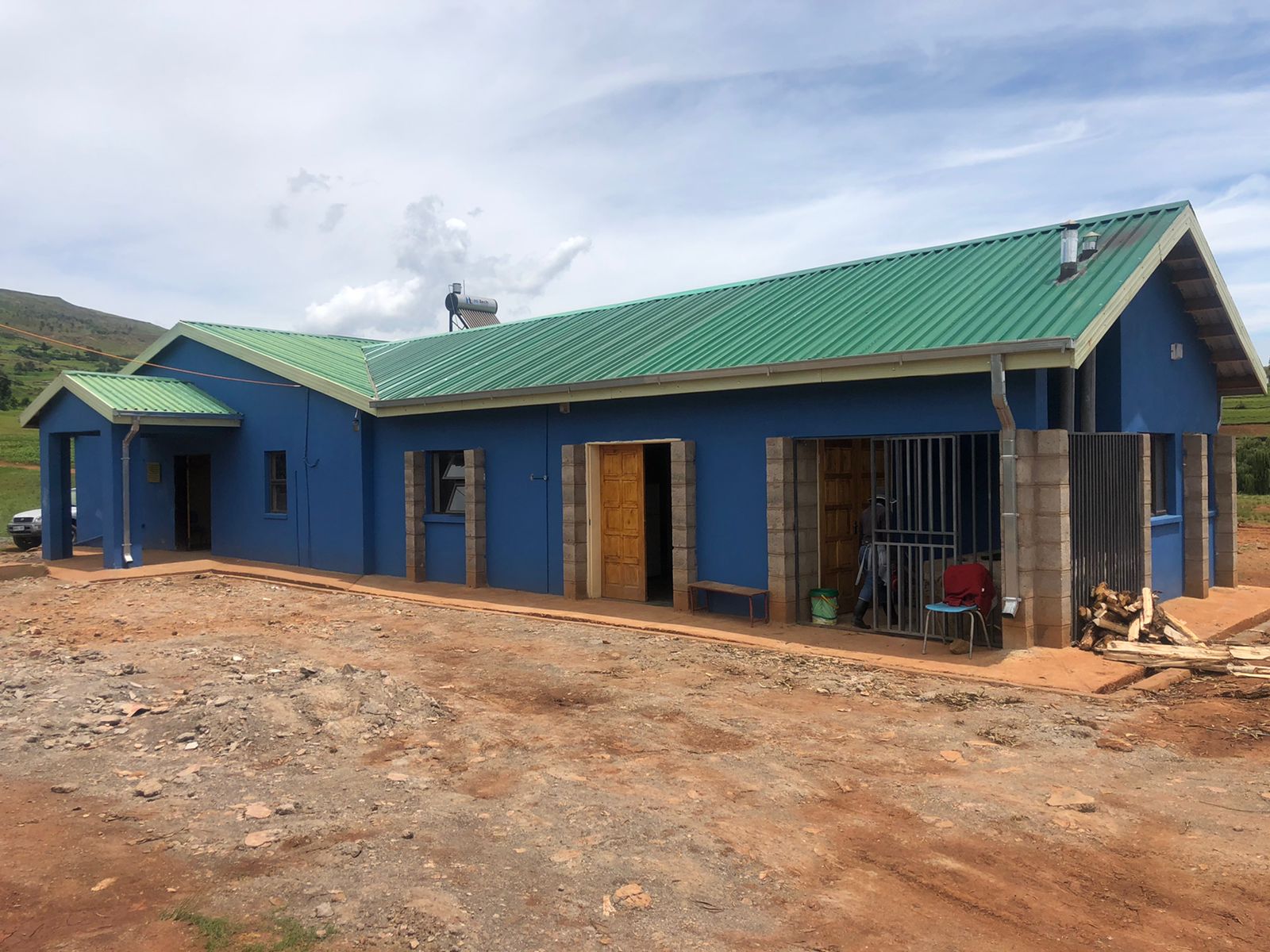
Newly upgraded kitchen featuring modern finishes and enhanced functionality
Reliable water supply: The foundation of community well-being
New upgraded bathroom
🧳 Methodology: Community at the Centre
From the beginning, the project followed a participatory approach. rise conducted a detailed baseline assessment in consultation with community members and caregivers. Local voices informed every step—from design to construction to operations — ensuring the intervention was relevant, community-owned, and resilient.
Following the Participatory Design process, the scope of the project was decided upon and it entailed:
Designing and constructing a fully equipped, weatherproof kitchen, including a bakery to sell bread to the local community, which would generate income for the centre.
Installing a new water supply system so the centre had running water once again in all its bathrooms, kitchen, and school.
Renovating old plumbing, pipes, and fixtures in the bathrooms and restoring bathroom functionality.
Introducing a community-driven social enterprise through a conference hall and bakery catering service.
These solutions addressed both immediate and systemic needs, creating long-term value through increased safety, improved health outcomes, and sustainable income generation.
Participatory design process by community members
🌟 Impact Highlights
✅ Job Creation and Local Empowerment
Over 26 jobs were created, 10 being permanent and 16 temporary jobs, increasing staff capacity in childcare and catering functions.
Staff reported improved ability to support their families and contribute to local economic activity.
“I used to cook for 200 children outside. Now, even in the rain, I can prepare meals in a safe kitchen.” — Mamello Mokholokoe, Director
🍽️ Social Enterprise and Financial Sustainability
The Conference Hall Catering Business has hosted 18+ events over 3 years.
Generated M15,000+/$800 in revenue, which has been reinvested into the child nutrition program.
Supports daily meals for over 200 children.
“The money we raise from catering pays for food for the children. It’s not just a business; it’s a lifeline.” —Mathekiso Tsoke, Kitchen Manager
🪑 Improved Health, Hygiene, and Dignity
Bathrooms are now fully functional, restoring privacy and sanitation.
Children with disabilities can use facilities independently, improving self-esteem and reducing reliance on caregivers.
“Children now use the bathrooms without needing help. It gives them dignity.” — Mats’oanelo Monaheng
📈 Infrastructure Resilience
The kitchen was rated 100% structurally sound.
Minor issues with ceiling repairs and water tank blockages were addressed through local maintenance.
Infrastructure remains in good condition and fit for purpose.
🌐 Before vs. After Snapshot
Before Intervention
After Intervention
Meals prepared outside in harsh and unhygienic conditions
Safe, indoor hygienic kitchen used daily
3 staff members
Over 26 jobs created
No income generation
M15,000+ raised via catering
Inaccessible sanitation
Inclusive bathrooms have been fully restored
🧡 A Human Story: Meet Mpho
Mpho, aged 11, has a mobility impairment. Before the project, she had to wait for help every time she needed to use the bathroom. Today, thanks to the accessible facilities, she moves independently. Her joy and confidence reflect the dignity and freedom now restored to many at Phelisanong.
🚀 What’s Next?
Expand the catering enterprise to increase income and train more local staff.
Strengthen preventive maintenance for kitchen and water systems.
Replicate the model in other vulnerable communities across Lesotho
rise International was honored to participate in the Kick4Life Sustainability Forum 2025, held earlier this month in Maseru, Lesotho. The forum brought together a diverse group of stakeholders, including civil society organizations, local educators, private sector representatives, and change-makers, to discuss the future of climate resilience and innovation.
The primary focus of the forum was to promote and advocate for eco-friendly practices, particularly in the areas of waste management, environmental conservation, and the preservation of natural resources in response to climate change.
Representing rise International, Construction and Project Manager Thato Nkikana delivered a compelling presentation on the Stadium of Life, a flagship project built using Forest Stewardship Council (FSC)-certified sustainable timber. She outlined the construction process and highlighted the project’s positive impact on the surrounding community, especially through job creation and local development.
Nkikana emphasized the role of recent university graduates engaged through rise International’s in loco fellowship program, which equips young professionals in the built environment with hands-on experience. She also stressed the importance of collaborative design, noting that rise International worked closely with the Kick4Life football team during participatory design workshops to ensure the stadium’s layout reflected the team’s input and vision.
“During the participatory design workshop, we worked closely with the Kick4Life soccer team to share ideas about the pitch layout. This ensured we, as rise International, didn’t impose our ideas, but rather reached a design aligned with our client’s needs,” she explained.
Speaking on behalf of their former cohort, Liteboho Korea and Lintle Mofolo—members of the fifth in loco fellowship cohort—shared their experiences during the construction phase, which spanned from March 2023 to April 2024. Their group of nine fellows worked on key elements of the stadium, including posting rails, a six-meter seating stand prototype, and a retaining wall for a 5-a-side pitch.
The duo discussed both challenges and successes, citing harsh weather conditions, the importance of teamwork, and the development of problem-solving and time management skills as significant learning experiences.
Korea, who served primarily as a Quantity Surveyor, also took on the role of Site Manager, thanks to rise International’s culture of cross-role learning.
“As team lead, I took on various responsibilities relevant to my field of study, including ensuring compliance with FSC timber regulations and overseeing community members who were employed during the construction,” Korea noted. “I am thankful for the in loco program, which allowed me to build lasting professional relationships.”
Mofolo, who acted as both Site Architect and Site Manager, reflected on the challenges of working with timber—a less common construction material in Lesotho.
“Initially, I was skeptical about the sustainability of using large quantities of timber,” she admitted. “But after learning about FSC and the planned construction methods, I understood how the project would protect and responsibly use timber resources.”
Mofolo concluded by sharing her personal growth through the experience, especially in teamwork, networking, and building confidence.
“I am truly grateful to rise International and Kick4Life for involving us in such a significant project,” she said.
The forum concluded with a guided tour of the stadium, led by Site Manager Keketso Sula. Attendees had the opportunity to experience the stadium first-hand, examine the timber structures, and explore how different sections of the facility are designed to accommodate people with disabilities.
A Q&A session followed the tour, providing a platform to address attendees’ questions and concerns and deepen understanding of the sustainable choices made in constructing the Stadium of Life
Empowering Local Artisans: ICEB Training & Business Workshop
During the month of March, rise International hosted an informative workshop at Durahm Link in Maseru, aimed at educating local stone artisans about Interlocking Compressed Earth Blocks (ICEBs) and providing essential business training. This initiative is part of the “Build Smart, Build Local” campaign, which promotes sustainable and innovative construction methodologies within the industry.
The session was led by Business Trainer ‘Maneo Seekane, who facilitated an open dialogue, encouraging artisans to share their experiences, challenges, and successes. Through interactive discussions, participants explored the balance between input and output in their businesses, gaining practical insights to enhance their craftsmanship and entrepreneurial skills.
This workshop underscores our commitment to equipping local artisans with knowledge and tools that foster sustainable construction and economic growth.
Celebrating the Kick4Life & Wrexham AFC Partnership
In late February, rise International had the privilege of celebrating with our partner, Kick4Life, as they launched their club twinning partnership with Wrexham AFC from Wales, UK!
This collaboration goes beyond football—it’s about empowering young people through sport, skills development, and life-changing opportunities. With the newly constructed Stadium of Life, Africa’s first-ever FSC-timber football stadium, this partnership will open even greater pathways for youth to develop their talent and build a brighter future.
Biodiversity Stand: A Step Towards a Greener Future
The Biodiversity Stand at the ‘Stadium of Life’ is making great strides and is due to be completed by the end of March. This innovative feature will not only provide additional seating in a beautiful garden setting of indigenous plants, trees and shrubs, but will also serve as an educational and cultural space with an amphitheater for performances and events, all helping to promote environmental awareness.
Using sustainable building methods and materials, the Biodiversity Stand showcases our commitment to green construction and community engagement. We are excited about the impact this will have on promoting biodiversity and sustainability within our community.
New Sanitation Facilities for Makoanyane & Leqele Primary Schools
As part of our ongoing commitment to improving school infrastructure, we are preparing to begin construction on new toilet blocks for Makoanyane and Leqele Primary Schools, thanks to the generous support of Action Ireland Trust and their partners. These facilities will ensure a healthier and safer learning environment for students, contributing to better hygiene standards and overall well-being.
The construction will be spearheaded by rise International pioneers, Peter of Pro Construction and Seabata of XYZ Collaborative, showcasing local expertise and commitment to sustainable development. This project is part of the larger initiative to enhance sanitation in schools and is made possible through collaborative efforts with key stakeholders, including Lesotho’s military, Lesotho Defence Force whose officers will be volunteering their time at the Makoanyane Primary School.
New Sanitation Facilities for Makoanyane & Leqele Primary Schools As part of our ongoing commitment to improving school infrastructure, we are preparing to begin construction on new toilet blocks for Makoanyane and Leqele Primary Schools, thanks to the generous support of Action Ireland Trust and their partners. These facilities will ensure a healthier and safer learning environment for students, contributing to better hygiene standards and overall well-being. The construction will be spearheaded by rise International pioneers, Peter of Pro Construction and Seabata of XYZ Collaborative, showcasing local expertise and commitment to sustainable development. This project is part of the larger initiative to enhance sanitation in schools and is made possible through collaborative efforts with key stakeholders, including Lesotho’s military, Lesotho Defence Force whose officers will be volunteering their time at the Makoanyane School.
rise International was privileged to host 90 dedicated volunteers from Action Ireland Trust (AIT), including high school students, parents, architects, and AIT management. This dynamic collaboration exemplifies the power of international cooperation in achieving meaningful change.
The AIT volunteers brought incredible energy and enthusiasm to the 5Hub Schools project, enriching the community with vibrant cultural exchange.
Transforming Education Infrastructure: The Makoanyane Primary School Project
Together with AIT, we’re revolutionizing early childhood education at Makoanyane Primary School in Maseru. Two shipping containers, generously donated from Ireland, are being transformed into a state-of-the-art creche facility. This nurturing space will provide a safe, stimulating environment for early childhood development and skills-building, addressing a critical need in the community.
Project Highlights:
Impact: This project will provide a strong foundation for young learners, fostering their growth and development.
Innovative Design: The creches interior and exterior are being meticulously crafted to create a child-friendly, vibrant, and educational space.
Local Ownership: We are proud of rise International’s pioneers and staff, who took over ensuring the project’s successful completion and long-term sustainability.
AIT’s Generous Donation: Strengthening Healthcare in Lesotho
rise International facilitated the donation of essential medical equipment by AIT to two local organizations: Starlight Oasis of Hope Hospice and Intellectual Disability and Autism Lesotho (IDAL). This generous contribution included wheelchairs, hospital beds, crutches, and zimmer frames, significantly enhancing the capacity of these organizations to provide vital care to vulnerable populations.
Collaborations and Partnership
Cultivating Lesotho’s Future Leaders
rise International is committed to empowering the next generation of changemakers. Our recent Collaborative Online International Learning (COIL) program (26 February – 1 April 2025) connected students from:
This cross-cultural initiative addressed the critical theme of “Analyzing Building Materials in Lesotho for Affordable Housing.” Students explored sustainable housing solutions, with a focus on:
Environmental Sustainability: NTU students evaluated the ecological footprint of local materials, promoting environmental responsibility.
Economic Analysis: NUL students conducted cost analyses of various building materials, emphasizing affordability for low-income households.
Social Impact: LP students assessed the social impact of different construction materials, considering community acceptance, safety, and cultural relevance.


 . This facility provides young learners with a safe, nurturing space to learn and grow. Made possible by the generous support of


 “We are excited to see the toilets taking shape. Our learners will finally have the safe facilities they deserve, which will give them dignity and proper sanitation” shared a teacher at Leqele Primary School.