rise News

Growing in bounds and leaps

rise Hosted Athabasca University Students as part of a knowledge exchange and skills sharing program 

Thanks to a Canadian government-funded program, the Global Exchange Opportunities Program, nine students from Architecture, Heritage Resources Management and Computer Science as well three faculty members from Athabasca University in Canada visited Lesotho for a 2-week visit this month. 
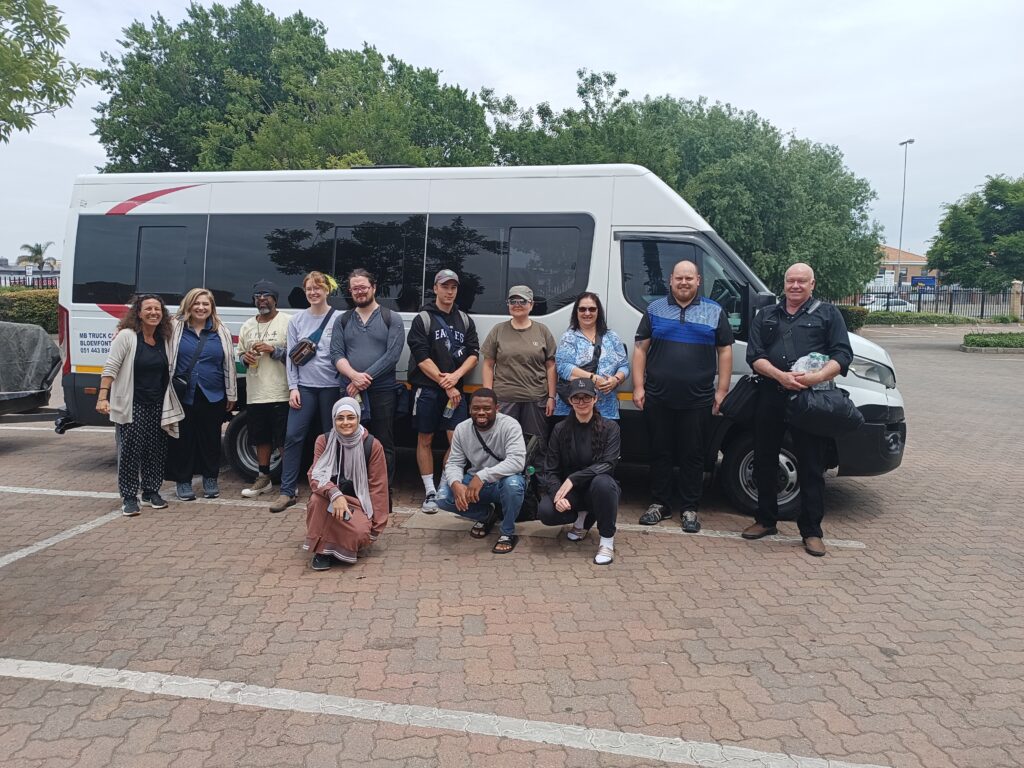
rise Executive Director – Daniela Gusman with Athabasca University students and tutors upon arrival in Lesotho

During this trip in Lesotho, the contingent had the privilege of visiting Morija, Lesotho’s cultural and historical center, where they spent a large part of their time. Along with 10 Architecture Technology students from Limkokwing University of Creative Technology,  the Athabasca students were trained in how to facilitate a participatory design workshop (PDW) for the proposed development of the heritage park in Morija. After gathering all the opinions, needs and wants of various members of the community as well as key stakeholders, the students worked tirelessly to analyze all the information and came up with some potential layouts for the potential development of the Heritage Park, which they then presented to the community and stakeholders for validation.  

Athabasca University students and tutors engaging in a PDW with rise pioneers and Morija community members 

While in Morija, alongside community members and rise’s in loco fellows, the students got their hands dirty as they got to learn about how to construct using rammed earth and how to make earth blocks. 

Construction of rammed earth and earth blocks

An important element of the visit, was for the students to exchange their knowledge and skills in a practical manner, whereby they got to work hand-in-hand with rise’s in loco fellows who are currently building the Stadium of Life, a football stadium for a non-profit called Kick4Life who use sport as a tool for social change. 

The National University of Lesotho also hosted the students for a lecture on The role of Basotho design culture in architecture which was led by Ms Mpinane Qhobela. They also engaged in another lecture session which was hosted by the Limkokwing University of Creative Technology on the History of Architecture in Lesotho given by Ms Boikokobetso Mohlomi which can be seen Limkokwing University Lecture Part 1 Limkonkwing University Lecture part 2

As part of the study and exploring Lesotho, the group also visited the national monument and mountain called Thaba Bosiu, the rural horseriding community of Semonkong, the University town of Roma and the capital of Maseru at the National University of Lesotho learning about the Mountain Kingdom’s heritage, architecture and tech challenges and opportunities.

Additionally, the Heritage and Computer Science students got to collaborate with students and tutors from Botho University, the Innovation Hub at the National University of Lesotho as well as the Morija Museum & Archives, the Seriti Sa Makhoarane Heritage & Tourism Project, The Hub in Morija and the Morija Arts Centre. 

rise Executive Director, Daniela Gusman with the staff of Botho University Lesotho and some of the Athabasca University tutors and students after a lecture.

Lastly the students had an opportunity to interact with Basotho artists, musicians, dancers, participate in a drumming circle as well as visiting some of Lesotho’s successful social enterprises including Pheha Plastic and Noma Pads where they joined a session  learning about the establishment’s operations and a hands on experiment of using the machinery machines to make plastic recycled products and reusable sanitary pads!

This visit was part of a 2-year program funded by Global Exchange Opportunities which will also include another group of up to 15 students coming to Lesotho in 2024. 

For anyone interested in visiting Lesotho on an educational trip contact us at info@riseint.org or sign up for updates about our International Workshops which you can learn more about here 

READ MORE
News

Kicking off 2023\’s newsletter cycle with strategic and strong collaborations from the Mountain Kingdom to the world!

Launching a new Research & Innovation Programme

  • We are very excited to have received support from Irish Aid through our partnership with Action Ireland Trust to spearhead revolutionary indigenous building materials research, that is aimed at capacitating built environment experts, entities, and regulatory bodies to shift towards more environmentally sustainable building methodologies. 
  • Over the course of 2023, we are going to research Indigenous building materials such as sandstone, thatch, and compressed earth blocks as well as repurposed materials such as wool, hemp, and packaging waste materials. 
  • We hope to develop solutions on how Lesotho can reduce its dependency on foreign imports, which currently stands at 70% for building materials. This will not only help the economy by creating jobs but will also help the environment by decreasing the amount of high-carbon building materials used and the high levels of fossil fuels consumed to keep these thermally inefficient buildings warm in winter. The project aims to document building materials in a catalog that will act as a reference document for everyone in the built environment on material specifications, carbon emissions and so much more.
  • Other phases of the project include:– Training of entrepreneurs in the Circular Economy (Teaser for activities to watch out for April Newsletter)

           -Training of policymakers  in the built environment

Celebrating 5 years of operation in Lesotho:

In November 2022, we celebrated 5 years of being operational in Lesotho and being fully led by a Mosotho woman as Country Director, which means that the Lesotho team is now 100% Basotho – an important milestone to have reached, which was part of the plan since we opened in Lesotho. We want to practice what we preach and increase the number of African entrepreneurs working in Africa instead of foreign entrepreneurs. Daniela Gusman, the Founder & Executive Director, has transitioned into an advisory role.

Partnering with Habitat for Humanity toward building environmentally sustainable affordable housing prototype:

At the end of 2022, rise signed an MoU with Habitat for Humanity Lesotho to collaboratively build an affordable housing prototype using sandbag methodology or adobe bricks, to help us move towards more environmentally sustainable affordable materials while simultaneously building comfortable and thermally efficient housing for the poor.

– Wrapping up the 4th in loco fellowship cohort:

  • The 4th in loco cohort is currently wrapping up a school kitchen, at Seboka Primary School in the Lithabaneng Area. This area has been identified, by the Ministry of Education, as one of 5 schools in critical condition in the areas of sanitation, food security, and clean water access. The kitchen is being constructed using the innovative and environmentally friendly sandbag method.
  • Thank you to donors Action Ireland Trust
  • The opening ceremony is planned for 5th April 2023.

International Workshop

Be part of international construction, engineering, and architecture students from the USA, Europe, and Asia who will participate in the in loco program alongside 10 young graduates in the built industry, benefit from an international design and build experience, and allow yourself to develop design skills suitable for working in challenging environments, and conditions of scarcity of resources.

This year’s workshop will take place from the 14th to the 25th of August 2023.

Click HERE for more info and to apply.

  • Upcoming events;

Join our monthly webinars, where on Thursday 30th March, Elisa Engel, the Founder of Citizen Architects, who also lectures at various universities, will be talking about  Ethics and Values in Architecture.

Join our radio shows at Bokamoso FM 97.4, every Tuesday, at 2:05 pm where you can learn more about opportunities in entrepreneurship, the built environment, rise’s projects, and programs.

READ MORE
rise News

Basotho take Heritage into their own hands

Seriti sa Makhoarane Heritage and Tourism Network (SSM) in collaboration with rise  held a first of its kind Built Environment and Heritage Masterclass in Makeneng, a small village in Maseru, Lesotho. This class was held at Makeneng (Matsieng), the royal village of Morena Lerotholi, the second-generation successor of Morena Moshoeshoe I. Architectural heritage spets from Cape Town; Janine de Waal and Graham Jacobs facilitated the Masterclass and shared their knowledge on the conservation of heritage in buildings.

A combination of people from different disciplines can now help create awareness and help youth in Lesotho with job creation in the Heritage and Conservation spectrum.  The participants and other interested persons now have the opportunity to establish an association of Heritage activists to advocate for issues and causes in Heritage Conservation. This kind of association would also work to publicize and help educate the broader public on how to better appreciate the rich heritage of Lesotho/Basotho. It would also be open to interested persons from various disciplines in order to apply “Kopano ke matla” to Heritage Conservation.

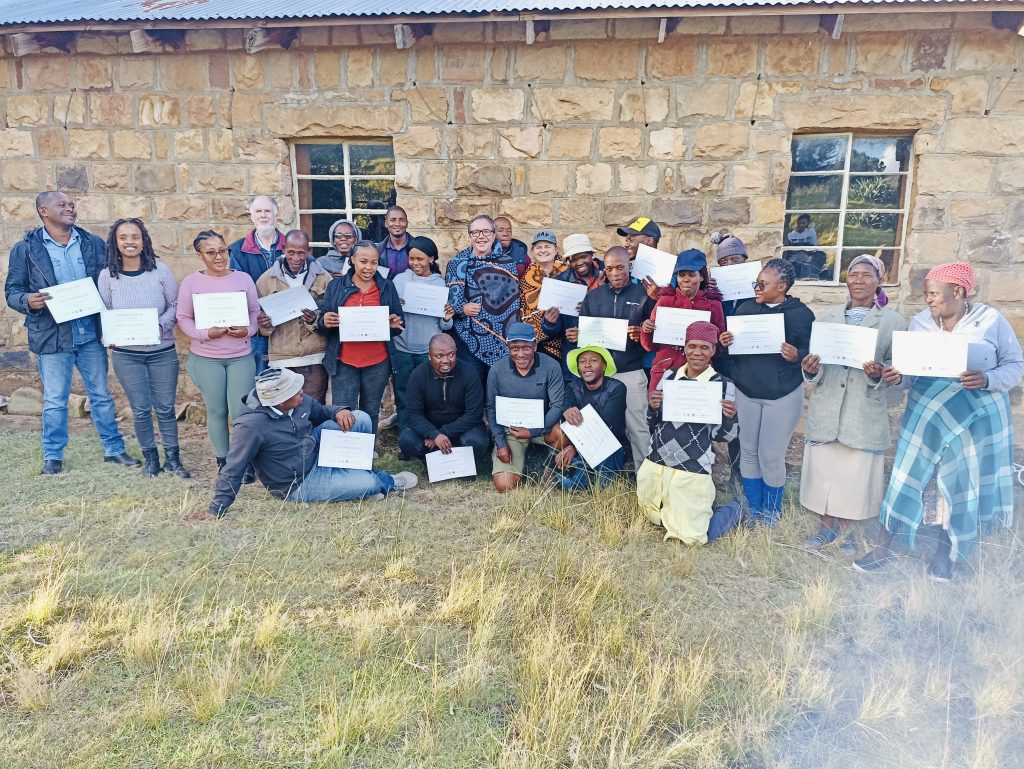
The Masterclass was attended by 20 participants including architects; researchers in Anthropology, students of heritage studies, historians, engineers, construction managers, quantity surveyors, and Makeneng residents skilled in indigenous building techniques such as stone masonry, thatch, and reed fencing.

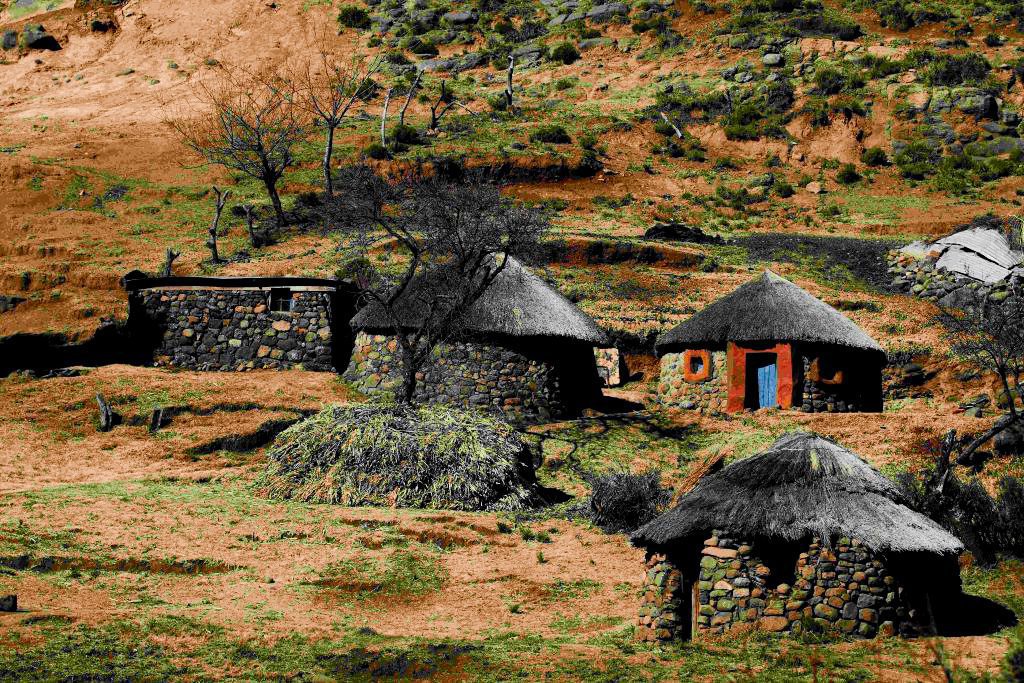
It was a full house of experts. The Masterclass was held at Makeneng because of its rich built environment, especially when taking into account the previous royal villages of Morena Moshoeshoe I at Thaba-Bosiu and of Paramount Chief Letsie I at both Morija and Matsieng. 

Moreover, a rich and varied oral tradition has been recorded from the elderly inhabitants of Makeneng, allowing a full understanding and appreciation of the linkages between the built environment, archival sources, and living traditions. Finally, its unique architecture, landscape, and terrain give it a special ambiance with spectacular panoramic views to the north and east. Because of its geographical position, being on a dead-end road, it has largely been forgotten but Makeneng is a prime candidate for special recognition.

The Masterclass followed a participatory methodology as it involved knowledge and skills sharing between trainers and trainees. The trainers taught steps to follow to achieve heritage conservation of buildings, while trainees shared their knowledge and skills on Lesotho’s indigenous architecture.

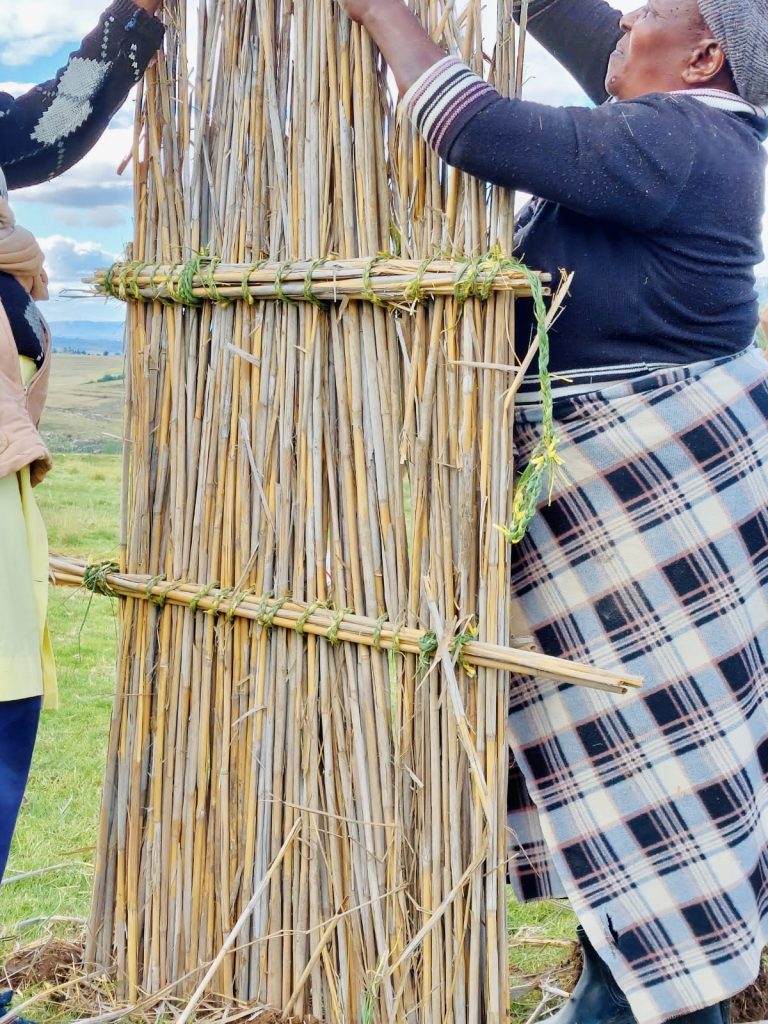
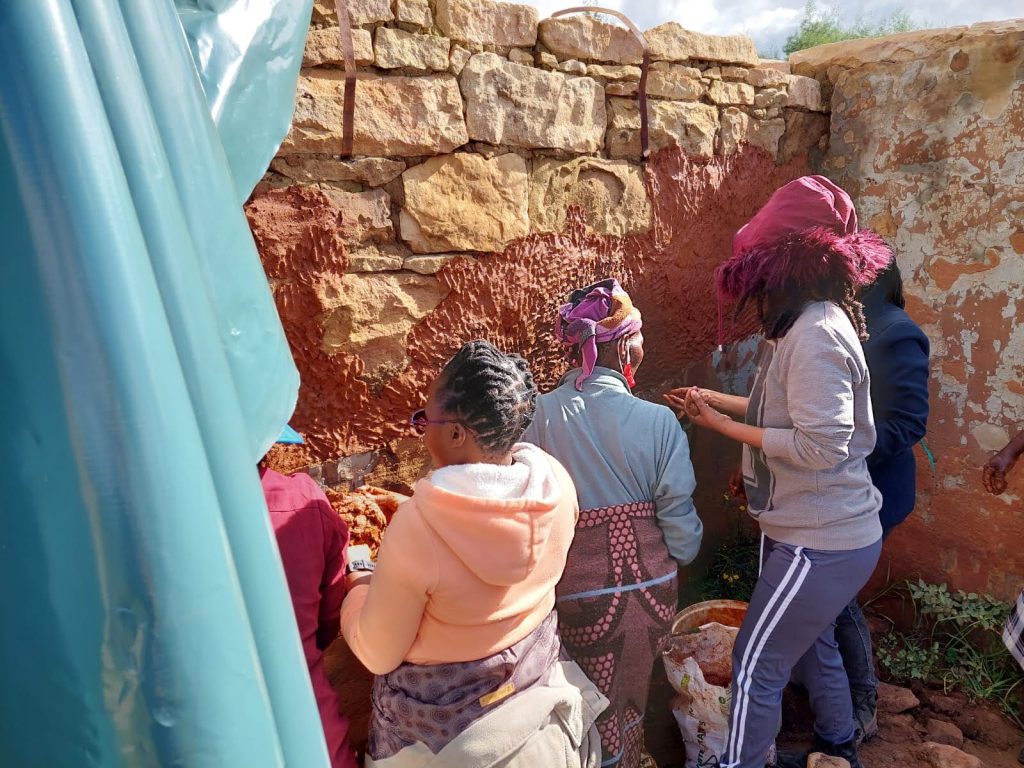
These were all illustrated through practical demonstrations like; How to protect the wall of the Evangelist’s House from further damage using cow dung and mud; Seotloana and Reed screen demonstrations, and many more. The Masterclass explored the importance of not only conserving heritage sites and buildings in Lesotho but the need to preserve and adapt indigenous knowledge systems to create energy-efficient buildings that will be more sustainable and climate-friendly.

About Seriti sa Makhoarane Heritage and Tourism Network (SSM)

SSM is a legally registered association committed to the preservation, presentation and promotion of heritage and tourism associated with the Makhoarane area.  

For more info on this initiative, please contact:

Mr Stephen Gill, +266 5885-8662, morija@leo.co.ls 

Ms Daniela Gusman, +266 5946-0734, daniela@riseint.org 

Mrs Maneo Ralebitso, +266 5801-6984, cereboz@yahoo.com 

Mr Pusetso Nyabela, +266 5886-0884, pnyabela20@gmail.com 


READ MORE
  • 1
  • 2