News

Empowering Communities Through Innovation: rise International partners with SolidarMed Lesotho’s Youth Center Project

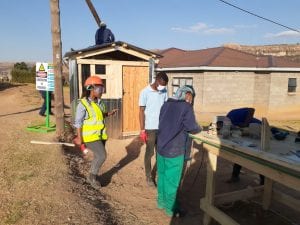
rise International is proud to announce an impactful new partnership with SolidarMed Lesotho, marking the beginning of a transformative project in Mokhotlong District. The initiative focuses on the design and construction of a youth center and health and community facility in the highlands, aimed at providing much-needed support and opportunities for young people in the region.

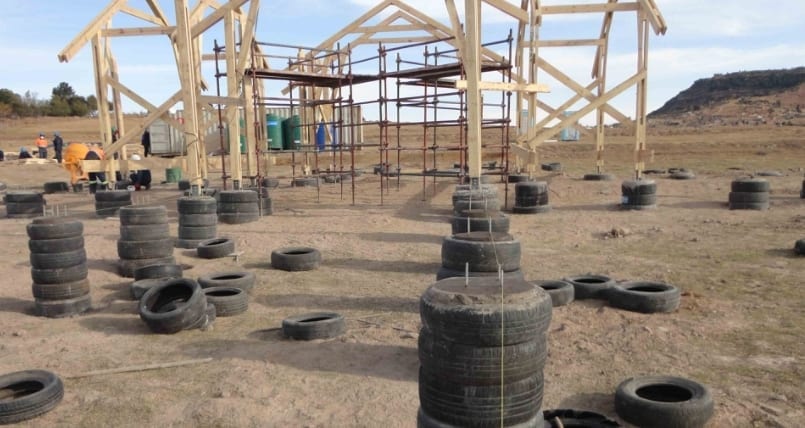
The project, currently in its construction phase, is expected to be completed by early-March 2025. It is a remarkable example of sustainable architecture, as it involves the innovative conversion of shipping containers into a fully functional and dynamic youth center. This approach not only reduces construction costs and environmental impact but also ensures durability and adaptability to the community’s needs.

At the heart of this initiative is Bokang Tjakotja, a graduate of rise International’s in loco fellowship program and a 2019 Pioneer. Bokang, through his company BEEK Projects, is leading the execution of this project, showcasing the strength of rise International’s incubation program in empowering young professionals to drive social change. His work highlights the potential of sustainable construction methodologies to create lasting solutions for underserved communities.

The youth center and health and community facility will serve as a safe and engaging space for young people, offering various programs and resources to support their personal and professional growth. It will also provide essential health services and act as a hub for community-driven initiatives.

This collaboration between rise International and SolidarMed Lesotho is a testament to the power of partnerships in addressing social challenges through innovative and sustainable solutions. As the project progresses, we look forward to sharing more updates and witnessing the positive impact it will have on the Mokhotlong community.

READ MORE
Case Studies

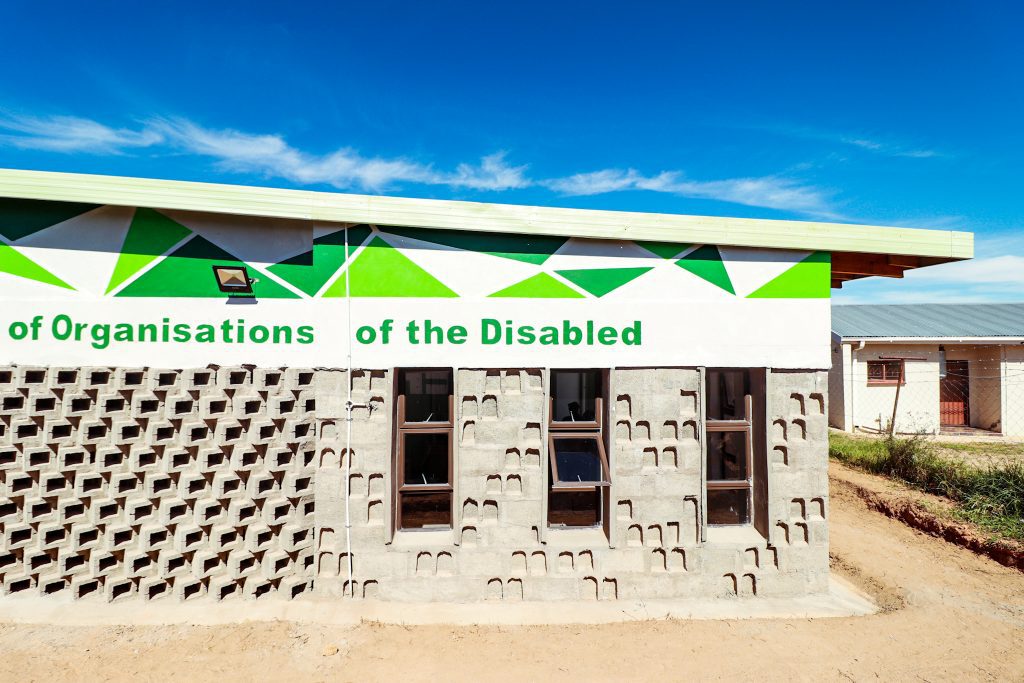
An inclusive office for the Lesotho National Federation of Organizations of the Disabled

Background

The Lesotho National Federation of Organizations of the Disabled (LNFOD) is an umbrella body of organizations dealing with disability in Lesotho. LNFOD advocates for, promotes, and defends the rights of people with disabilities and their families through provision of training, material and emotional support, and by representing their needs to government, development partners and the wider community. 

The Problem

The building in which LNFOD used as their office was not accessible and inclusive of people living with disabilities. There were no ramps, sliding doors, or rails in the toilets. There were no pavements on the outside of the building making it difficult for people who use wheelchairs to access the building. There were also no guiding blocks to assist blind people and signage for general guidance and warnings. The building had poor ventilation and lacked thermal insulation. In essence, the office did not allow for the organization to employ people with disabilities nor fully carry out services for people with disabilities because of  lack of accessibility.

The Solution

rise built a new all inclusive office in Naleli, Maseru the capital city of Lesotho. This building is the first one of its kind in the country catering completely for people with different disabilities. It has a ramp for easy access for people with physical disabilities, the doors are wide to allow  wheelchair access, there are rails in the bathroom, the walls are made of textured tiles for guidance for people with blindness or eye sight impairment. The building has insulation in the ceiling as well as a cavity wall for insulation which makes it warm in winter and cool in summer. It is also designed such that there is a separate entrance for the boardroom and toilets allowing LNFOD to rent out the boardroom to external entities as an income generating source because social enterprise is the heart of rise.

Methodology

With the support of funds from Sedlak GmbH and Brotfür die Welt, the rise in loco cohort of 2020 designed and constructed this building. in loco is rise’s learning by doing program where 

Young Basotho graduates from the design, architecture and built environment fields come together as a fellowship and learn practical skills. This way, graduates gained practical skills while the LNFOD community gained an inclusive office space.

Challenges

The site available for the building was very small, as was the budget for this project. Moreover this building was constructed during the Covid-19 pandemic, movement restrictions due to the pandemic restricted a lot of activities and decreased morale on site. People on site had to work with each other but still maintain Covid-19 protocol which was new and uncomfortable. Construction materials prices kept increasing due to high transport costs and restricted movements which further challenged an already budget-restricted project. Hardware stores would often run out of stock, which challenged progress on site. The International partners were not able to visit the project.

The Impact

LNFOD is a national umbrella body of organizations of persons with disabilities and therefore works for an estimated 56 000 people in Lesotho according to census (2016). LNFOD now employs more than 10 people with different disabilities and can provide even more services because of their fully inclusive new headquarters office building.

Testimonials

Nkhasi Sefuthi – Director of LNFOD

We now have accessible toilets and ramps that make the office accessible for all people with disabilities including those using wheelchairs. We are now able to conduct our work efficiently even without the disturbances we used to have in our previous working space.

SEDLAK GmbH and Diakonie/Brot für die Welt – Sponsors of the project

We are proud to have supported the first accessible and inclusive office building in Lesotho. The construction of the LNFOD offices in Naleli is a milestone for disability organizations in Lesotho and will hopefully serve as a role model for other accessible buildings throughout the country.” 

READ MORE
rise News

rise’s work on Water, Sanitation & Hygiene (WASH)

rise‘s work on Water, Sanitation & Hygiene (WASH)

“Growing up in a clean and safe environment is every child’s right. Access to clean water, basic toilets, and good hygiene practices not only keeps children thriving, but also gives them a healthier start in life.” – Unicef

Lack of sanitation can be a barrier to individual prosperity and sustainable development. When children, especially girls, cannot access private and decent sanitation facilities in their schools and learning environments, the right to education is threatened. Poor sanitation puts children at risk of childhood diseases and malnutrition that can impact their overall development, learning and, later in life, economic opportunities. According to UNICEF, as of 2015, nearly one in ten children in Lesotho dies before reaching their fifth birthday. Too many of these deaths are due to the effects of unclean water and inadequate sanitation and hygiene, which increases a child’s vulnerability to disease and infection. Most of Lesotho’s ten districts report a high percentage of households using unprotected water sources, and about 20% still need access to improved sanitation facilities. That is why we have partnered with various organizations and entities to address this urgent challenge. 

What rise has achieved so far…

Toilets for a Primary School in Lithabaneng village

Watch video of the launch

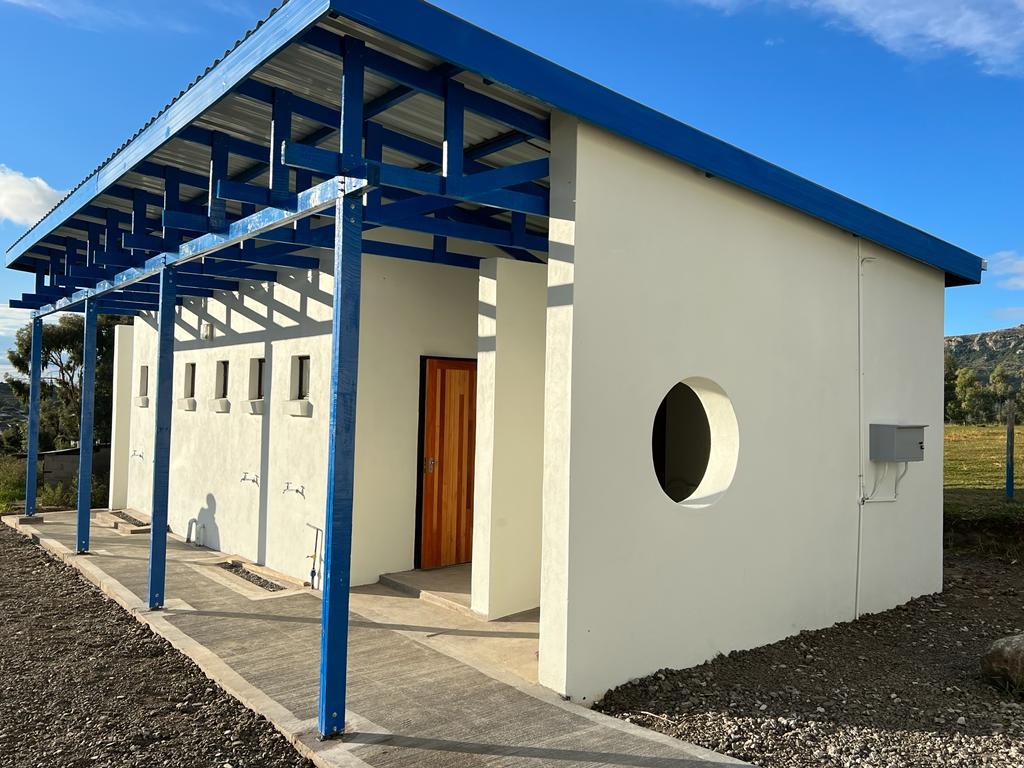
Ever since the existence of Seboka Primary School, over 600 learners yearly have endured poor sanitation due to a lack of healthy sanitation facilities and no running water anywhere on the school site. We are so proud of our in loco pioneers xyz collaborative for building new toilets for the learners and staff and Mokhethea Civils and Contactors for constructing the percolation system, as part of our 5 Hub Schools project thanks to the support of a not for profit organization called Action Ireland Trust (AIT) in collaboration with the Ministry of Education and Training of Lesotho.

Boreholes and rainwater harvesting for 5 Hub schools

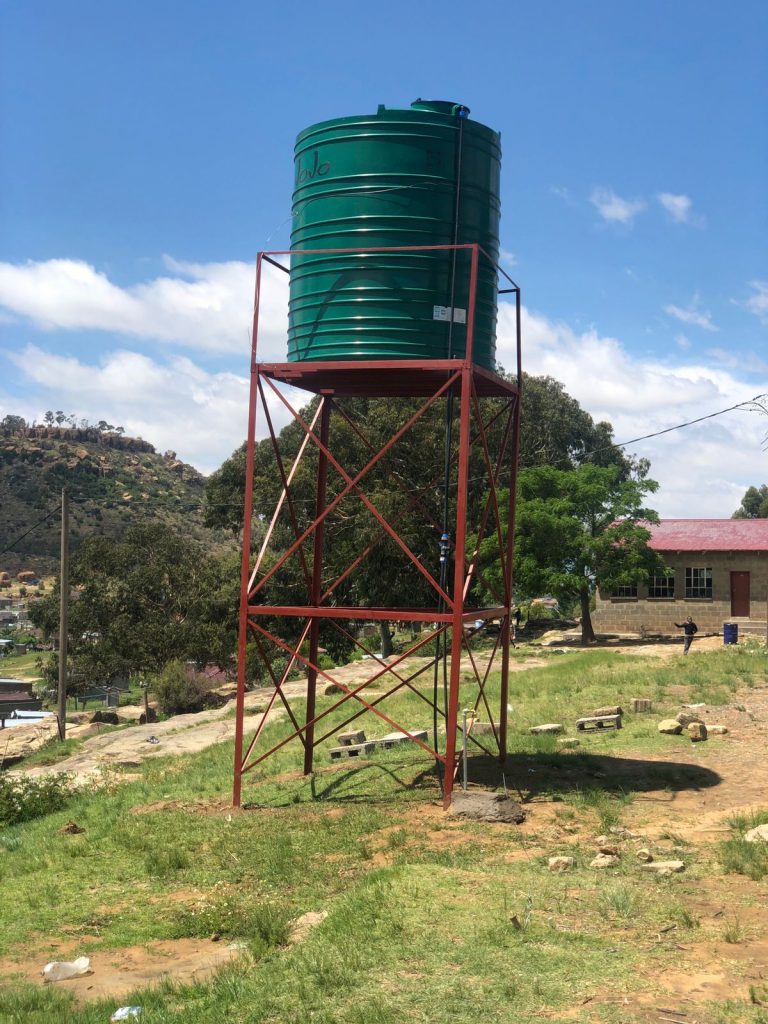
Our in loco Pioneers PRO Construction successfully constructed rainwater harvesting systems in 2 schools with the help of sponsorship from the British High Commission in Lesotho and AIT. The boreholes, together with the rainwater harvesting systems now provide a regular flow of clean running water to the schools, facilitating general good hygiene and frequent handwashing amongst learners and the schools’ community – an essential healthy habit in these Covid-19 ridden times. This access to running water also makes food preparation in the schools much easier, provides much needed water in the food gardens constructed by Green Yards, another in loco Pioneer company while promoting food security and food hygiene, and further supplies constant water circulation in the newly built toilets. 

Why food gardens? You may ask. School lunch is the only meal that many of the learners in these schools get each day and therefore being able to grow their own nutritious food is vital for the learners’ feeding program and overall health & nutrition hence the construction of these food gardens. The schools are also able to sell excess produce to raise funds towards their operational costs.

No more outdoor cooking for another school in Lithabaneng village

The food preparation of over 600 learners was done in the outdoor area of Leqele Primary School. It is so amazing to have our in loco Pioneers Presto Construction Company build a new kitchen for this school also with clean water supply. It is integral that food be prepared, handled and served where there is access to running water.

Hand Wash stations for towns, hospitals, schools and villages in Lesotho during 1st wave of Covid-19

Watch more on this project

To curb the spread of the Coronavirus, we built handwash stations in all 5 schools in the Lithabaneng area which promoted hygiene and the safe handling of food. On the same mission, xyz collaborative built 105 more hand wash stations which were installed in all 10 districts of Lesotho in various health clinics, hospitals, child care facilities as well as busy town areas in partnership with UNDP, UNICEF and the Ministry of Health.. We built 10 more for a semi-rural community called Motimposo to lessen the number of communities that did not have access to running water and were thus at the highest risk of contracting the virus.

Safely managed water, sanitation, and hygiene (WASH) services are an essential part of preventing and protecting human health especially during infectious disease outbreaks, including the current Covid-19 pandemic. Our mission is to ensure that young people exist in environments that allow them to develop so they can one day join the fight against poverty in Lesotho and the Subsaharan African region at large.

We call on you to help make a difference with us! 

READ MORE
2020

IN LOCO FELLOWS 2020 BLOG SERIES #3: Intergalactic love

Intergalactic means movement between spaces. Buildings occupy space, from their foundations upwards. Therefore in this blog, intergalactic is compared to construction because of the fuming passion I have for the built environment and intergalactic.

My passion for the built environment grew after several setbacks from the University of Free State, where I was enrolled in the faculty of natural sciences, however I dropped out from the University and I enrolled for a National Diploma: Building at the Central University of Technology, Free State (CUT) where I graduated in record time. The faculty of Engineering has always been best for me…HAHA.

Malingaka working on construction site

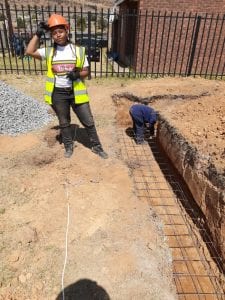
Upon completion of my diploma, I was awarded a MerSETA women in engineering bursary. This encouraged me to further my BTech in Construction Management which I also completed in record time. A fiery love for construction grew deeper, so much so, that I established my own construction company named Khal Construction Engineers the same year I enrolled for my BTech, with a view of creating a better industry that would lessen surplus costs, delays, accidents on construction site, and upsurge job creation. My first project in construction was plastering and floor pouring a residential building.

The business did not go so well. Our marketing was poor, we could not get customers as we were unknown in the industry, project hunting became all-consuming  but there were still no doors opening for the smart, enthusiastic ‘Malingaka. But I don’t accept defeat; it’s just not in my DNA. Therefore I enrolled for a Masters at the University of Johannesburg while job hunting and tender hunting. Being the go getter that I am, I completed my Masters within a year. The same year in December my company got its first client!  Sufficient grace, right?

Malingaka building a guard house

That first client was a stepping-stone to many. Currently I have over two years’ experience in the industry and already embarking on the journey to bag my PhD in Construction Management. Though my business is facing challenges such as lack of construction equipment to commence a project, rise has a solution to my challenge since fellows and alumni are able to borrow construction equipment from rise.

My first encounter with rise international was when I navigated through the internet for job vacancies. I believe it was through www.selibeng.com that I saw the opportunity for the in loco fellowship. rise’s mission and vision caught my attention, I was amazed. With much enthusiasm I applied for the fellowship and got in. I must say I am super grateful for this platform; it has been nothing but a place of growth in the built environment, industry and entrepreneurship.

Work on Construction Site
Malingaka and other in loco fellows working on LNFOD site

“Don’t let an opportunity pass you by, grab it and make the most of it.” I’ve been doing the most, learning by doing, learning from my other fellows, grabbing every skill and networking. rise has taught me that “Letso’ele le beta poho”, (Together we can overcome). Team work is the utmost, sharing innovative ideas amongst the fellows, problem solving and building each other through business partnerships. At rise, I have learned the importance of marketing, effective communication, negotiation skills and working in groups with other fellows. Amongst the activities we’ve done with rise, I enjoyed the Participatory Design Workshop and team building the most; what an experience!

‘Malingaka Maoeng

I am excited to learn more from my fellows, to experience getting our hands dirty on the 2020 project. I have been getting along well with other fellows; it has really been fun working with each and every one of them. It is as if we’re one big happy family.

I AM ‘Malingaka Maoeng

READ MORE
in loco program

in loco fellows blog series #2: Becoming who, I will

For too long a time, I believed that success in the construction industry in the tiny Kingdom of Lesotho had been reserved for prominent professionals who have grown with stature in the country. That employment didn’t include all but those individuals for whom the society has great reverence. To an extent, there is truth to that; experience definitely sets precedence in a sense of surety, especially when we consider the amount of knowledge one should have when creating something as complex as a house. Even so, this is only a part of a large whole.

I got introduced to rise through one of the lecture series they run at my school. What caught my attention about these series, along with the film debate sessions, was the creation of an interactive space for people of predominately students and recent graduates of different disciplines within the built environment. This habitat was a rare yet an exciting setting to be part of, and a much needed one at that.

Kole taking a selfie with some of the other in loco fellows

My interest in the organization of rise grew amicably with each interaction, whether it be social media, or community donation drives. Then finally, I came upon an advertisement of a job application for the next cohort. I was religiously following the cohort progression of the GLC Centre by then, and I did not want to miss out on the amazing opportunity to become part of their pilot program, in loco. Without hesitation, I took a leap of faith, and after a couple of, what seemed all too long, weeks, I became part of the 2019 cohort fellowship.

Kole sitting on scaffolding with Retsepile – another Architecture fellow

In this venture I have learnt so many skills and trades that I had not thought I would have known in such a short space of time. The profound opportunity to amass a network of skillsets from young and eager individuals has truly been a mind changing experience. By going against the norm where people assume that in order to create a well built structure you have to be very experienced, but that’s not really the case because we are young graduates with not much experience, but we are erecting an iconic building in the country. I have been able to consistently challenge myself while harnessing plenty of techniques including carpentry, social media marketing, as well as my architectural designing craft.

Kole learning by doing

The cohort has taught me that with the removal of a miniature mindset persona of having the experienced gain all the power, it invites a conversation that indulges with not just the freshly eager to work graduates, but also that these creative minds can also learn to create opportunities for  themselves and others as well. Entrepreneurship is vital in our communities, and rise has helped me to learn how to harness that power to invoke a positive shift in a life of more than many.

My believes grown from rise can be combined in three words: challenge, change, cohesion.

Kole hard at work

Blog by Nkhole Thakhisi, fondly known as Kole.

READ MORE
in loco program

IN LOCO FELLOWS BLOG SERIES 2019 #1: I am because we are

My womanhood and age in a male dominated industry has always been a sharp piercing thorn in my side, for unlike most of my male counterparts who had pre-exposure to the built environment in their upbringing, for me it was the dawn of a new world.

In June I was scanning my Facebook newsfeed and I saw a poster about the fellowship. What struck me as odd was the call for recent graduates for too many times the prominence is on experience. After carefully nit-picking the poster, I decided to take a shot in the dark with marginal hope it would lead to a call for an interview on a random Wednesday afternoon.

Fast-forward a few weeks later, I’m accepted into the fellowship and I make a conscious decision for a radical mind-set shift. With this new conviction, I was and still am, open to learning new things, asking questions and never shying away from research. This rejuvenated outlook gave way for acquisition of immense knowledge in carpentry, researching, concrete mixing and social media marketing.

Moreover, it has translated into an understanding that the built environment is a boys’ club thus if I can’t beat them, I have to join them. And in amalgamation with them, what has shone through is the need to speak up and be assertive as a woman and school them and us (women in construction) into a culture that accepts and celebrates each other’s differences, promotes collaborative effort and championing for each other. In this regard, no gender will fall victim to having an inferiority complex.

The most phenomenal thing that rise has done is to provide a platform to learn, hone current skills and without fail, advocate for a teachable spirit which due to constant exposure to captains of industry is a must-have. Befittingly, this spirit is what enables one to learn from fellow fellows as we are a team that stems from diverse professions. And due to this, I am no longer just a water and environmental engineering graduate, but one with carpentry, social media marketing, communication, negotiation skills and so much more.

READ MORE
in loco program

in loco fellows’ blog series #1


My name is Palesa Rapolo and I’m a 2017 graduate from Limkokwing University having graduated in Interior Architecture. I just completed my first month as a fellow in the eight-month in loco program by rise. My first month into the program has been inspirational, educational and fun. The atmosphere in the office is incredible, I get to go to work and do one of my favourite things in life, work while listening to dumb jokes and having a good laugh.


One of in loco’s goals is to train its fellows to be successful entrepreneurs, so for the first week we had a series of business training sessions where I learned to stop using money or capital as an excuse of why I can’t run my own business. We had a series of guest speakers who were truly inspirational. They shared with us their journey of how they started out to get to where they are right now. One of them named Malefetsane Mohlomi, said he started out with just his laptop and his mind. That really got me thinking, ‘why haven’t I? Who am I not to be successful? But then everything happens in its own time, I’ll tell my story someday.


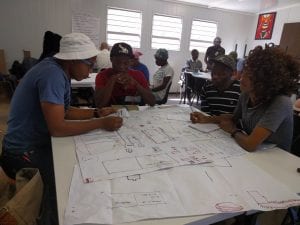
My favourite part has got to be the participatory design workshop, not only because of the food, but most importantly what I got to learn from it. Going out to God’s Love Centre (GLC) and getting to know the people we are going to be designing for and hearing from them what they wanted instead of assuming we know what’s right for them. The sad part is that we can’t meet all their needs, but I hope that what we’ll give them will make a huge difference.


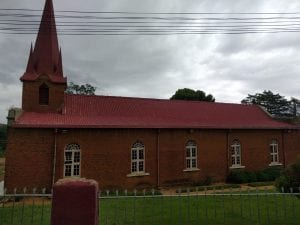
My second favourite part is definitely the trip to Morija, one of Lesotho’s most important historical and cultural sites. Morija has some of the oldest buildings such as the first Evangelical Church. I came back with a lot more appreciation for traditional methods of construction, and I’m definitely looking forward to going back there again.

READ MORE