rise News

Basotho take Heritage into their own hands
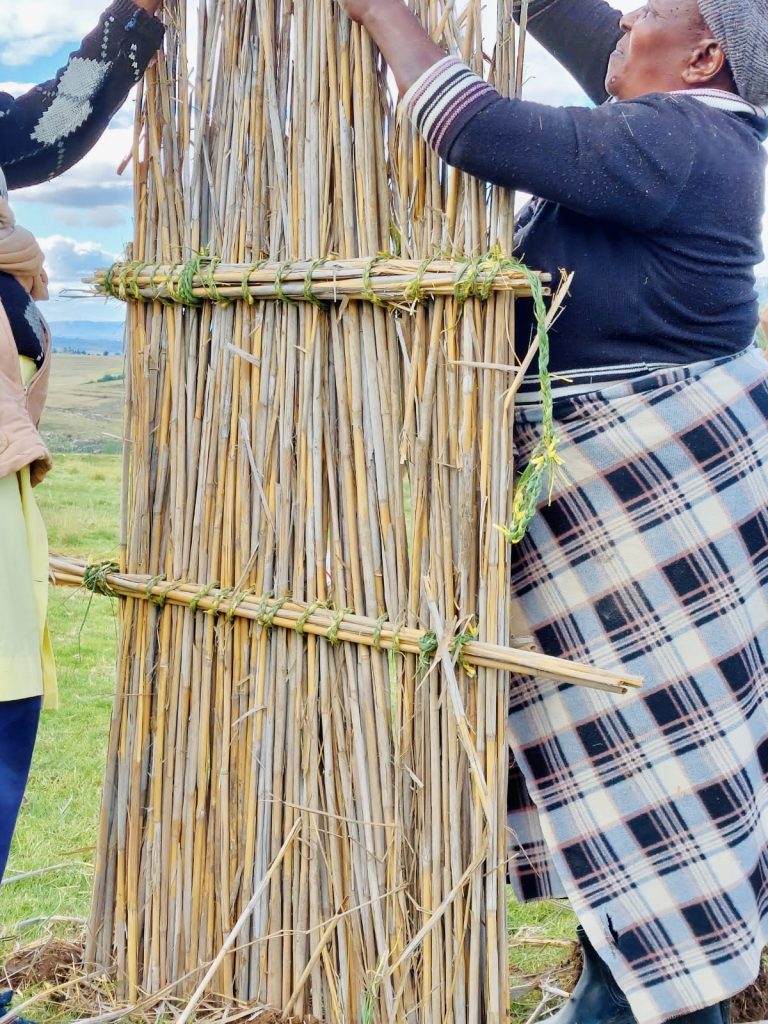
Seriti sa Makhoarane Heritage and Tourism Network (SSM) in collaboration with rise  held a first of its kind Built Environment and Heritage Masterclass in Makeneng, a small village in Maseru, Lesotho. This class was held at Makeneng (Matsieng), the royal village of Morena Lerotholi, the second-generation successor of Morena Moshoeshoe I. Architectural heritage spets from Cape Town; Janine de Waal and Graham Jacobs facilitated the Masterclass and shared their knowledge on the conservation of heritage in buildings.

A combination of people from different disciplines can now help create awareness and help youth in Lesotho with job creation in the Heritage and Conservation spectrum.  The participants and other interested persons now have the opportunity to establish an association of Heritage activists to advocate for issues and causes in Heritage Conservation. This kind of association would also work to publicize and help educate the broader public on how to better appreciate the rich heritage of Lesotho/Basotho. It would also be open to interested persons from various disciplines in order to apply “Kopano ke matla” to Heritage Conservation.
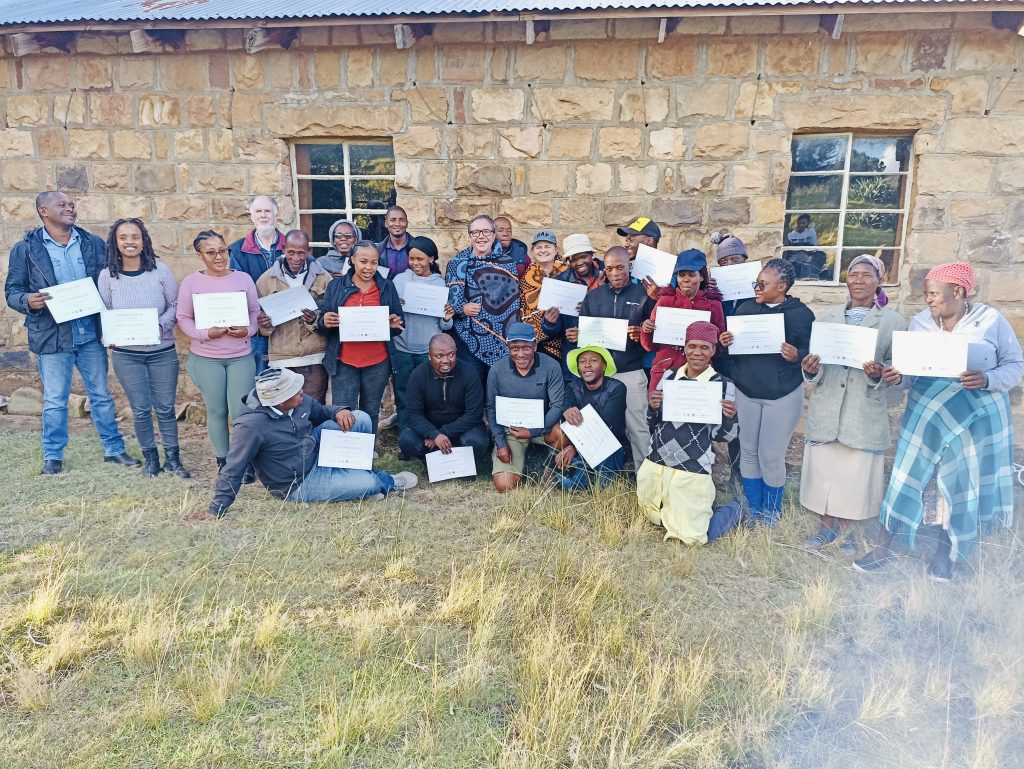
The Masterclass was attended by 20 participants including architects; researchers in Anthropology, students of heritage studies, historians, engineers, construction managers, quantity surveyors, and Makeneng residents skilled in indigenous building techniques such as stone masonry, thatch, and reed fencing.

It was a full house of experts. The Masterclass was held at Makeneng because of its rich built environment, especially when taking into account the previous royal villages of Morena Moshoeshoe I at Thaba-Bosiu and of Paramount Chief Letsie I at both Morija and Matsieng. 

Moreover, a rich and varied oral tradition has been recorded from the elderly inhabitants of Makeneng, allowing a full understanding and appreciation of the linkages between the built environment, archival sources, and living traditions. Finally, its unique architecture, landscape, and terrain give it a special ambiance with spectacular panoramic views to the north and east. Because of its geographical position, being on a dead-end road, it has largely been forgotten but Makeneng is a prime candidate for special recognition.
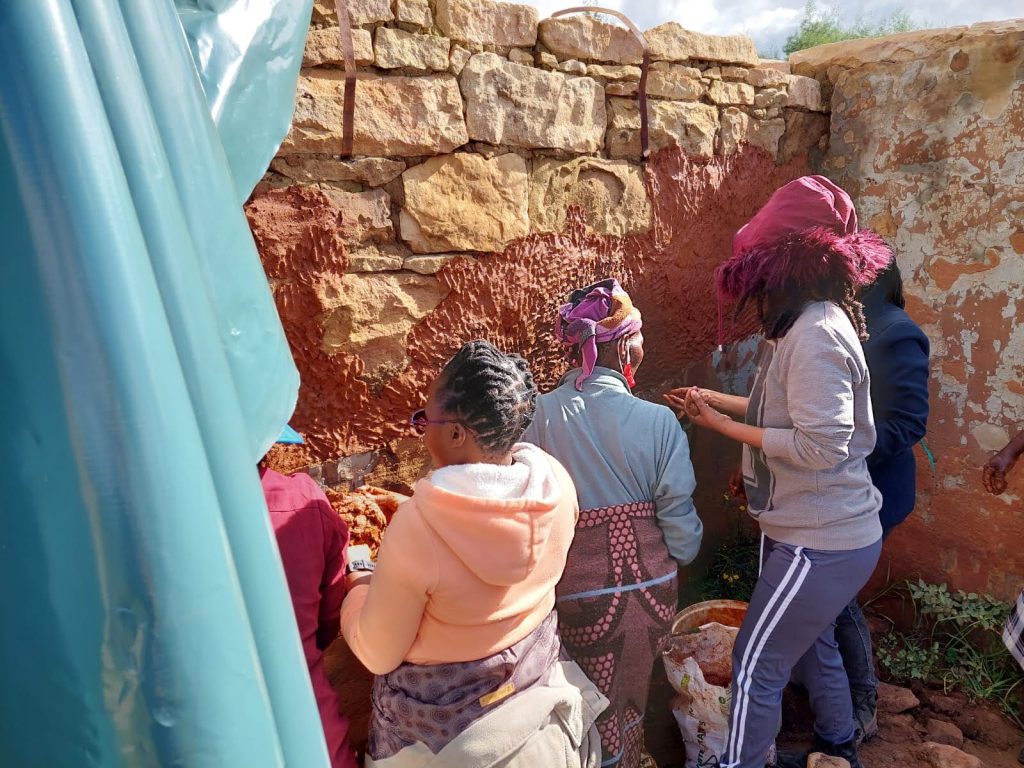
The Masterclass followed a participatory methodology as it involved knowledge and skills sharing between trainers and trainees. The trainers taught steps to follow to achieve heritage conservation of buildings, while trainees shared their knowledge and skills on Lesotho’s indigenous architecture.

These were all illustrated through practical demonstrations like; How to protect the wall of the Evangelist’s House from further damage using cow dung and mud; Seotloana and Reed screen demonstrations, and many more. The Masterclass explored the importance of not only conserving heritage sites and buildings in Lesotho but the need to preserve and adapt indigenous knowledge systems to create energy-efficient buildings that will be more sustainable and climate-friendly.

About Seriti sa Makhoarane Heritage and Tourism Network (SSM)

SSM is a legally registered association committed to the preservation, presentation and promotion of heritage and tourism associated with the Makhoarane area.  

For more info on this initiative, please contact:

Mr Stephen Gill, +266 5885-8662, morija@leo.co.ls 

Ms Daniela Gusman, +266 5946-0734, daniela@riseint.org 

Mrs Maneo Ralebitso, +266 5801-6984, cereboz@yahoo.com 

Mr Pusetso Nyabela, +266 5886-0884, pnyabela20@gmail.com 


READ MORE
News

rise’s work on Universal Design 


rise’s work on Universal Design 

We often say that we are inclusive of all communities, or that we are restructuring society to be understanding and empathic of all, especially the marginalized. But to which extent? The lack of inclusivity in urban planning does not only separate us by weaknesses and strengths, but it deprives us of some of the joys of the environment like urban spaces, access to green spaces and even essential services like public transport.

It is pivotal for professionals in the built environment to prioritize the promotion and protection of the rights of people with disabilities particularly in urban design. With the hope that a potential exists for the improvement of buildings and thus facility access for people with disabilities in Lesotho, rise embarked on a project that would shed light on the existing issue of “lack of inclusivity in the urban design of Lesotho”. According to a study by the Lesotho National Federation of Organizations of the Disabled (LNFOD), people with disabilities are constantly faced with the challenge of not having equal access to facilities like banks and hotels and to services like public transportation as the built environment does not cater for wheelchair access and other limited mobility needs. 

The aims of this project were to facilitate an interface which promotes that everyone gains equal access to services and facilities; to educate the general community on the need for inclusivity in urban design; to increase awareness within the built environment sector on the need for inclusivity in design and construction and to engage policy makers in the discussion on inclusivity in the urban planning of Lesotho. Empathy is key here, the feeling of belonging rather than feeling excluded. Inclusivity of design is achievable. The goal of inclusive design is to offer the same access for all users, whether with special needs, disabilities or neither of these.

……Empathy is key here


What rise has achieved on universal design so far…  


A panel discussion with policy makers 

Made possible by the British High Commission

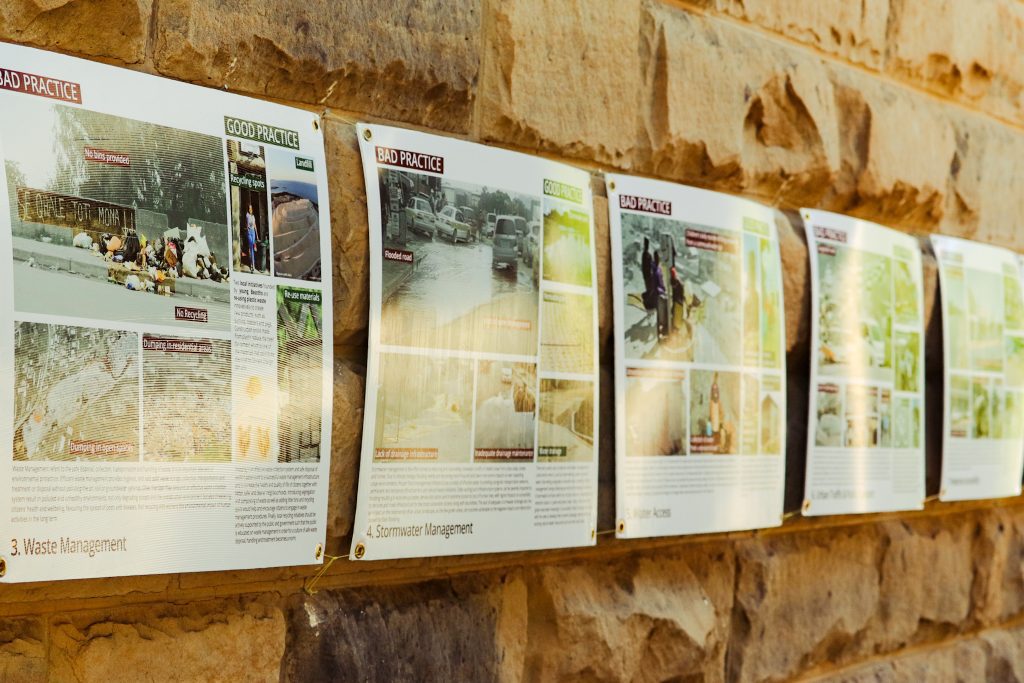
rise hosted a photo exhibit and panel discussion on inclusive design where policy makers engaged in a discussion around the need for reforms on Building Codes for inclusive design in both private and public sectors. A voting poll was set up for the general public to vote on the matters that mean the most to them regarding the infrastructure and accessibility of Maseru city. 

Key stakeholders working in the built environment made pledges on how they are going to commit to improving the existing situation of lack of inclusivity in the urban planning of Lesotho. WATCH VIDEO OF PANEL DISCUSSION

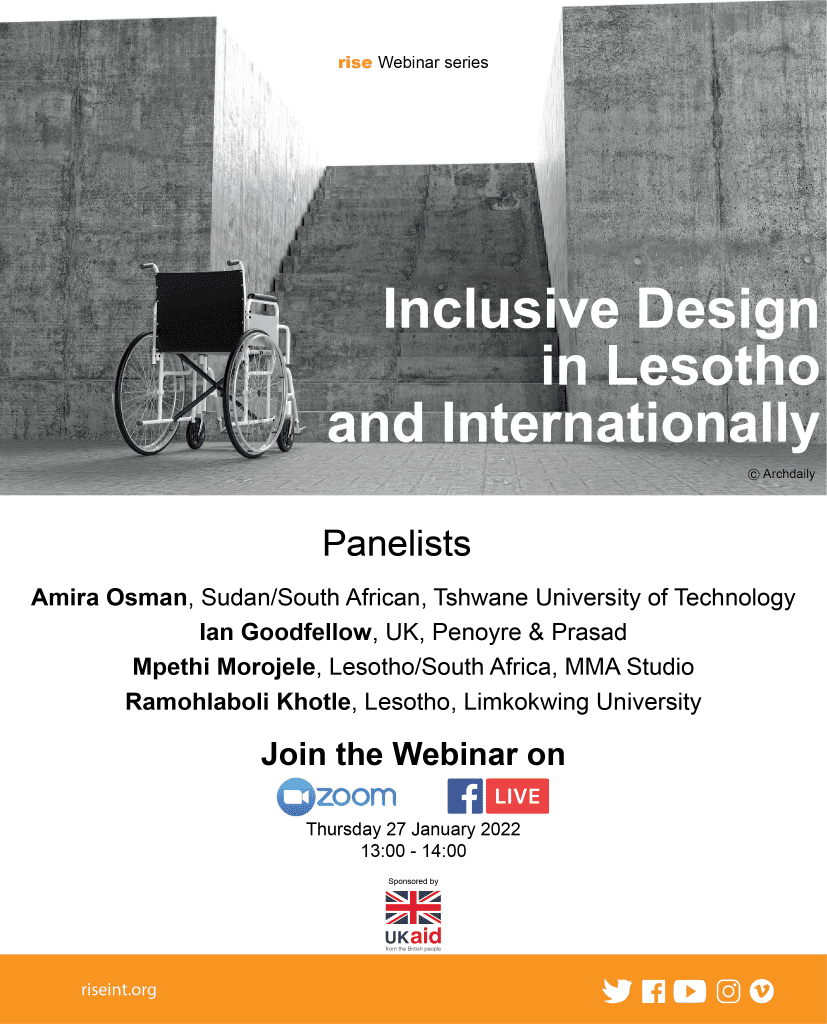
A webinar to create awareness on Inclusive design in Lesotho & internationally

WATCH VIDEO OF WEBINAR

After the panel discussion rise hosted a webinar on Inclusive design in Lesotho and internationally where professionals engaged, educated and spoke on the need for universal design globally and locally.

Radio shows to create awareness on the need for universal design


rise hosted 4 radio shows in partnership with SkyAlpha, aimed at increasing awareness of the need for inclusivity in the urban planning of Lesotho.

An inclusive building for people living with disabilities


Through in locorise built an all inclusive design building for the Lesotho National Federation of Organizations of the Disabled, allowing them to finally employ people with physical disabilities.


A panel discussion with key stakeholders for action planning


Universal Design for Maseru City Roundtable was hosted on March 2nd 2022 by the Ministry of Local Government and Chieftainship, facilitated by rise and funded by the British High Commission in Lesotho with a focal thematic area around Universal Design including :

1. Regulatory & Legislative Building Codes for Inclusive Design 

2. Design & Planning Practices 

3. Action planning and Next Steps needed 

Our work on Universal Design does not end here, watch out for more on our social media platforms, engage with us on this topic and lend your hand wherever you can because if you want to go fast you go alone. But if you want to go far you go together. Let’s go together!


READ MORE
in loco program

Experience taught me well

I am Mpokho Kherehloa, a proud member of the in loco fellowship cohort of 2020 with rise international. I am a 24 year old Mosotho woman and my life is based on challenging the status quo in the Lesotho construction industry. I hold a diploma in Construction Management from Lerotholi Polytechnic. Not only do I have managerial skills in construction but I can also get my hands dirty in the field. I love doing labor intensive work and I always considered myself the definition of what we call “the complete package”. I can easily manoeuvre in the construction industry as an employable candidate. However, I was missing an integral aspect which I personally never thought was as important as my technical skills and this was having an entrepreneurial mindset.

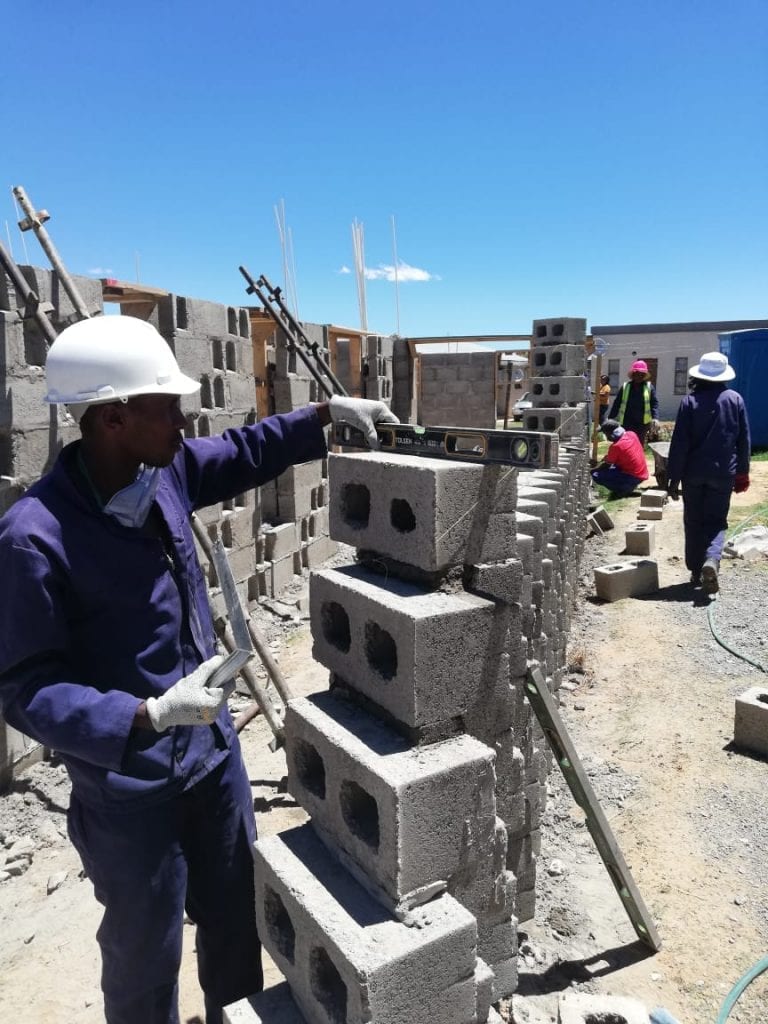
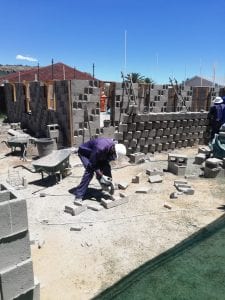
Mpokho bricklaying

In the five months that I have been part of this fellowship, I have learned that rise international’s dominant mission is to equip its fellows with the skills and lessons that help newly graduates to develop their attitude towards being self-sustaining and being job creators as opposed to job seekers. As a woman in  construction, one can be tamed into thinking their career is good enough by being employed as opposed to being  the employer, as the Lesotho construction industry is male dominated. I also wanted to change the normality of having more men in construction than women.

Mpokho in the wiring process

I knew about this fellowship through a Whatsapp group, which talked about construction so it obviously grabbed my immediate attention.  So I applied just because I qualified for it, little did I know that there was more to the program than just construction work, there is intense business training. I am five months into the program with about 2 months left to completion. These five months felt like a whole 2 years, not because it was that difficult, but because of the knowledge and site experience I have gained. This experience has been everything and more than I could have ever imagined.

Mphokho checking levels of foundation

I  mentioned that I am a woman who knows her business and am not shy to get my hands dirty.  I  already knew most things that had to do with construction besides bricklaying and therefore my take away in construction skills so far is bricklaying. As for the entrepreneurship aspect there is a whole lot that I have learned, that has opened my eyes, and directed my way of thinking to be organized and be an executer. These lessons include good communication skills, taking calculated risks without doubting yourself, marketing strategies, customer care and how to prepare a business plan from start to end. And I have no doubt that with these skills acquired I will definitely be the complete package that I aspire to be.

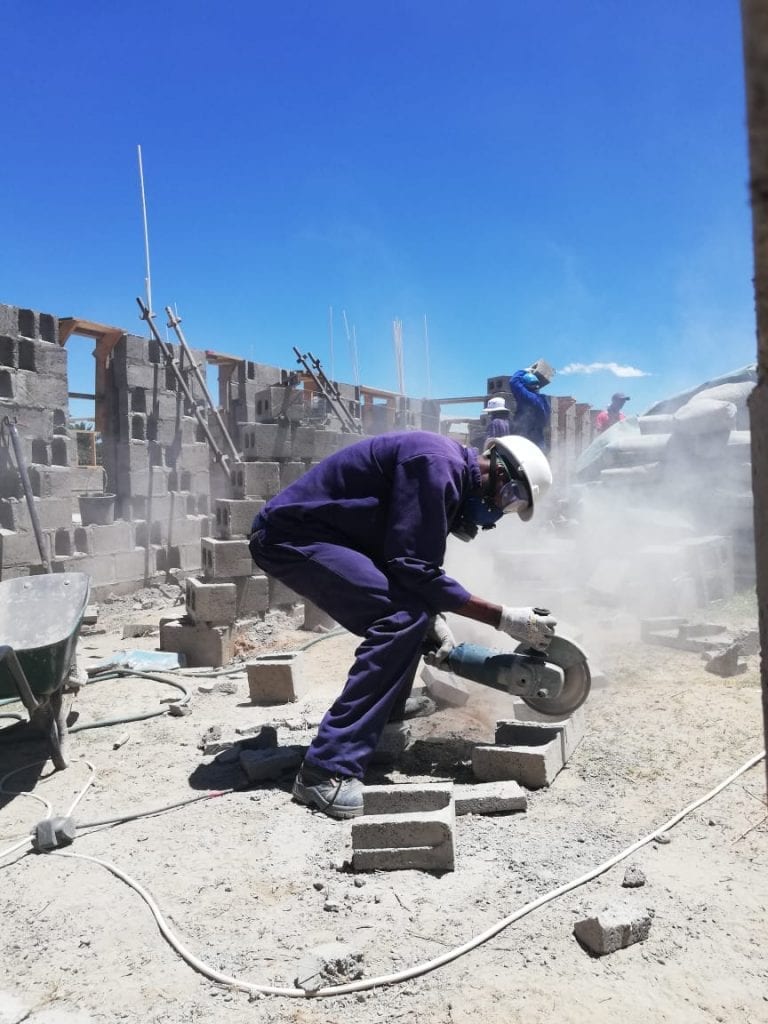
Mpokho cutting timber

Apart from being inspired to be a job creator, I have a dream to contribute to my community by founding an orphanage. The reason is that I believe in giving everyone a chance to find their purpose, and having a warm bed to sleep in, food to eat and education meets the individual half way in helping them find their true purpose. Also it breaks my heart whenever I see homeless and abused children. So I believe my true purpose in this life is to give hope and support to those in great need of it.

READ MORE
in loco program

in loco fellows blog series 2020 #6: Great things never come from our comfort zone

My name is Ramarou Tsoho, a 30 year old Mosotho man. I was born and raised in the highlands of Lesotho “Raleqheka”. I am privileged to be part of the 2020 cohort of the in loco fellowship at rise international. I hold a Diploma in Civil Engineering from Lerotholi Polytechnic. I have chosen this programme because I believe engineers are among the fortunate since they build their own monuments with public consent, public approval and often public funds, most importantly they bring construction ideas and dreams in to reality.

Relationship Inspiring Social Enterprise (rise) offers a great opportunity for new graduates from the built environment, to have experience through learning by doing in the in loco fellowship programme. Most importantly it raises young Basotho entrepreneurs who then become job creators.  This programme gives clear insight into what the work environment is like; we learn time management, prioritizing, we feel real pressure to ensure completion of tasks and gain an array of skills that sharpen us to be field ready. I am a personal believer in the power of being humble and teachable because the world is way bigger than our view of it. There is always  room for a new idea, a new step and a new beginning, so it is wise to open yourself up to learning.

I started the fellowship in July 2020, with absolutely no experience in the construction of buildings and in running a business as a whole. However, being assigned to be part of the research team taught me a lot in gathering information on all aspects that are needed in obtaining the success of a project. It was in this team that we were searching and sourcing the materials that the design team wanted the proposed building to have. This helps in finance control and time management because by the time the project commenced, we knew where to get materials needed. I was then assigned to be part of the events and digital media team of our cohort. This is where I learnt extensively that punctuality, reliability and consistency are the keys to life. Know the time and frequency to post on the various social media platforms and maintain it so that people can easily follow you. Remember it is through social media where people get to know you better in all things you do.

At this juncture I am now in the quality control, plant and logistics team where we intelligently control the interlinking of material flow and production process. In addition to that, we are also maintaining standards in manufactured products

For this 2020 cohort, we are constructing the offices for Lesotho National Federation for Disabled (LNFOD). This will be one of the most outstanding buildings I’ve ever known here in Lesotho. It has a cavity wall which is not usually included in the buildings in our country. Cavity walls make it possible for the temperature in rooms to be inversely proportional to the temperature that surrounds the building. This building is also inclusive; it is structured such that it accommodates both disabled and able people to utilize it with ease. For instance there is a ramp made for people who use wheelchairs and electric plugs are installed at lower positions of the building than usual which will allow excess for people on wheelchairs.

Through rise I saw a light at the end of the tunnel; because of the in loco fellowship I will be a job creator one day. Your world can be an entirely different place than the world you lived in just moments ago, once your attitudes towards it changes. I almost gave up on my career but rise rescued me by giving me hope. I am gaining the much needed experience to be field ready, I now believe that I indeed have a bright future ahead of me.

READ MORE
in loco program

in loco fellows blog series #3: Success comes from good networking and a lot of experience

In this day and age in our country of Lesotho in order to succeed in any profession you’ve got to have connections and experience, a college diploma/degree alone does not guarantee success.

I got introduced to rise back in 2017 when one of my lecturers at my former school insisted that I should attend a lecture by rise founders and that I would get to learn a lot from the lecture. Without disappointment I did get to learn a lot; about the projects rise has done in Southern Africa that tackled major issues in less privileged communities and about sustainable building using locally sourced materials. This captured my interest in rise and I started following them and attending some of their lectures and film screenings to acquire more knowledge that I could have not get from school.

This is me, Jeff (Mojalefa Hatane)

Fast forward to June 2019 I’m an unemployed graduate and struggling with my freelancing business of Architecture and Graphic Design, with a few clients under my belt. Two friends of mine told me about the in loco 2019 program and that I should apply for it as it would be a great learning experience for me where I would acquire entrepreneurial, design and construction skills. I did not hesitate and I applied for the program since I had already known about the in loco program from the previous year

My prayers were answered and I had been accepted into the program. Now into the program, the project we are currently working on is the IDAL (Intellectual Disability and Autism Lesotho) centre, first off we had to design it but in order to do that we had to understand our clients (people with intellectual disabilities and their families) and their needs. We conducted a Participatory Design Workshop (PDW), which helped us to better understand our clients and their problems, and came up with solutions together. The PDW was a new concept to me but with guidance from the rise members I quickly learned it and I would say it’s a very useful tool to have as a designer.


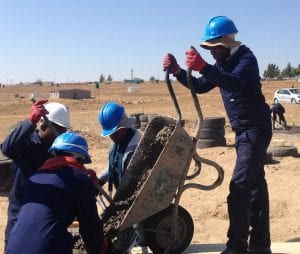
Jeff casting the foundations with other fellows

A few weeks into the program now on construction site I’m gaining a lot of construction experience from concrete mixing to working with timber, learning from the challenges we encounter, developing my skills through my fellow in loco fellows and the rise team and creating networks. Half of the program is the business enterprise where we are taught to be job creators rather than job seekers and I would say it’s coming along fine, I’m still open to learning more and challenging myself.

A lot of challenges have presented themselves but through hard work and dedication from me and the rest of the fellows we have yielded goods results and I can say I am proud to be part of the cohort.

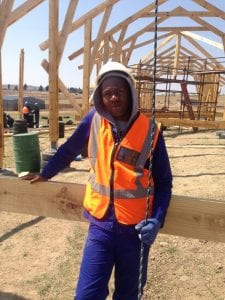
Jeff, proudly standing in the centre of the IDAL Centre currenty under construction
READ MORE