Join us for this heart warming film by award winning Fabio Petronilli and Habofanoe Letsosa which will be dowsed by a panel discussion. Witness the stories of people with disabilities and learn about the development of Lesotho’s first Centre for Intellectual Disabilities. Honoring World Autism Awareness Day 2021 with Unicef Lesotho, IDAL and LNFOD.
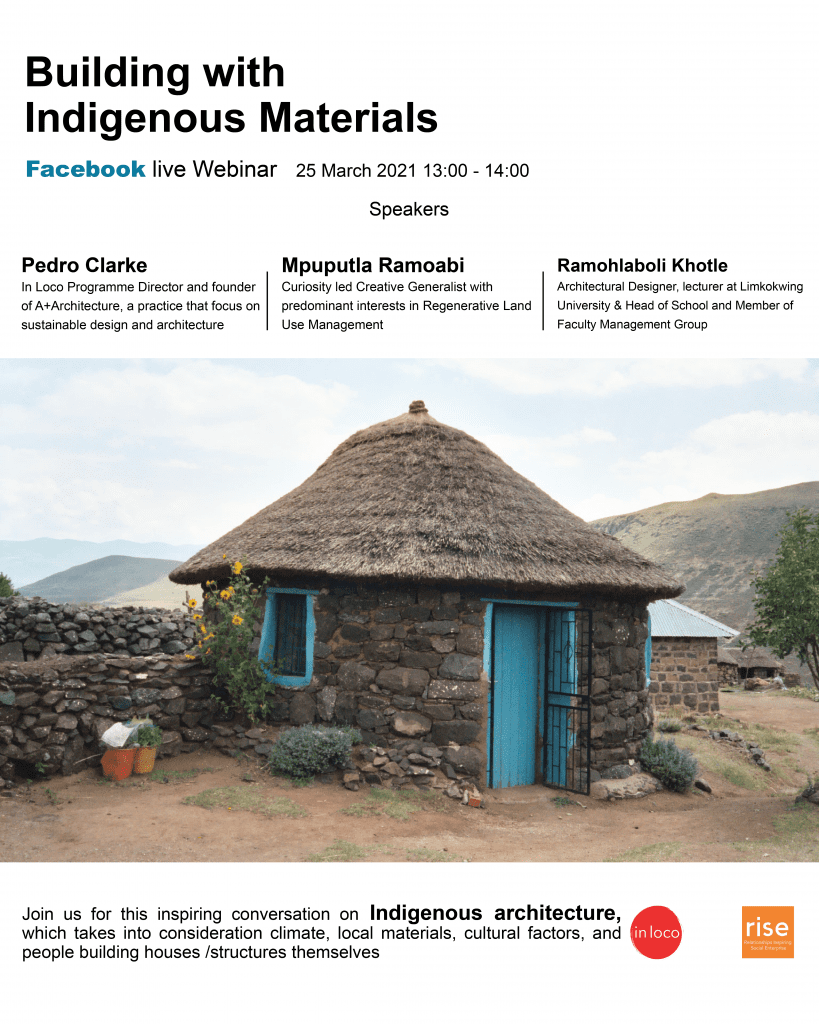
An inspiring conversation on Indigenous Architecture, which takes into consideration climate, local materials, cultural factors and people building houses / structures themselves.
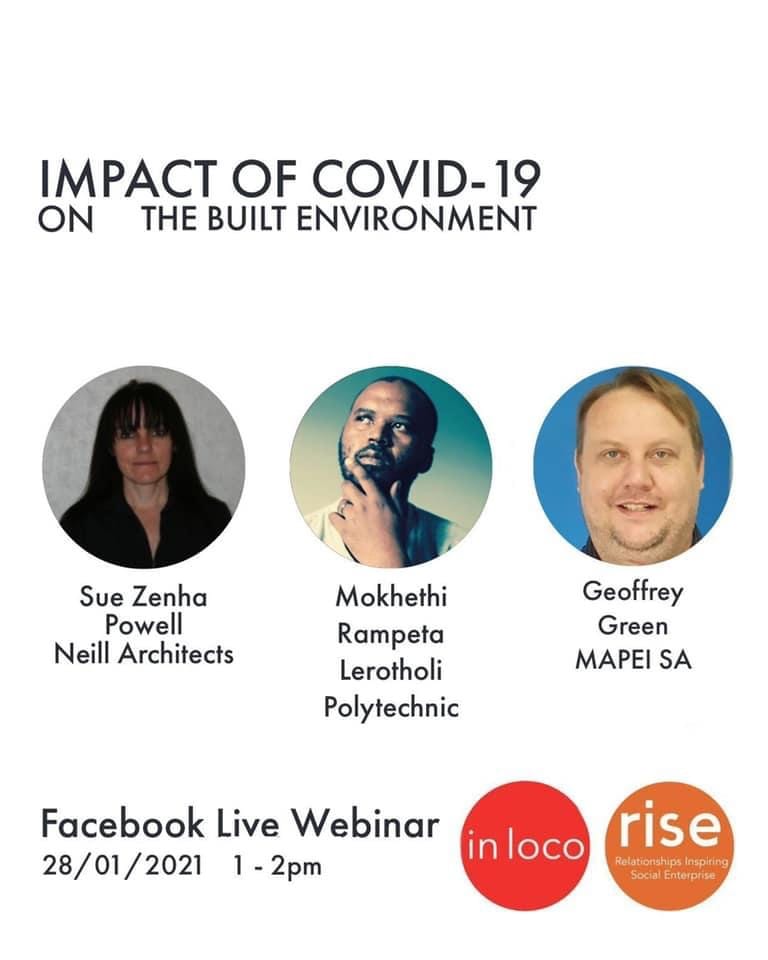
As part of the rise webinar series, we had a much needed conversation on the Impact of Covid-19 on the built environment. Watch it anytime here . Enjoy!
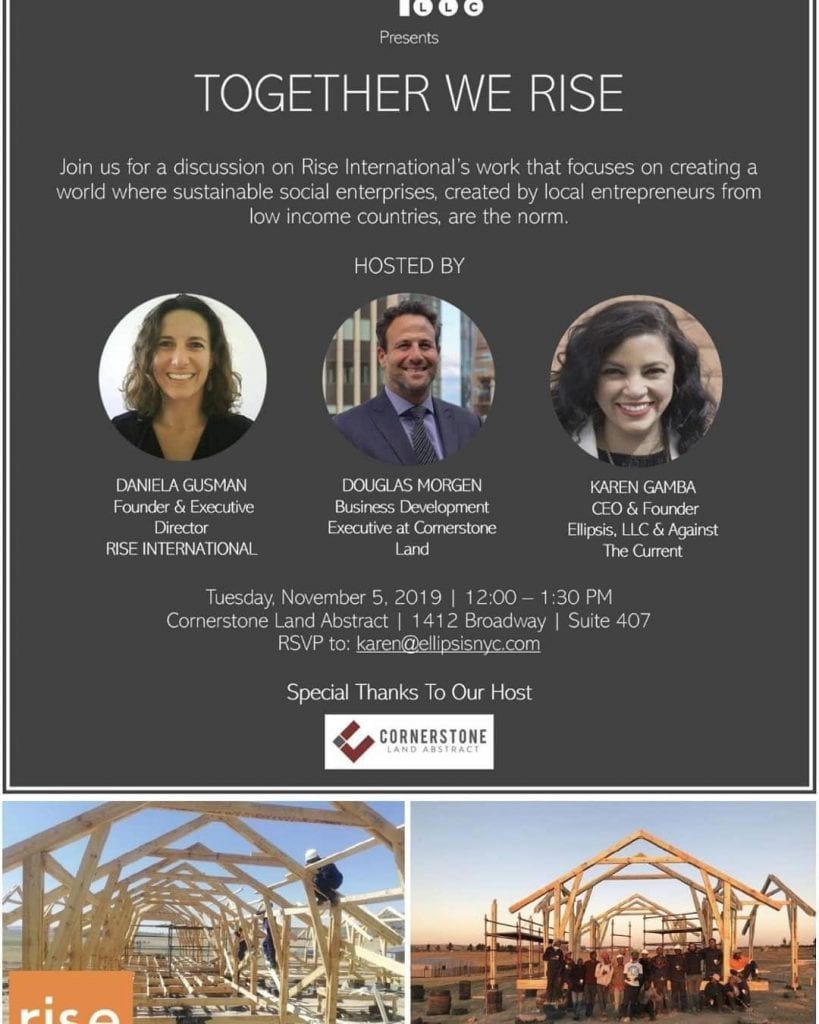
Join us for a discussion on rise international’s work that focuses on creating a world where sustainable social enterprises, created by local entrepreneurs from low income countries are the norm
I am Mpokho Kherehloa, a proud member of the in loco fellowship cohort of 2020 with rise international. I am a 24 year old Mosotho woman and my life is based on challenging the status quo in the Lesotho construction industry. I hold a diploma in Construction Management from Lerotholi Polytechnic. Not only do I have managerial skills in construction but I can also get my hands dirty in the field. I love doing labor intensive work and I always considered myself the definition of what we call “the complete package”. I can easily manoeuvre in the construction industry as an employable candidate. However, I was missing an integral aspect which I personally never thought was as important as my technical skills and this was having an entrepreneurial mindset.
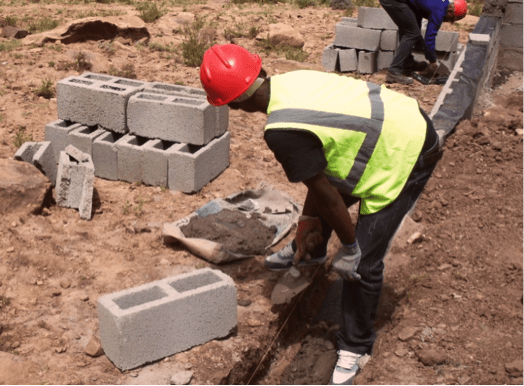
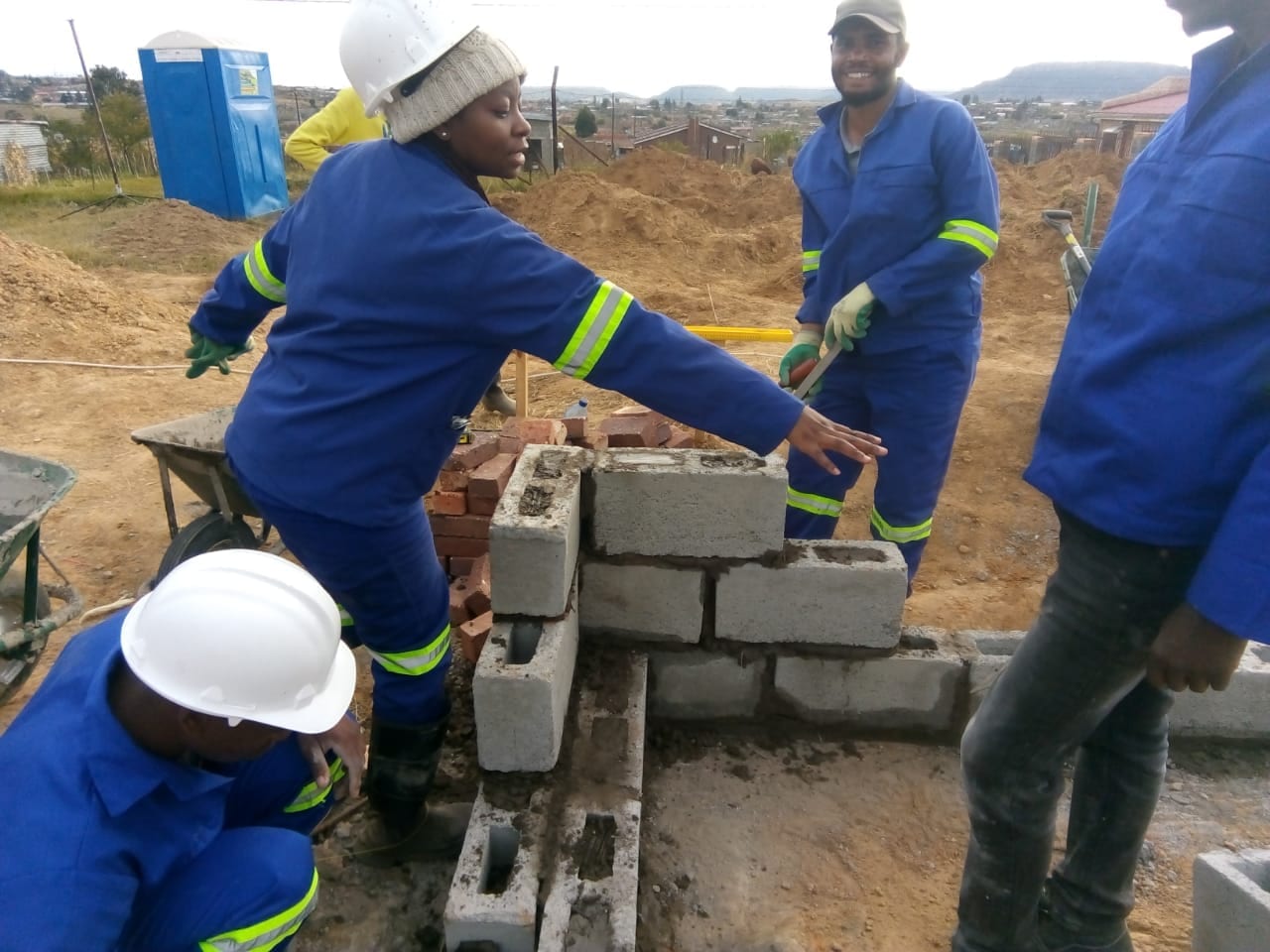
Mpokho bricklaying
In the five months that I have been part of this fellowship, I have learned that rise international’s dominant mission is to equip its fellows with the skills and lessons that help newly graduates to develop their attitude towards being self-sustaining and being job creators as opposed to job seekers. As a woman in construction, one can be tamed into thinking their career is good enough by being employed as opposed to being the employer, as the Lesotho construction industry is male dominated. I also wanted to change the normality of having more men in construction than women.
Mpokho in the wiring process
I knew about this fellowship through a Whatsapp group, which talked about construction so it obviously grabbed my immediate attention. So I applied just because I qualified for it, little did I know that there was more to the program than just construction work, there is intense business training. I am five months into the program with about 2 months left to completion. These five months felt like a whole 2 years, not because it was that difficult, but because of the knowledge and site experience I have gained. This experience has been everything and more than I could have ever imagined.
Mphokho checking levels of foundation
I mentioned that I am a woman who knows her business and am not shy to get my hands dirty. I already knew most things that had to do with construction besides bricklaying and therefore my take away in construction skills so far is bricklaying. As for the entrepreneurship aspect there is a whole lot that I have learned, that has opened my eyes, and directed my way of thinking to be organized and be an executer. These lessons include good communication skills, taking calculated risks without doubting yourself, marketing strategies, customer care and how to prepare a business plan from start to end. And I have no doubt that with these skills acquired I will definitely be the complete package that I aspire to be.
Mpokho cutting timber
Apart from being inspired to be a job creator, I have a dream to contribute to my community by founding an orphanage. The reason is that I believe in giving everyone a chance to find their purpose, and having a warm bed to sleep in, food to eat and education meets the individual half way in helping them find their true purpose. Also it breaks my heart whenever I see homeless and abused children. So I believe my true purpose in this life is to give hope and support to those in great need of it.
Here is some fascinating reading from Dr Sean Maliehe (PhD), a postdoctoral research fellow in the Human Economy Programme, Centre for Advancement of Scholarship, University of Pretoria.
Dr Maliehe works on the economic history of Lesotho and on the development of mobile money in southern Africa (Lesotho and South Africa).
He gave a fascinating lecture in Maseru on Entrepreneurship in Lesotho, only his third time presenting the subject in his native country.
Click on links below for each paper:
Potential Colonial Commerce
An obscured narrative in the political economy of colonial commerce in Lesotho 1870 – 1966
“You must be the change you want to see in the world,” Gandhi once said. As a graduate you think that you could never make a difference in the world, but you can. It all starts with your thoughts. They soon become words, which become your actions, which become your habits, which become your character, which become your destiny.
We are constantly making decisions that shape the rest of our lives. Each choice we make can forever affect our future, our impact on society, and the way others perceive us. That’s why it is so important to develop our characters. Even a simple notion can spark a lifetime ideal – positive or negative. When we help out our communities, we are influencing ourselves in a positive way that often follows us throughout our adult lives. Each tiny thought, word, action, and habit, changes your future.
I’m Lebohang Mosiuoa (Figas). The biggest decision that I have ever made was in 2012, when I had to choose whether to study Architecture or a Bachelor of Science. Since I was a little child, I had a passion for architecture, but I was good in sciences and maths in high school. While at primary and high school I spent most of my time on drawing buildings. I had to drop my environmental health science studies and join Limkokwing University of Creative Technology to follow a dream that I have had since I was a child and that dream was to study architecture. My career started in 2016, when I volunteered to join Habitat Youth Build with Habitat for Humanity Lesotho to construct a two-room house for homeless orphanage children at Mafeteng. Later that year, I was among the Limkokwing University Students who were competing to remodel and renovate Lhda Katse Lodge in which our team won.
in loco Fellowship
Learning is a never-ending journey of discovery that can only be enjoyed when it is put into practice. It should never be confined to books and rooms, but instead it should be shared with the world. I’m proud to be an in loco 2018 fellow. When I first heard about the program, I thought it was all about helping an orphanage by building a better place for them. Since it’s in my heart to help vulnerable people, I decided to leave whatever I was doing and join the in loco eight-month fellowship.
Experience at in loco
When it comes to your career, you need to put in the work and practically engage in it as you learn, because it sets the foundation for you to be a champion and the best at your craft. As someone who is practicing architecture, I never knew about participatory design before I joined in loco. In the first week of the fellowship we had a participatory design workshop, which involved the fellows, God’s Love Centre staff and the children. The important things that I learned about it is that, it forces designers to look at things from another’s point of view, it is very important to respect other people’s opinions. It helps designers gather several other facts about certain design situations they may not have been aware of. Because of in loco we now know how to approach design better.
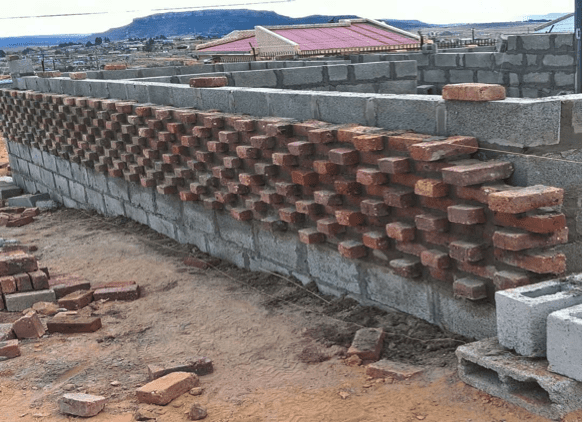
It’s a dream of everyone who practices architecture to work with international architects. Our culture and style of approaching things differ. We learn lot of things from our international architects Pedro and Luca. Because of them, we now know about participatory design, which we never knew about before they arrived. Our local style as people who are practicing architecture in Lesotho, is only to hear what the client wants and never encourage them to take part in the design process. Also they challenged us to came up with a unique brick pattern (see below) that will give the orphanage buildings their own unique shape.
Nothing beats the power of learning by doing, because it creates knowledge and skills foundation that is rooted in your interest and experience of the subject matter. At in loco we practice what we preach, gaining the skills that we never had before. In my life I never thought I would lay a brick, fix the reinforcement and mix the mortar. We do everything by ourselves, but with the help of professionals. I’m proud to say, I can now build a house on my own, because in loco gave us a chance to unveil our hidden skills that I never knew I had before.
Afrisam cement gave us training about the good use of cement, like the quality needed when mixing mortar for plastering, bricklaying and also for concrete. Also I got an opportunity to attend the paint training with Thetsane Paint Centre. I really learned a lot from that training since in my company we are also specializing with epoxy products, but we didn’t know where they are sold in our country. We as Basotho people we use paint for the sake of painting, but we didn’t know the steps to follow when painting walls, ceilings and everything that needs to be painted.
The most important thing that we learnt at in loco is the business training. Even though we are in architecture and built environment fellowship, we are also taught to be successful entrepreneurs. These happen in many ways, like being able to listen to successful business people who come to give us testimonies on how they tackle business and how they started. The important thing that I learned from all of them is that you have to have passion in what you do and also you must have skills. You really don’t need capital to start a business, but as little as you have you can start a business.
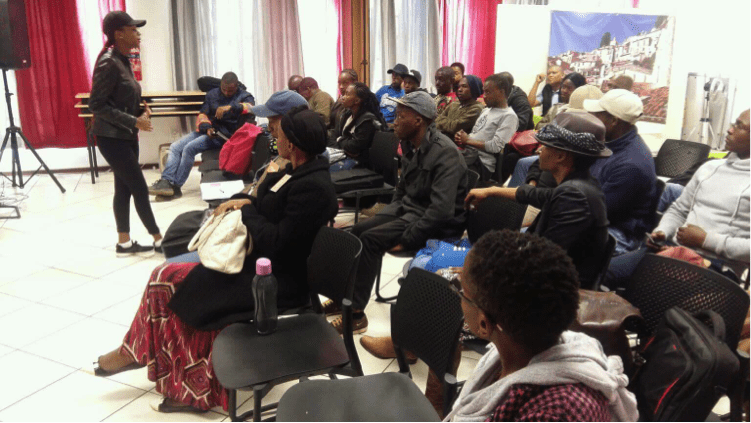
Lastly, we learn more about entrepreneurship through the lecture series that are held every month by rise, where successful entrepreneurs and architects share their experiences and business skills to the students and inspire, graduates, lectures and the public. Also the film screenings that are held every month, whereby we have interesting discussions after watching the selected video. It also forms part of our learning as we share and discuss the problems and the solutions that face our community.
In the fellowship we all have roles that I think are going to help in our future. At the moment, I’m a logistics and plant manager. I make sure the tools on site are well protected, safe and clean. For me it’s quite a challenging role because, we as people are not the same, some are irresponsible and some are not cooperative. This kind of work requires a person to keep their eyes open all the time, because some materials might disappear and you never know where to find them. We now have our first two international students from India and Malta from the faculty of Architecture and Structural Engineering, who I believe we are going to learn a lot from them.
After the fellowship
Since I’m from a country of people who believe that, constructing a house is only for people who have money. I’m going to encourage the people to use locally available materials, like building with clay bricks. Lesotho is one of the coldest countries during winter and many people especially living in the urban areas spend a lot of money to warm their house. I’m going to introduce the cheap method of keeping the building warm in winter and cool in summer that I learned from the fellowship.
May 5 was my birthday and I was turning 28. I always thought by now I would have all the money I could ever want, a house in the country with horses, a tall, dark and handsome husband and kids and I would call that success. But on my 28th this is what I have learnt. Seeing those smiles of the children who were celebrating with me was more than a smile of a husband and a few kids could ever bring. The love I received was more than any conditional love I would get from my own family because I would be theirs. But these children give without expecting me to belong to one or all of them. That my friend is the success I am willing to invest in and keep.
My name is Mammatli Molefi and I received my bachelor’s degree in social work from National University of Lesotho in 2013. I never thought I would ever be involved in designing a building or even digging foundations as we’ve been doing this month. But I have come to realize that every profession or business needs a social worker. Architects are creatives but in order for that creativity to be meaningful, measurable and impactful, there should be a link between them and the society for whom they are designing. As experts in our fields we always assume we know what is best for the people we work for but that is not always the case. We may create something beautiful, unique, and innovative but if it is not functional or doesn’t benefit the people we have created it for then that would be a terrible loss and a waste of time.
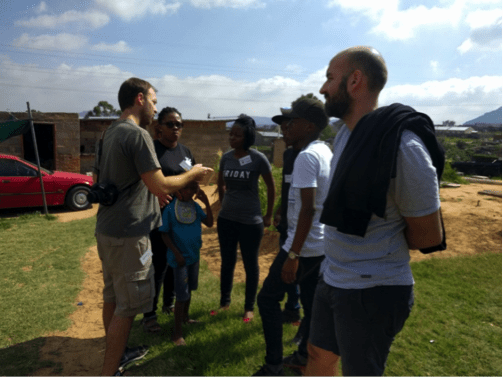
in loco isn’t a traditional kind of project. It is diverse and goal driven. The first month of this project was about getting to know our clients, their environment, their hopes and dreams and hopefully make them come true instead of imposing our own dreams on them. It was a great and touching experience especially when the smallest child in my group drew a very simple house with a small baby sleeping in front of it. It was beautiful!
The sleeping, playing and eating spaces were derived from all the information we receive. What I have realized with architecture is that, money doesn’t do the talking but the mind does all the walking, through exploring locally available materials, recycling and coming up with something less costly yet worth millions in value and impact to the people it is done for. I can’t wait for September when the project will be done and I will be proud to have brought the youth at God’s Love Centre’s dream to reality, changed lives and set the future in motion.
This month we have also been doing market research for our businesses, on the entrepreneurial side. Since we got certified as business facilitators to offer simplified business skills to women and youth with low literacy in February, we have been facilitating the business sessions with the GLC women and youth. The program doesn’t end here as we are going to continue monitoring their progress until their businesses are successful enough for them to move to the next level. We believe that starting small is a way to get to where one wants to be in wealth rather than waiting for when one is financially fit, which may never come if one doesn’t start with what they have. Which sometimes can just be “themselves” because the best capital one has is their brains.
We have also been strengthening the orphanage’s governance capacity through weekly leadership trainings. The goal of these sessions is to make sure that the facility complies with the Ministry of Social Development’s guidelines, is well structured and is able to sustain itself through fundraising. The most interesting activity was when we were building cardboard boxcars. The activity was meant to show that everybody has some bone of creativity in them and innovation they can create products that can generate them income and change their predicament.
The Lesotho Red Cross Society also sponsored us for first aid training. Seven GLC staff members and four in loco Fellows attended the training. Shout out to Mr Moeketsi Lethoko from Lesotho Red Cross for being so patient with us.
May is gone now and I believe took some of my muscles with it. No, I mean I gained some since the construction started!

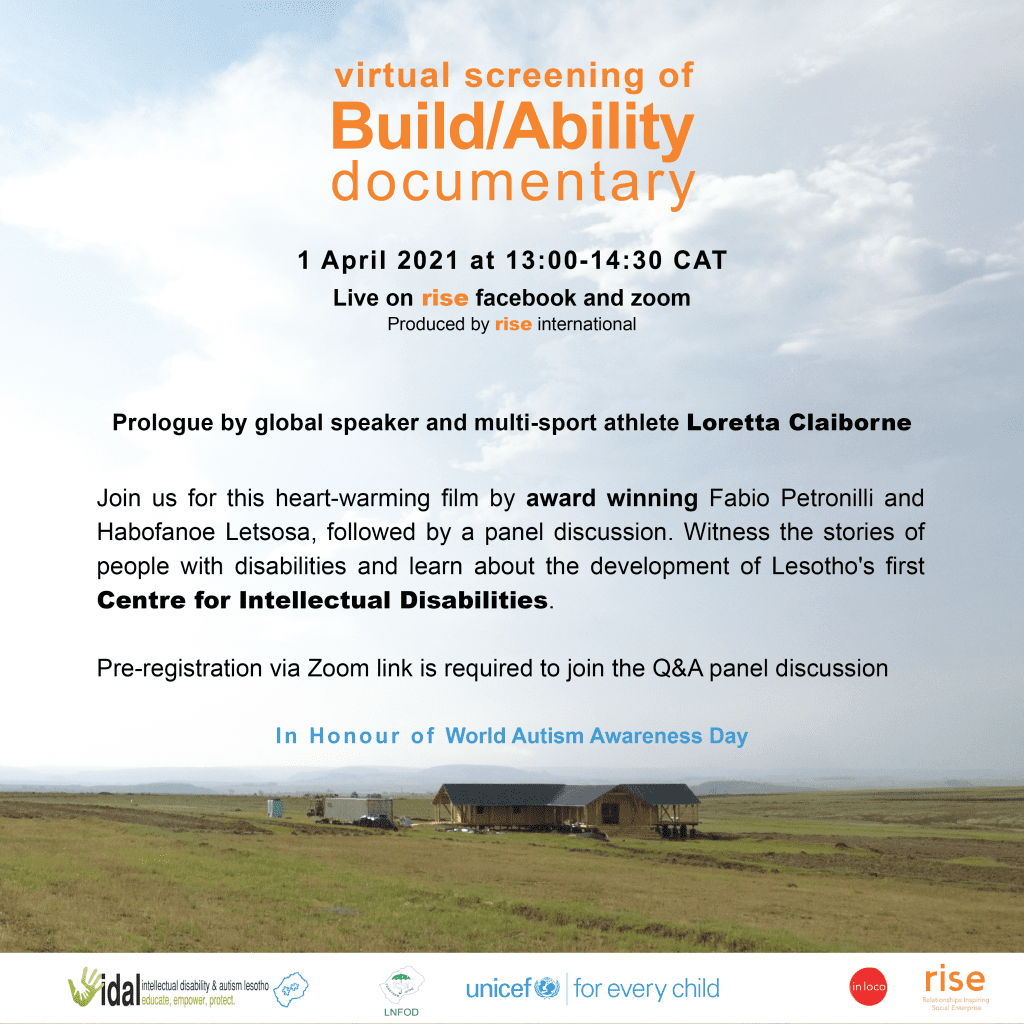
 first Centre for Intellectual Disabilities. Honoring World Autism Awareness Day 2021 with Unicef Lesotho, IDAL and LNFOD.