Case Studies

A new Orphanage for God’s Love Center

Background

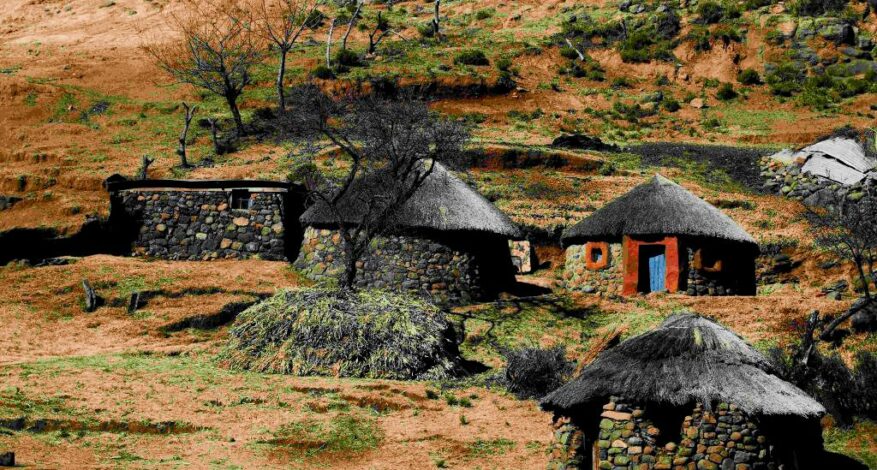
God’s Love Centre is an orphanage for vulnerable children in the peri-urban area, called ‘Sekamaneng’.It was established in 2001 by Mme Neo Motants’i, and has become a refuge for over 60 orphans and children without families. Many of the children at God’s Love Centre have been orphaned by the AIDS epidemic.  The center is located 20km outside of Maseru, the capital of Lesotho in a nearby district of Berea. 

The Problem

The orphanage was highly overcrowded. With only 2 bedrooms, it was initially built with the aim of housing about 12 or 15 children but when we discovered it, there were 45 children living there. The grounds needed immediate improvement, the number of children was also increasing rapidly, and there was no privacy between the younger children and the adolescents. There was a desperate need for a new building.

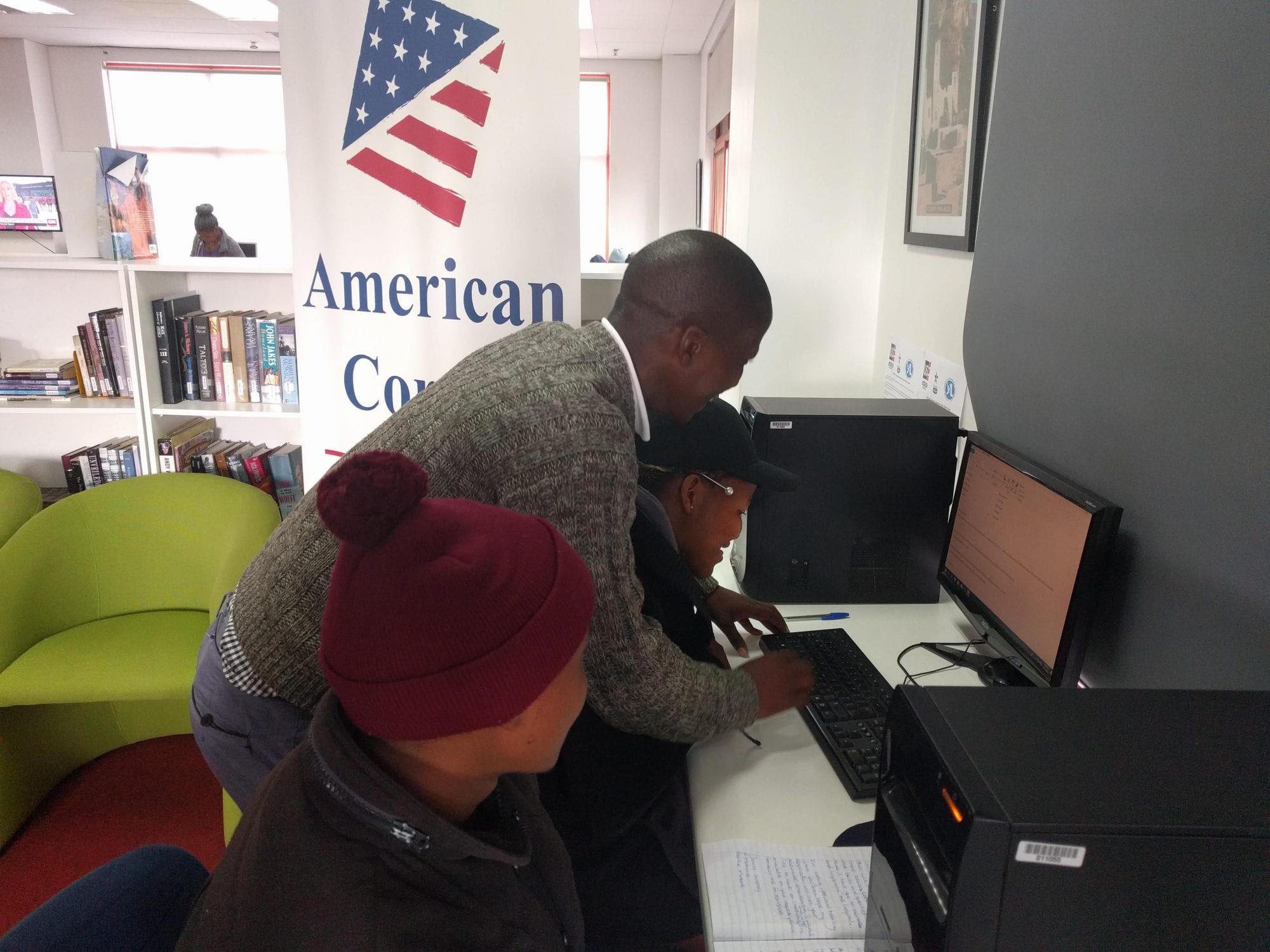
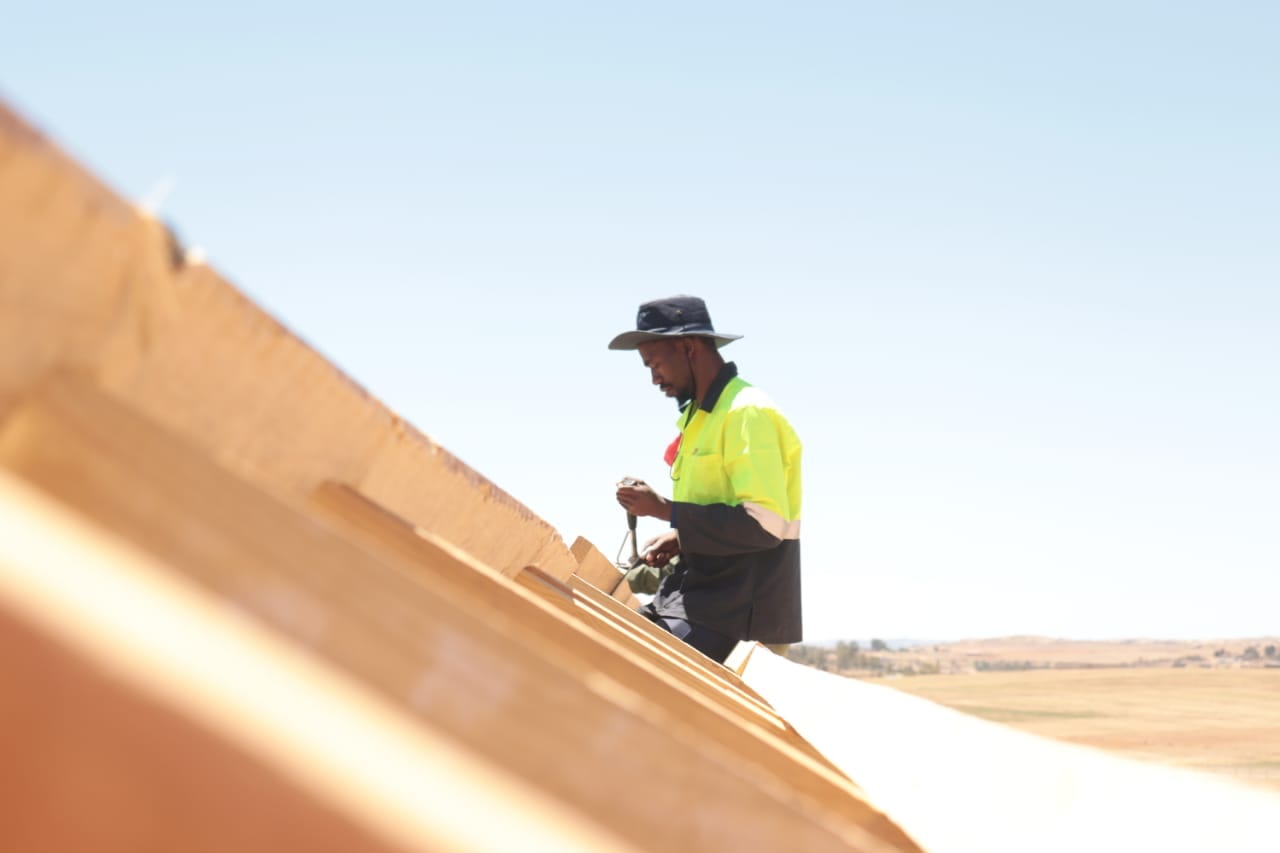
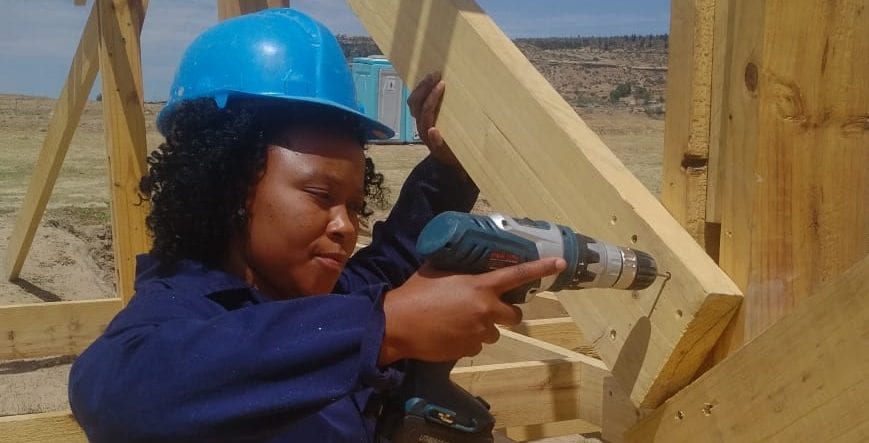
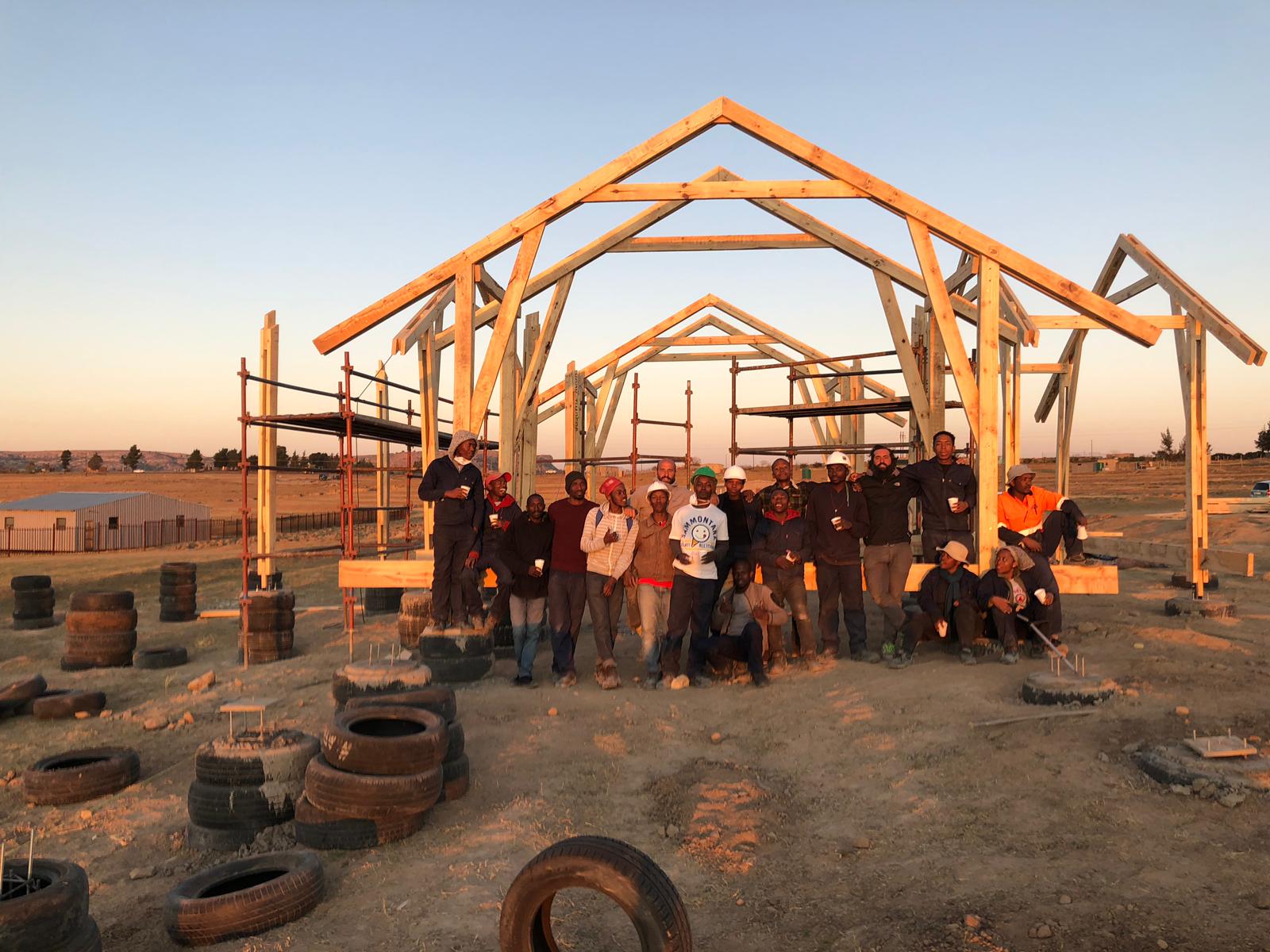
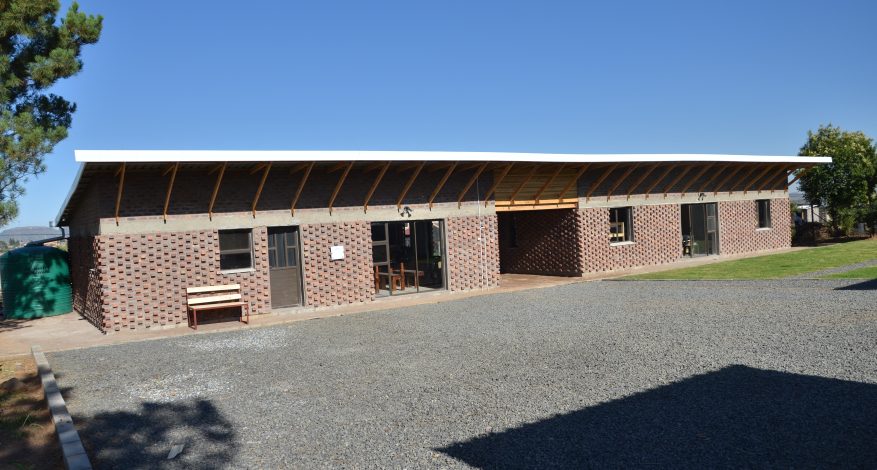
rise built a new residence for GLC solely for those above the age of 18. This building was constructed as the first in loco project in 2018, and was officially handed over in February 2019. The residential area has a tuck shop for means of income, a computer laboratory for the residents and community to learn how to be tech-savvy, and food gardens for a sustainable means of food provision. 

Methodology

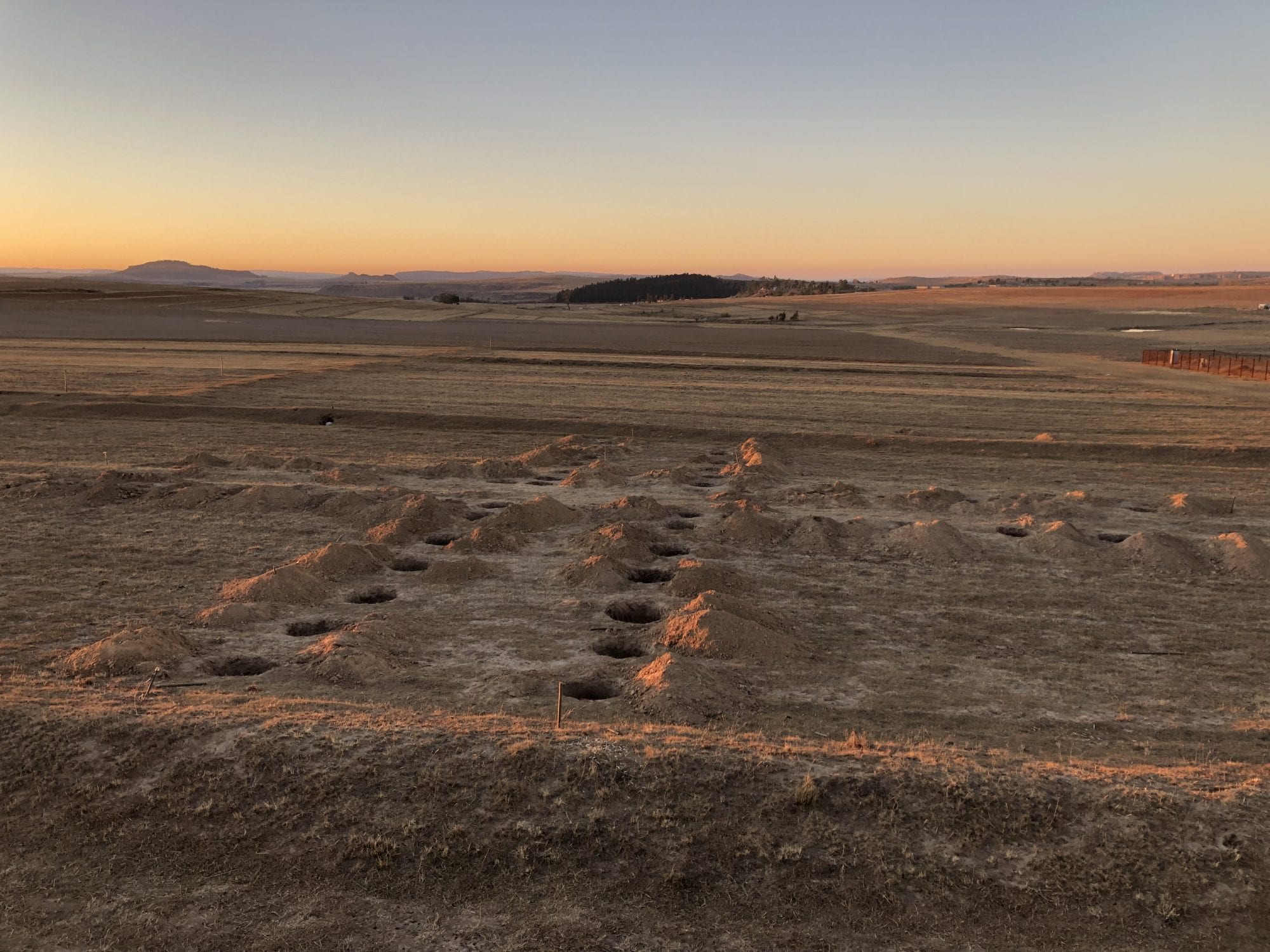
rise purchased land about 10 km from the initial GLC site and then designed and built a new building for the orphanage. This building was designed for adolescents of ages 13 to 18.  A shipping container was converted into a computer center and a tuck shop on the other end. 

The Impact

Over 20 young boys and girls were given a home every year. The community computer center was a good resource for the community to have access to the internet and computer facilities, especially in this day and age of technology. The adolescents also got capacity training for financial independence. A group of young graduates from the Design, Architecture, and Built environment fields from local universities got relevant work experience as they designed and built the extension of the orphanage. 

Testimonials

” We are so grateful to ‘M’e Daniela and rise for all of their help. Now the orphanage has dignity, the older children will now have privacy and I am hoping they get the independence they need to take on life as adults.” – Neo Motants’i, Founder of God’s Love Centre

READ MORE
News

rise’s work on Universal Design 


rise’s work on Universal Design 

We often say that we are inclusive of all communities, or that we are restructuring society to be understanding and empathic of all, especially the marginalized. But to which extent? The lack of inclusivity in urban planning does not only separate us by weaknesses and strengths, but it deprives us of some of the joys of the environment like urban spaces, access to green spaces and even essential services like public transport.

It is pivotal for professionals in the built environment to prioritize the promotion and protection of the rights of people with disabilities particularly in urban design. With the hope that a potential exists for the improvement of buildings and thus facility access for people with disabilities in Lesotho, rise embarked on a project that would shed light on the existing issue of “lack of inclusivity in the urban design of Lesotho”. According to a study by the Lesotho National Federation of Organizations of the Disabled (LNFOD), people with disabilities are constantly faced with the challenge of not having equal access to facilities like banks and hotels and to services like public transportation as the built environment does not cater for wheelchair access and other limited mobility needs. 

The aims of this project were to facilitate an interface which promotes that everyone gains equal access to services and facilities; to educate the general community on the need for inclusivity in urban design; to increase awareness within the built environment sector on the need for inclusivity in design and construction and to engage policy makers in the discussion on inclusivity in the urban planning of Lesotho. Empathy is key here, the feeling of belonging rather than feeling excluded. Inclusivity of design is achievable. The goal of inclusive design is to offer the same access for all users, whether with special needs, disabilities or neither of these.

……Empathy is key here


What rise has achieved on universal design so far…  


A panel discussion with policy makers 

Made possible by the British High Commission

rise hosted a photo exhibit and panel discussion on inclusive design where policy makers engaged in a discussion around the need for reforms on Building Codes for inclusive design in both private and public sectors. A voting poll was set up for the general public to vote on the matters that mean the most to them regarding the infrastructure and accessibility of Maseru city. 

Key stakeholders working in the built environment made pledges on how they are going to commit to improving the existing situation of lack of inclusivity in the urban planning of Lesotho. WATCH VIDEO OF PANEL DISCUSSION

A webinar to create awareness on Inclusive design in Lesotho & internationally

WATCH VIDEO OF WEBINAR

After the panel discussion rise hosted a webinar on Inclusive design in Lesotho and internationally where professionals engaged, educated and spoke on the need for universal design globally and locally.

Radio shows to create awareness on the need for universal design


rise hosted 4 radio shows in partnership with SkyAlpha, aimed at increasing awareness of the need for inclusivity in the urban planning of Lesotho.

An inclusive building for people living with disabilities


Through in locorise built an all inclusive design building for the Lesotho National Federation of Organizations of the Disabled, allowing them to finally employ people with physical disabilities.


A panel discussion with key stakeholders for action planning


Universal Design for Maseru City Roundtable was hosted on March 2nd 2022 by the Ministry of Local Government and Chieftainship, facilitated by rise and funded by the British High Commission in Lesotho with a focal thematic area around Universal Design including :

1. Regulatory & Legislative Building Codes for Inclusive Design 

2. Design & Planning Practices 

3. Action planning and Next Steps needed 

Our work on Universal Design does not end here, watch out for more on our social media platforms, engage with us on this topic and lend your hand wherever you can because if you want to go fast you go alone. But if you want to go far you go together. Let’s go together!


READ MORE
News

rise answers the SDGs call

Lesotho’s Sustainable Development Goals (SDG) index rank is at 135 out of 165, with little progress made in SDGs 1 (No Poverty) and 2 (Zero Hunger) as they relate to the ultimate goal of Lesotho’s National Strategic Development Plan (NSDP) II; “to create private sector-led jobs and eradicate extreme poverty,” according to the Lesotho National Voluntary Review of 2019. The goal of the NSDP is to transform Lesotho from a consumer-based to a producer-based economy. This goal links greatly to part of rise’s goal of transforming Basotho youth from job-seekers to job-creators.

rise International is a non-profit social enterprise organization that is registered in Lesotho and the USA and has been spearheading projects that bring about change and innovation to the built environment since 2016. This is being achieved through the in loco fellowship program where graduates in architecture, design and construction are recruited and provided with business training skills and connected with mentors, clients, and possible funding sources, while at the same time taken through an intense 10-month hands-on learning by doing process in building infrastructures that are much needed for vulnerable community development.

Goal 1: Creating resilience against poverty

rise plays a huge role in the realization of the SDGs, such as creating resilience against poverty. On average, since inception the in loco alumni’s monthly income has increased by 44%. 19% of Fellows in the program got full-time employment, while 74% started their own businesses in order to sustain their livelihoods and to create employment for others. On average, 1 Pioneer employs 5 other people in the construction industry.

Goal 4: Quality education and the Learning by Doing methodology

The Learning by Doing methodology, which rise has been using since the organization’s inception, has allowed the fellows to interact with their environment in order to adapt and learn. The methodology gives hands-on experience by allowing the fellows to get immediate feedback by learning from their mistakes, thereby shortening the learning span. 

Goal 5 and Goal 8: Relationships inspiring social, economic and gender equality

The organization recruits fellows from all socio-economic and educational backgrounds and from different trades, treating all equally, and providing a space for all to develop and understand the importance of an integrated education and construction system. rise addresses the problem of gender discrimination in the built environment by promoting inclusive decision making, with both genders equally represented in both labor and planning, and rotating the leadership roles of fellows in the in loco fellowship program.

Goal 6: Water and sanitation in the fight against Covid-19

Portable running water is a vital resource now more than ever in the midst of the global pandemic and in the bid to address the Covid-19 situation in Lesotho, rise has built more than 150 mobile hand wash stations for hospitals, health centers, busy taxi areas, schools and vulnerable communities in Lesotho. This brief documentary shows how this has helped address the pandemic while also creating jobs in the country.

Goal 7: Affordable and Clean energy as health-saving technology

The number of people who die every year from cooking smoke inhalation is currently at 4 million, so rise partnered with African Clean Energy (ACE), a company that produces environmentally friendly stoves that burn materials much more efficiently with a lot less smoke, to design and construct mobile shops for the distribution of the stoves to remote villages in Lesotho.

Goal 9: Innovation and Infrastructure for eradication of unemployment

rise promotes innovative and creative designs in every infrastructure it builds to promote sustainability and resilience by incorporating recycled materials into the projects. rise also equips graduates in the built environment with entrepreneurship skills as a measure of eradicating unemployment and contributing to the economic development of the country. Twenty businesses have been created thus far by the rise in loco fellowship alumni in the 3 years since its inception, who in turn continue to hire other youth in their businesses. rise collaborates with the public to jointly implement community-driven development through Participatory Design Workshops. These workshops are carried out in order to share the importance of inclusive design with the partner organizations, stakeholders and community members.

The Learning by Doing methodology, which rise has been using since the organization’s inception, has allowed the fellows to interact with their environment in order to adapt and learn. The methodology gives hands-on experience by allowing the fellows to get immediate feedback by learning from their mistakes, thereby shortening the learning span. 

In light of the most recent accessible data and patterns, practically all nations will find it hard to reach the SDG goals by 2030. The need has never been more urgent for developing countries to ensure effective programs are put in place to meet the SDGs so that no one is left behind. 

The world needs more consistent implementation from leadership, long-term economical practices, strong institutions, education, innovation, partnerships, and services that are sustainable for development.

READ MORE
in loco program

Do your best and the rest will follow

My name is ‘Mathebe Rampielo, AKA “Pepper”, “Thibi turner” or “Pepper at de ground”. I am a young charismatic and kind hearted Mosotho girl at the age of 24. I am a graduate from Lerotholi Polytechnic tertiary institution and I have an academic qualification in Carpentry and Joinery. I am currently a fellow in rise international’s in loco program. I learnt of this program on social media, but was lucky enough to learn more about rise as an organization through its collaboration with Kick4Life in developing the infrastructure of Kick4Life’s Campus, as I am a member of Kick4Life’s female football club.

‘Mathebe in her football uniform

I am a very hands-on, “do it yourself”, “if you can do it, I can do it better” kind of girl. This is why I am known for my bold choices, one prominent one being to study a very male dominated practice; carpentry and joinery, and also being a football player. Pursuing such male dominated fields, I believe I am a boundary breaker. On the contrary, I am daddy’s little girl and I think I had a lot of positive influence from my father. He is an excellent and very experienced carpenter, a construction worker and fanatic when it comes to football. I bet that by now you can attest to the fact that I am my father’s daughter right? So, I applied for the in loco fellowship 2020 because I wanted to improve my portfolio as a professional carpenter because I knew I would acquire business training skills and that would therefore broaden my mindset as an entrepreneur.

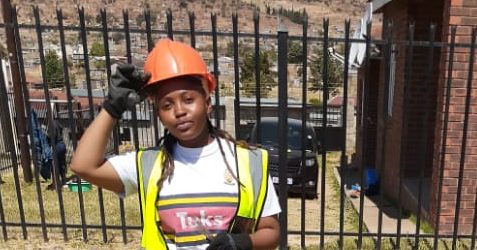
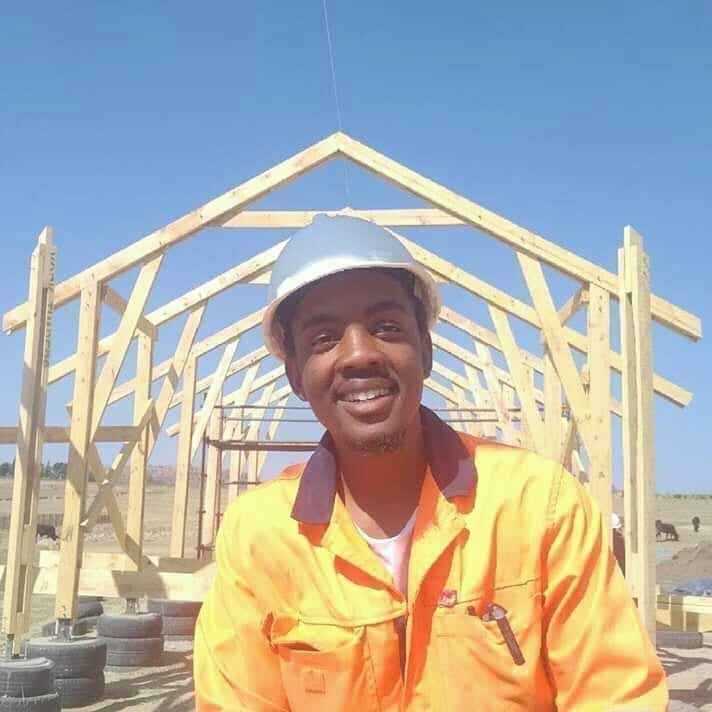
‘Mathebe placing purlins

I am an entrepreneur at heart; I tried out so many business ventures from when I was a kid, something rare for a young girl living in Lesotho. However, I lacked a lot of business and entrepreneurial skills, from planning to budgeting, documenting, market research, all the way to efficient customer service. It is so exciting that I have gained all these skills since I joined the fellowship.  My approach to my business really improved due to the intense training I receive from the fellowship.

‘Mathebe assembling trusses

One of my favorite things about being in the fellowship is that I am an active participant in the designing, managing of a project and the actual construction of a building. We are building the head quarter offices of the Lesotho National Federation of Organizations for the Disabled (LNFOD) in Naledi, Maseru. The building is due for completion at the end of March 2021. For the duration of this project I have taken the roles of being a plant and logistics manager, health and safety officer and finally a site manager which were all satisfying and challenging in their own different ways.

‘Mathebe brick laying

But my key takeaways from this project, which I did not know or have before, are the art of accurate bricklaying, plastering and compiling the Bill of Quantities. In addition to this I have learned the standards of building and standard names of construction techniques and practices that were never in my vocabulary. In a nutshell, being part of both the design and the practical part of construction has solidified the construction theory that I learnt in varsity. My aspiration is to have my own construction company that hires mostly females. My main aim is to empower women in the construction industry. And my experience with rise international has helped me get exposure and experience diversity in the working environment; working in different professions, allowing a peer-to-peer learning experience that one can only get in a fellowship. My motto is “do not hold back, be your best and the rest will follow”, and I live by it every day of my life.

READ MORE
in loco program

Learning to love the process

I remember my eleven-year-old self coming across a drawing which I later learned was a floor plan. I began to wonder how a simple drawing like the one I had seen became a house. I was quiet curious and really loved to read a lot as a child. I then learned that for every structure to be constructed it had to be drawn first. However, a bigger question remained; how is construction carried out?  I guess that’s why I ended up pursuing a Diploma in Civil Engineering.

I am Ikhetheleng Moshoeshoe, a 24-year old woman born and raised in the Mountain Kingdom of Lesotho. I am a fellow with rise international’s in loco fellowship 2020 cohort. I have big hopes to make real changes in my community and the economy through entrepreneurship. As a fresh graduate from school with little on site experience, this fellowship seemed like a great opportunity to enhance my skills and to become more employable. So when I joined the rise family, I was looking to gain practical experience, not knowing there would be so much more to gain. 

Ikhetheleng brick laying

This fellowship has provided me with valuable skills which I can use to start my own enterprise in future. It also supports the fellows through resource and professional networking which is great for building a business entity. I read somewhere that in a man’s world, a woman has to use both her brains and beauty. The past 6 months that I have spent here has taught me to change the narrative to “use her brains and gets her hands dirty”. Through labor intensive work and working with different people from numerous disciplines of the construction industry, I have learned and still continue to learn the key activities involved in construction. Some of these include project preparation, bricklaying, carpentry, roofing, electrical and plumbing works. I also got to experience the challenges involved in construction first hand which according to me is one of the best ways to ever master anything.

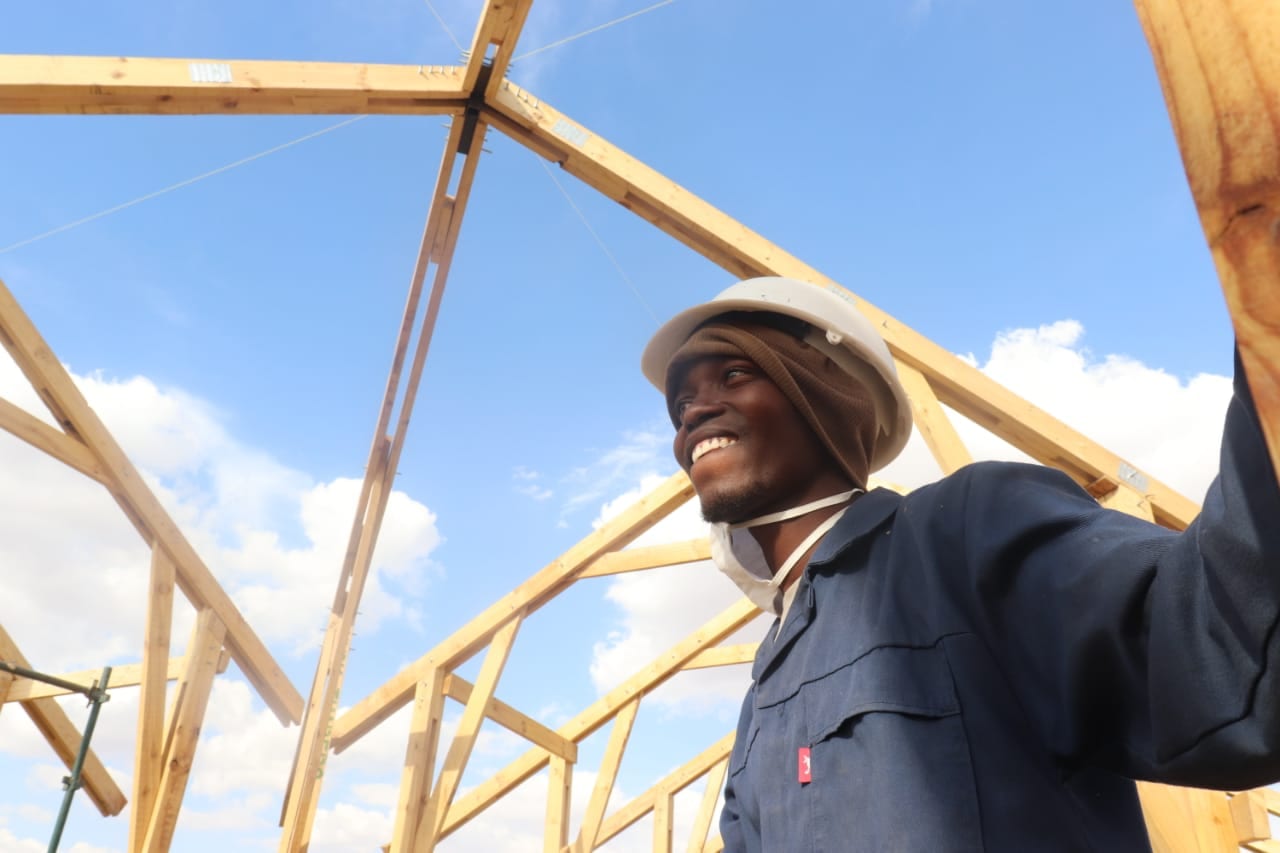
Ikhetheleng constructing a roof truss structure

During the design stage of the project, I was part of the research team. This was where we went out to do research on different types of material and their availability while building a relationship with the suppliers. As a shy person, this task helped me work on my communication skills and it was a definite boost to my confidence. I have also been involved in purchasing materials playing the role of a buyer. This was a very challenging role since I also had to negotiate prices from our suppliers to ensure that we stick to the budget as per the Bill of Quantities. Since we work as a group, this fellowship has been a platform where I get to show my teamwork skills while also learning from other fellows.

Ikhetheleng preparing concrete

Even though more women are progressively and proudly making their mark, the built environment is still a male dominated industry. My dream is to change that and through the entrepreneurship training that I get from rise, I am at a very big advantage. These sessions have changed my mindset from working towards being more employable to wanting to be an employer.  I am confident that I have acquired enough tools to help me start my business. In addition, the in loco fellowship provides a mentorship program which propels me into professional networks and spaces, by learning from and interacting with my esteemed mentor.

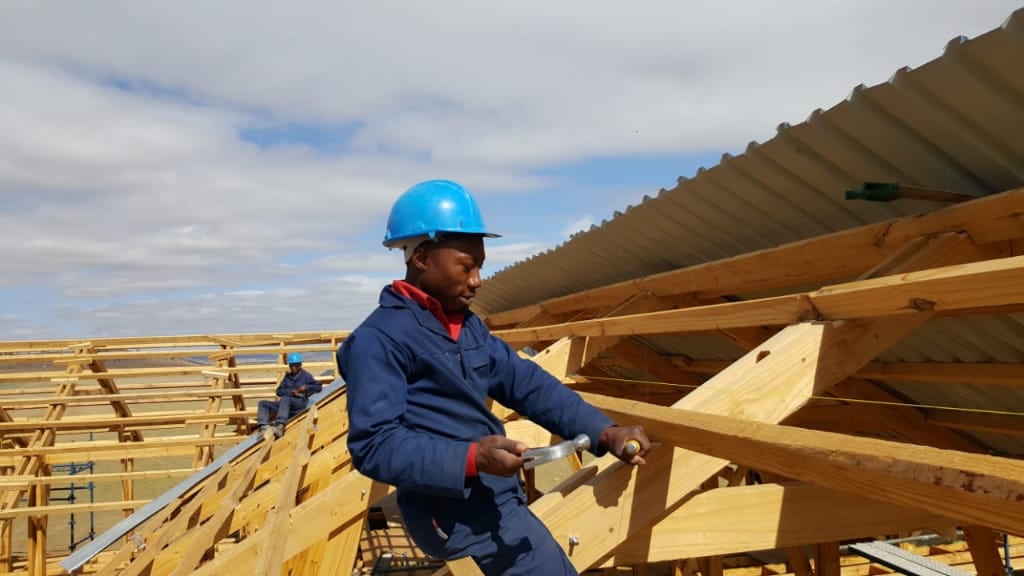
Ikhetheleng placing roof sheets

One of the most inspiring aspects of rise as an organization is giving back to the community. We are currently constructing offices for LNFOD; the first of its kind in the country. This building will be user friendly to all people living with disability. With a cavity wall to ensure improved thermal efficiency throughout the building so as to reduce heating and air conditioning costs and a beautiful screen wall. Our main aim is to reduce costs and challenge construction methods while abiding by the SABS housing and environmental standards and not compromising lives and the durability of the building. This really requires an open mind. We also get to work with amazing architects from in and out of Lesotho. I am very grateful for this opportunity and excited to learn more in the remaining month.

READ MORE
in loco program

Experience taught me well

I am Mpokho Kherehloa, a proud member of the in loco fellowship cohort of 2020 with rise international. I am a 24 year old Mosotho woman and my life is based on challenging the status quo in the Lesotho construction industry. I hold a diploma in Construction Management from Lerotholi Polytechnic. Not only do I have managerial skills in construction but I can also get my hands dirty in the field. I love doing labor intensive work and I always considered myself the definition of what we call “the complete package”. I can easily manoeuvre in the construction industry as an employable candidate. However, I was missing an integral aspect which I personally never thought was as important as my technical skills and this was having an entrepreneurial mindset.

Mpokho bricklaying

In the five months that I have been part of this fellowship, I have learned that rise international’s dominant mission is to equip its fellows with the skills and lessons that help newly graduates to develop their attitude towards being self-sustaining and being job creators as opposed to job seekers. As a woman in  construction, one can be tamed into thinking their career is good enough by being employed as opposed to being  the employer, as the Lesotho construction industry is male dominated. I also wanted to change the normality of having more men in construction than women.

Mpokho in the wiring process

I knew about this fellowship through a Whatsapp group, which talked about construction so it obviously grabbed my immediate attention.  So I applied just because I qualified for it, little did I know that there was more to the program than just construction work, there is intense business training. I am five months into the program with about 2 months left to completion. These five months felt like a whole 2 years, not because it was that difficult, but because of the knowledge and site experience I have gained. This experience has been everything and more than I could have ever imagined.

Mphokho checking levels of foundation

I  mentioned that I am a woman who knows her business and am not shy to get my hands dirty.  I  already knew most things that had to do with construction besides bricklaying and therefore my take away in construction skills so far is bricklaying. As for the entrepreneurship aspect there is a whole lot that I have learned, that has opened my eyes, and directed my way of thinking to be organized and be an executer. These lessons include good communication skills, taking calculated risks without doubting yourself, marketing strategies, customer care and how to prepare a business plan from start to end. And I have no doubt that with these skills acquired I will definitely be the complete package that I aspire to be.

Mpokho cutting timber

Apart from being inspired to be a job creator, I have a dream to contribute to my community by founding an orphanage. The reason is that I believe in giving everyone a chance to find their purpose, and having a warm bed to sleep in, food to eat and education meets the individual half way in helping them find their true purpose. Also it breaks my heart whenever I see homeless and abused children. So I believe my true purpose in this life is to give hope and support to those in great need of it.

READ MORE
in loco program

in loco fellows blog series 2020 #6: Great things never come from our comfort zone

My name is Ramarou Tsoho, a 30 year old Mosotho man. I was born and raised in the highlands of Lesotho “Raleqheka”. I am privileged to be part of the 2020 cohort of the in loco fellowship at rise international. I hold a Diploma in Civil Engineering from Lerotholi Polytechnic. I have chosen this programme because I believe engineers are among the fortunate since they build their own monuments with public consent, public approval and often public funds, most importantly they bring construction ideas and dreams in to reality.

Relationship Inspiring Social Enterprise (rise) offers a great opportunity for new graduates from the built environment, to have experience through learning by doing in the in loco fellowship programme. Most importantly it raises young Basotho entrepreneurs who then become job creators.  This programme gives clear insight into what the work environment is like; we learn time management, prioritizing, we feel real pressure to ensure completion of tasks and gain an array of skills that sharpen us to be field ready. I am a personal believer in the power of being humble and teachable because the world is way bigger than our view of it. There is always  room for a new idea, a new step and a new beginning, so it is wise to open yourself up to learning.

I started the fellowship in July 2020, with absolutely no experience in the construction of buildings and in running a business as a whole. However, being assigned to be part of the research team taught me a lot in gathering information on all aspects that are needed in obtaining the success of a project. It was in this team that we were searching and sourcing the materials that the design team wanted the proposed building to have. This helps in finance control and time management because by the time the project commenced, we knew where to get materials needed. I was then assigned to be part of the events and digital media team of our cohort. This is where I learnt extensively that punctuality, reliability and consistency are the keys to life. Know the time and frequency to post on the various social media platforms and maintain it so that people can easily follow you. Remember it is through social media where people get to know you better in all things you do.

At this juncture I am now in the quality control, plant and logistics team where we intelligently control the interlinking of material flow and production process. In addition to that, we are also maintaining standards in manufactured products

For this 2020 cohort, we are constructing the offices for Lesotho National Federation for Disabled (LNFOD). This will be one of the most outstanding buildings I’ve ever known here in Lesotho. It has a cavity wall which is not usually included in the buildings in our country. Cavity walls make it possible for the temperature in rooms to be inversely proportional to the temperature that surrounds the building. This building is also inclusive; it is structured such that it accommodates both disabled and able people to utilize it with ease. For instance there is a ramp made for people who use wheelchairs and electric plugs are installed at lower positions of the building than usual which will allow excess for people on wheelchairs.

Through rise I saw a light at the end of the tunnel; because of the in loco fellowship I will be a job creator one day. Your world can be an entirely different place than the world you lived in just moments ago, once your attitudes towards it changes. I almost gave up on my career but rise rescued me by giving me hope. I am gaining the much needed experience to be field ready, I now believe that I indeed have a bright future ahead of me.

READ MORE
News

Young entrepreneurs rise to the Covid-19 challenge in Lesotho

Since the beginning of this year, countries around the world have been facing unbearable health and social emergencies due to the global Covid-19 pandemic. In the most vulnerable countries, millions of people do not have access to critical life-saving supplies and basic primary health facilities for hand sanitation. The Water and Sanitation policy of 2007 states that “all Basotho are entitled to have access to a sustainable supply of potable water and to the provision of basic sanitation services at an affordable cost.”

Standing by the policy rise was commissioned by the United Nations Development Programme to make 65 hand wash stations for the Ministry of Health and Maseru City Council to combat the COVID-19 pandemic in Lesotho.  The United Nations Development Programme (UNDP) had learnt about the excellent work that had been done by our in loco alumni in making and distributing hand-wash stations earlier in the year when an NGO called Sepheo had commissioned rise to make and install 10 emergency hand-wash stations in the Motimposo communities in Maseru, Lesotho.

Ten in loco alumni who started their own company called xyz collaborative constructed and distributed 65 hand wash stations. Fifteen for Maseru City Council for both taxi and bus stop areas and 50 for the Ministry of Health which would be installed in clinics and hospitals all over the country.

in loco alumni who have formed a company called xyz collaborative making the hand-wash structures

This project was completed in just 5 months and the UNDP hosted a hand over ceremony in Maseru, Lesotho to recognise and appreciate the work of rise, and to introduce the use of these hand wash stations to the community.

UNDP and rise team at handover ceremony

Subsequently, UNICEF Lesotho commissioned rise to build another 40 hand wash stations for health clinics and facilities in all 10 districts of Lesotho to some of the most remote and hard to reach areas of the Mountain Kingdom.

READ MORE
in loco program

in loco fellows 2020 blog series #5: When times get tough I get tougher

My name is Poloko Phalinyane. I am a twenty seven year old Mosotho man born in Rothe, in the outskirts of Maseru. I studied Electrical Installation at the renowned institution of Lerotholi Polytechnic. I enrolled in 2015 and completed in 2018. I am part of the in loco fellowship of 2020 with rise international. What sets me apart from a crowd is my work ethic and desire to produce excellence in everything I do. I am a patient person and I act promptly in every task; giving it all of my time and attention. I am a person filled with laughter and always willing to offer a helping hand.

The most important of all reasons why I applied for the in loco fellowship is the entrepreneurship aspect of it all. I was curious about the business trainings provided in the fellowship – on how they can improve and add value to the informal business I was already running. Although at the time I already had much experience in the built environment through offering services in electrical installation and installing building finishes, I knew that I could learn more. That is what is currently happening in my time at the fellowship.

At this point in the fellowship, 4 months in, I have acquired a lot of skills and lessons that I didn’t have before. In line with the entrepreneurial training, I have learned how to keep documentation of all transactions, budgeting skills, how to improve my negotiation skills, how to position my brand, and how to advertise my business. In construction I have learned about the inception of construction cycles, what tenders are and what they deal with, the preparation of the Bill of quantities, preparation of electrical drawings, technical skills in building foundations, surface bed and a cavity wall.

As a Mosotho man I want to be an example to the community I come from. I want to be an attestation that hard work, discipline and laughter are ingredients of success. I want to build my skills not just to work for an existing company but to run my own enterprise one day. An enterprise built from scratch by a Mosotho man. One that can be successful and uplift the Basotho youth by providing jobs and convenience for communities in the outskirts of Maseru. Owning an electrical store that is situated in the north of Lesotho is the one dream I really want to come true. I want to transition from old ways of making my services available to customers and incorporate digital platforms to keep up with the times because digital media has taken over the world.

Growing up I never had a specific aspiration but I always knew that in everything I choose to do, I shall always give it my all. Lesotho has a high unemployment rate and opportunities are very scarce so it’s no surprise that I want to be a successful entrepreneur, it is one of the major motivations to make money and secure a comfortable future. There is a saying that says the early bird catches the fattest worm and every day when I wake up I work towards catching the fattest worm.

READ MORE
News

Happy National Mentoring Day!

The landscape of business today is constantly changing and increasing in complexity. Innovation is critical to success, and a combination of skills is the key. Having a mentor to help manoeuvre through the business landscape; someone who has more experience, who guides a less experienced person by building trust and modelling and inspiring positive behaviours. A mentor essentially helps their mentee be accountable for their vision, their goals and plans. An exceptional mentor can help a fledgling entrepreneur think through effective strategies, crunch numbers and create realistic business plans. However, mentorship is not only beneficial to the mentee but also to the mentor. The time spent pushing another person towards being the best possible version of themselves develops one’s leadership and management skills.

The need for mentorship in Lesotho

Lesotho is a low- income, land locked country in Africa where the rate of poverty stands at almost 50%. This calls for an urgent need for the youth to venture into entrepreneurship in order to survive. Yet most start-ups in Lesotho fail due to lack of access to business support services. There are no formal leadership development programs and there is an existing generational gap between experienced and less experienced people in workforces. Therefore, there is a need to ensure that professionals are equipped and future- ready. Krynauw Nel, an architect in South Africa, who virtually mentors a young entrepreneur in Lesotho, when asked about the potential impact of mentorship on Lesotho’s economy stated “the biggest issue for a small enclave like Lesotho is exposure to wider practices. We forget that not everyone has access to the same exposure we have even in South Africa if not to the world at large.  Widening the horizons for locals and increasing their networks can make a massive impact. I find a total hunger for that. When that exposure is supported by a compassionate mentor, it can make a huge difference to at least one individual.” Tshepang Thabane, Krynauw’s mentee and graduate from in loco 2018 cohort  also stated that “Lesotho needs to invest heavily in mentorship programs and platforms in order to tackle the high unemployment rate as they help turn lofty goals into tangible goals.”

In this day and age where the 4th industrial revolution has almost taken over, mentorship programs have proven to be game changers and what’s more, they can be done remotely. This is all the more important as we navigate through a global pandemic. 

rise mentorship program

In 2018, we launched a ground breaking fellowship program, a practical ‘learning by doing’ live design, build and entrepreneurship training program called in loco. The fellows receive business and entrepreneurial training as well as an introduction to professional networks, access to market and employment opportunities. in loco fellows practice the principles of entrepreneurship and social impact while receiving hands-on training in community designed infrastructure projects. At the end of each cohort the fellows are given the opportunity to select a mentor from everyone they would have interacted with during the fellowship, we then facilitate a mentor-mentee relationship benefiting both parties.

Celebrate National Mentoring Day with us

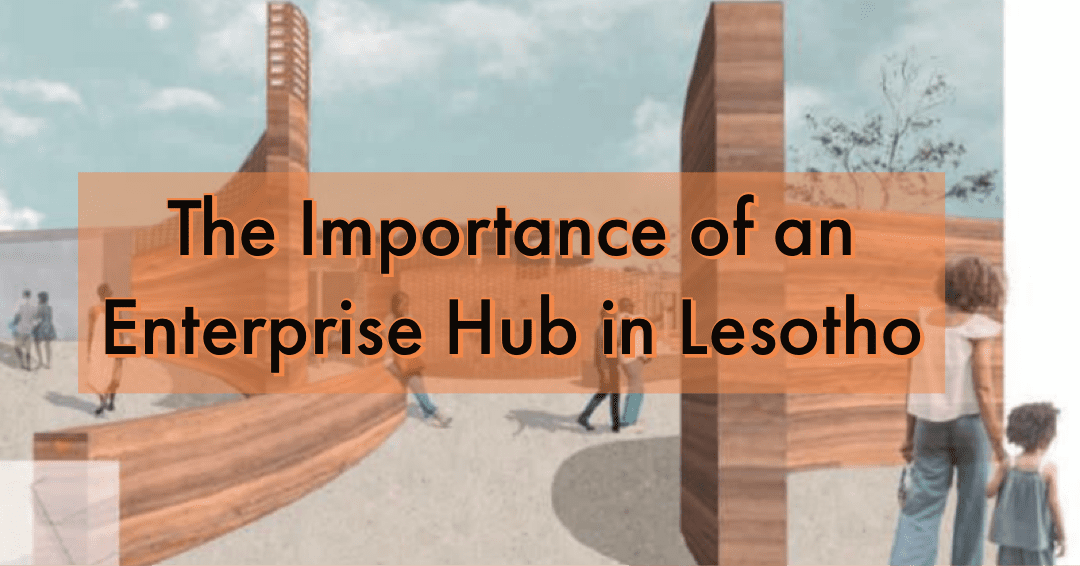
We are working on designing and building Lesotho’s first Enterprise Hub for start- ups in the country’s capital of Maseru as part of our rise in the city 2020 campaign. This Hub is a key component to building Lesotho’s entrepreneurship ecosystem to fight against poverty in the country. The wheels of our campaign are the creation and facilitation of a mentorship program that will award start-up architects in Lesotho the platform to be mentored by successful international architects who continue to sign up to our campaign. Watch this brief 2 minute video that explains how it works and help spread the word!

READ MORE
2020

in loco fellows 2020 blog series #4: The stone the builder refused

My name is Paki T’sotleho, I am a 29 year old man with a heart of a kid, a mind of an old soul and the body of a giant. I am part of the 2020 cohort of the in loco fellowship and a contributor to the vision set by rise international. I hold a Bsc in Construction studies in the built environment from the University of the Witwatersrand. This program focuses on all aspects of construction; from Construction Management and Technology, Quantity Surveying, Property studies, Construction law, Building design, Building science and Construction Economics. The importance of this programme is to broaden one’s take on the construction industry so that going further with either a professional career or a contractor/ entrepreneur route you understand your role and how you fit in and keep up with the ever growing and changing construction industry.

Paki working on site

I strongly believe that ignorance, coupled with the “know it all” attitude is the root of the downfall of our Basotho People and hinders growth for Lesotho. In return this attitude leaves us, the youth, with a frustrated and discouraged outlook for Lesotho. With that said, the reason I applied for the in loco fellowship programme was that for the first time I came across a programme that seemed eager to give the young Mosotho child a vision, a platform to voice their creativity, challenge and grow their acquired skills from the built environment and at the same time teach them how to be independent and to self-sustain themselves when they go out into the field.

At this stage of the fellowship programme (3 months in), I have learnt how to breakdown Bills of Quantities into a material list. They can be used as a point of reference to see if your project is in line with the budget and indicate expenses that were not accounted for in the Bills of Quantities. I have also learnt the most tricky aspect of construction which is the Preliminaries in a practical sense, that has to do with site preparation, site establishment requirements, administrations and organisational requirements for the personnel on site. On top of the construction aspect of the programme there is also the entrepreneurship aspect. In this part of the programme  I continue to learn about how to position your brand, how to locate and expand your market, how to execute social media marketing, the importance of customer service, and a whole lot more that helps you tick all the boxes necessary to successfully start and operate your business.

Since the fellowship started in July 2020 I have been performing the role of a buyer as well as a laborer on site. As a buyer, I am responsible for making sure all the tools and materials needed on site are sourced in accordance with the construction schedule; when they are needed and at the best value for the client. I assure you this is no walk in the park. Finding the balance of being within budget but trying your best to get the best quality material and services possible is very challenging. This role requires a lot of planning and preparation skills but it is mostly exciting if you have worked as a consultant Quantity Surveyor like I have.

Paki operating cement mixer

Being able to see equipment and material, to interact with suppliers, all of which makes me feel hands on. It also solidifies my confidence in my profession as a Quantity Surveyor – this profession in Lesotho is easily brushed off and given little to no recognition. As for being a laborer, this is the most rewarding experience ever – I get to see that I am capable of creating something from nothing with my own hands and personally, I have always wanted to be the kind of man who is handy. So this experience is giving me the skills I need to be this man and tuning my mind to be oriented in problem solving in every task I face.

I am currently working in a project where we are constructing an inclusive building for LNFOD (Lesotho National Federation of the Disabled).  The in loco programme encourages fellows to advocate for inclusive buildings in every project that we take on for the benefit of people with disabilities. Secondly, this project challenges us as the future Lesotho construction industry; to come up with the technology to allow for all physical work to be done by everyone, no matter their gender.

Paki preparing foundations

In conclusion I would like to leave with an overview of my future aspiration. My dream is in three stages; first I would like to open a lamp shop and everything wood that will later have a coffee shop. Secondly, I would like to start up a recreational center/camp, and lastly to facilitate community projects that build parks with sports grounds all over the country. “Along with the trees, the animal in me and the soil I ground myself on, teaches me how to be human” – Paki Ts’otleho

READ MORE
Social Entrepreneurship

The power of community driven development – one year on…

Community driven development empowers people by giving responsibility to the community.
By virtue, this allows community members to work together and take a vital part in decision making. In so doing, opportunities are built, people’s voices are strengthened allowing them to freely demand greater accountability of the institutions that are relevant to their livelihoods, and to promote sustainable development. rise international prides itself in providing linkages to skills and resources where and how they are needed. rise believes that merely giving what you think will “help” may not help at all. That is why a community driven development approach is fundamental in all the projects carried out by rise.

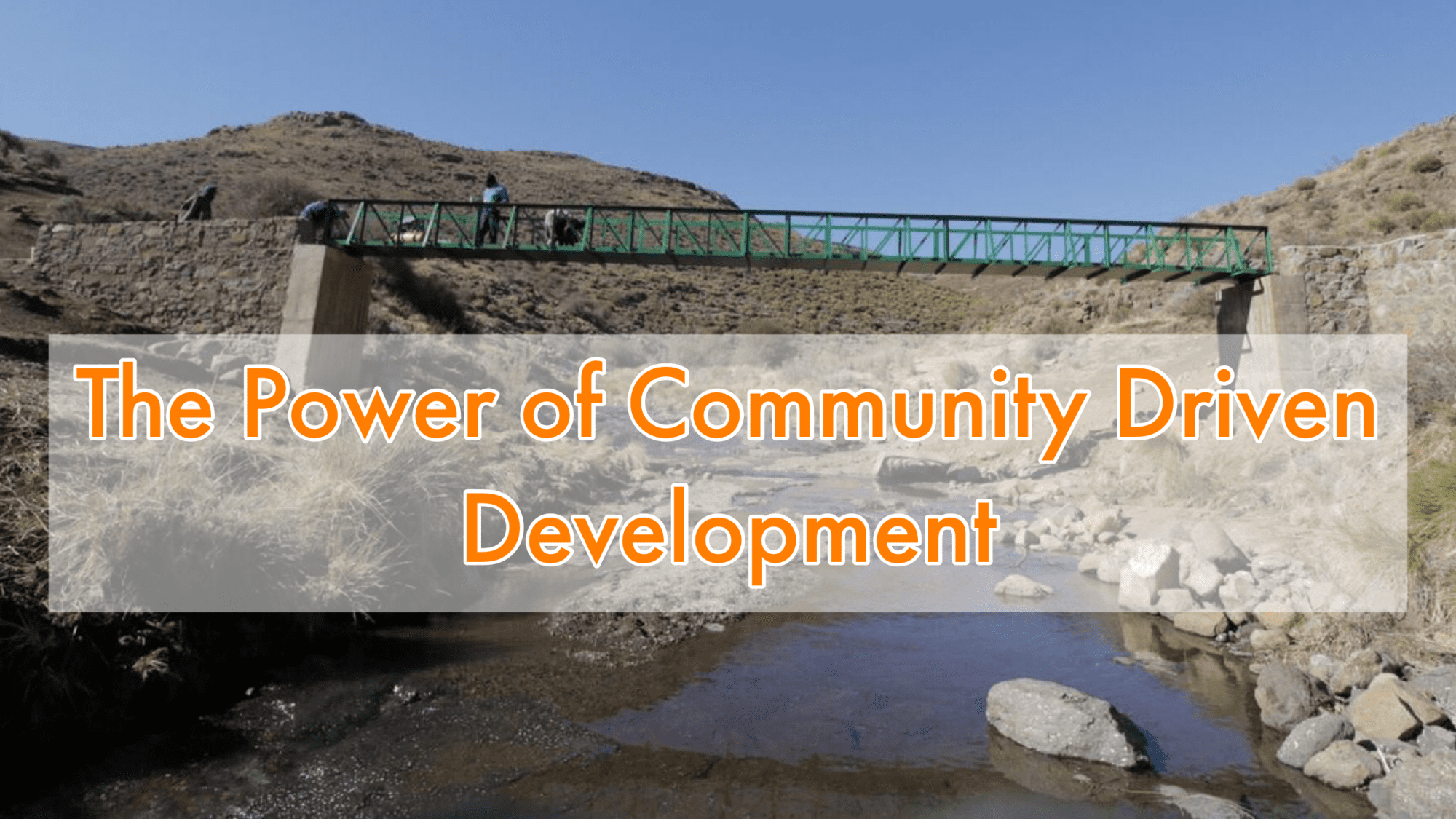
This time last year in 2019, rise international, in partnership with Possible Dreams Foundation, piloted a program with a rural community in Lesotho called Ha Sekants’i. As a means to tackling economic and infrastructural needs that the community identified as priorities, through the construction of a pedestrian bridge in collaboration with a group of international volunteers from Malta, sponsored by an international development company called J Portelli Projects.

This footbridge helped the community gain safe access to health care services, the market and also enabled children to get to school without having to go through the river which is menacing and at times impossible when it rained or snowed. With the help of community members and the guidance of the Roads Directorate, rise was able to construct the bridge in just two months

The community of Ha Sekants’i remain proud of the footbridge. It has become their reminder of the power of the Letsema concept – an African tradition of volunteering one’s labor to community projects. 
“We are pleased that through this partnership we finally have a footbridge. I am 86 years old now, I really never thought this would happen in my lifetime” – Abiel Khanyapa, Ha Sekants’i community member.

Alkire et al., (2001) demonstrated that by directly relying on communities to drive development activities, community driven development has the potential to make poverty reduction efforts more demand responsive, more inclusive, more sustainable, and more cost effective than traditional centrally led programs, thus increasing the efficiency and effectiveness of poverty reduction efforts. We can proudly attest to this statement.

One year on, the community of Ha Sekants’i has developed vastly. The only rural village in Lesotho with a permanent outdoor photo exhibition. Ha Sekants’i has become a popular destination for visitors looking for an authentic eco-experience. In collaboration with Possible Dreams Foundation, the Ha Sekants’i community is now raising funds to construct a community learning centre in the village.

Photo credit: Justice Kalebe

Catch up on the project on this link https://www.youtube.com/watchv=BiinzFnQ9OU

READ MORE
2020

IN LOCO FELLOWS 2020 BLOG SERIES #3: Intergalactic love

Intergalactic means movement between spaces. Buildings occupy space, from their foundations upwards. Therefore in this blog, intergalactic is compared to construction because of the fuming passion I have for the built environment and intergalactic.

My passion for the built environment grew after several setbacks from the University of Free State, where I was enrolled in the faculty of natural sciences, however I dropped out from the University and I enrolled for a National Diploma: Building at the Central University of Technology, Free State (CUT) where I graduated in record time. The faculty of Engineering has always been best for me…HAHA.

Malingaka working on construction site

Upon completion of my diploma, I was awarded a MerSETA women in engineering bursary. This encouraged me to further my BTech in Construction Management which I also completed in record time. A fiery love for construction grew deeper, so much so, that I established my own construction company named Khal Construction Engineers the same year I enrolled for my BTech, with a view of creating a better industry that would lessen surplus costs, delays, accidents on construction site, and upsurge job creation. My first project in construction was plastering and floor pouring a residential building.

The business did not go so well. Our marketing was poor, we could not get customers as we were unknown in the industry, project hunting became all-consuming  but there were still no doors opening for the smart, enthusiastic ‘Malingaka. But I don’t accept defeat; it’s just not in my DNA. Therefore I enrolled for a Masters at the University of Johannesburg while job hunting and tender hunting. Being the go getter that I am, I completed my Masters within a year. The same year in December my company got its first client!  Sufficient grace, right?

Malingaka building a guard house

That first client was a stepping-stone to many. Currently I have over two years’ experience in the industry and already embarking on the journey to bag my PhD in Construction Management. Though my business is facing challenges such as lack of construction equipment to commence a project, rise has a solution to my challenge since fellows and alumni are able to borrow construction equipment from rise.

My first encounter with rise international was when I navigated through the internet for job vacancies. I believe it was through www.selibeng.com that I saw the opportunity for the in loco fellowship. rise’s mission and vision caught my attention, I was amazed. With much enthusiasm I applied for the fellowship and got in. I must say I am super grateful for this platform; it has been nothing but a place of growth in the built environment, industry and entrepreneurship.

Work on Construction Site
Malingaka and other in loco fellows working on LNFOD site

“Don’t let an opportunity pass you by, grab it and make the most of it.” I’ve been doing the most, learning by doing, learning from my other fellows, grabbing every skill and networking. rise has taught me that “Letso’ele le beta poho”, (Together we can overcome). Team work is the utmost, sharing innovative ideas amongst the fellows, problem solving and building each other through business partnerships. At rise, I have learned the importance of marketing, effective communication, negotiation skills and working in groups with other fellows. Amongst the activities we’ve done with rise, I enjoyed the Participatory Design Workshop and team building the most; what an experience!

‘Malingaka Maoeng

I am excited to learn more from my fellows, to experience getting our hands dirty on the 2020 project. I have been getting along well with other fellows; it has really been fun working with each and every one of them. It is as if we’re one big happy family.

I AM ‘Malingaka Maoeng

READ MORE
Information Library

Why do we need an Enterprise Hub in Lesotho?

An Enterprise Hub in the entrepreneurial sense is a kind of greenhouse for start-up enterprises. In this protected incubation environment, entrepreneurs with innovative business ideas can be consulted and trained. Incubation Hubs are contact points for entrepreneurial learning, thinking and connecting people where they share, network and mutually benefit from one another.


The importance of having an Enterprise Hub in Lesotho is immense; a place of this nature would be able to open up multiple doors for entrepreneurs and is currently an essential missing piece in the entrepreneurial ecosystem. With the unemployment rate in Lesotho as high as 30% amongst youth, there is a dire need for young people to go into business in order to make a living for themselves and their families. The rate of poverty in Lesotho stands at almost 50% , which calls for an urgent need for Basotho youth to be motivated, skilled and well equipped to create platforms for employment and thus fueling the country’s economy.


The Hub will represent an environment in which aspiring entrepreneurs can prosper in the entrepreneurship learning space. They will gain access to essential business development services from business and financial planning to legal and human resource spets. They will get to share their knowledge through peer to peer interaction, while at the same time having much needed space in terms of offices, meeting rooms and workshops to experiment their ideas and create prototypes of their forthcoming products and services before taking them to market. The Hub will also offer access to market and act as a referral centre linking startups to clients and potential investors, thus being a centre of business excellence acting as a benchmark for other businesses in the country. The existence of this Hub will inspire innovations that could change the livelihoods of a significant number of people living in Lesotho.


An Enterprise Hub therefore signifies a ray of hope for multiple entrepreneurs in Lesotho who have great ideas and new businesses, but lack the platform and tools needed in order to make these ideas and enterprises flourish. The Hub will also be a place of inspiration for the Basotho nation at large; a place where some of the wildest dreams are born and attained, a place to birth some of the most successful businesswomen and men to ever come out of the Mountain Kingdom.
To make all this happen we need to raise $100,000 by December 30, 2020. Learn how you can help here
You can read more about the plans for the Enterprise Hub here

READ MORE
2020

IN LOCO FELLOWS 2020 BLOG SERIES #2: KE NGOANANA OA MOSOTHO

My name is Mosa Nkhabutlane, “kengoananaoamosotho”, (I am a Mosotho girl) who was born & bred in Lesotho. I studied Interior Architecture from the University of Pretoria and I am currently an in loco fellow at rise international. I applied for this program because I wanted to equip myself with an entrepreneurial career in the built environment and creative sphere in Lesotho.

Mosa Nkhabutlane standing inside the site office
Mosa helping to set up the site office

Being part of the 2020 cohort, we are currently designing LNFOD (Lesotho National Federation of Organizations of the Disabled) offices which are going to be located in Naleli. With these offices, we hope to create a precedent for inclusive design in the country. It’s been a real joy to be learning about inclusive design on a practical level so early in my career. So often, we can allow our egos as designers to get in the way of the buildings and objects we are designing and in doing so, we neglect the people for whom we are actually designing and creating. rise has been really instrumental in guiding us as to how we can design in an inclusive manner.

Mosa cutting metal sheets
Mosa constructing the guard house

Before we started designing the LNFOD Offices, we met with LNFOD Staff & the Naleli Community. We then hosted a Participatory Design Workshop with LNFOD, which allowed us to communicate with our client and to find out what they need. Instead of assuming their needs, we listened to them, we learnt about how they function as an organization and in doing so, our design has been informed by the needs of the user. 

My experience at rise thus far, as an in loco fellow, has been one of growth and I hope it continues to be exactly that for the months that follow. We have just begun going to site and I believe that it is the “learning by doing” that is yet to mould us into holistic professionals.

In addition to architecture & design, I am also an entrepreneur at heart. I started a jewellery brand @madebymos in 2018. My brand has really allowed me to express myself, it is a baby of mine that allowed me to grow in a lot of different ways and to learn about the design business. It is through it that I learnt about creating campaigns, creative direction and the art of making. I have also learnt to respond to the needs of the customer and I am continuing to learn about managing the funds of a business. I believe that we need to equip ourselves as small businesses, in order to build sustainable businesses.

Mosa standing next to a concrete mixer
Mosa working on the LNFOD construction site

The business trainings that rise holds have been a great resource for me as an entrepreneur. We get to meet some of Lesotho’s greatest minds through these workshops and we are given the opportunity to learn from them. The opportunity to absorb knowledge from entrepreneurs who are making waves in this country is unmatched, especially because they are also born & bred in Lesotho. To be inspired by the people that look like us and have walked similar paths is a breath of fresh air. It feels like I am learning something new every day ever since I have been a part of the in loco fellowship. Some days are easy and mellow, some are challenging and new but most importantly, I continue to learn & to be equipped as a young, black female designer in the Mountain Kingdom.


READ MORE
2020

in loco Fellows 2020 Blog Series #1: Pieces of Me!

This piece of writing will reveal everything about my experiences so far. It is sometimes very difficult to really tell everything about yourself but bear with me and I will try my best. My parents named me Motebang Ramafole, I was born in the early 90’s at Queen Elizabeth 2 hospital in Maseru. I am the 3rd and lastborn son in my family. I grew up as a toddler in Maseru Sea Point, a place that in those days was deemed very dangerous so my parents decided that maybe I should go and live with my granny in another district and town called Leribe Hlotse. And for this initiative I always consider myself an origin bred of Leribe. In a local statement we say “Ke Nare”. So, it is in this district that I gained my maturity from adolescence to a young adult.

Mptebang profile picture

I started my studies at Hlotse Primary School, a local school that has produced giants who are now making big differences in the country at large and I guess it will not be long before I am counted as one of those giants! Molapo High School became the next step I took in my educational journey. I enrolled with them for 5 years and I am pretty sure or rather proud that I left a significant mark at the school. Molapo High School has been a very helpful institute towards building who I am, who I am to be and the life goals I have. It molded me into becoming a very good problem solver, especially with technical problems. It also created an “idea machine” in me. They say an intelligent and creative person never has adequate brain rest because their minds are always full of ideas. I would agree with that statement but I would be blowing my own horn.

Talking of “idea machine”; I remember when I was in primary school, we had a Science Club where we would showcase our scientific ideas. We even went as far as the National Science Competition where I got the Second prize in the Technology category.

Motebang on work site

As it is any high school student’s dream I advanced my studies at Lerotholi Polytechnic in 2013, where I enrolled in the School of Built Environment studying Diploma in Civil Engineering. At this stage I met a whole new different set of friends who had almost the same vision as I had and I can’t say I didn’t like that because they challenged my intelligence most of the time and that drove me to be more creative. Whenever they wanted something or an idea that was out of this world I became their benchmark. After enrolling with Lerotholi Polytechnic I worked in South Africa; maintaining railways. That was a whole different experience in my life. There are no railways in our country, it was a really challenging task to work on something that I have never seen before and I am also grateful for that challenge. It taught me so many things; from patience, ram to travelling.

As I have revealed, I like challenges so sometime in March 2020 I saw a post shared by one of my friends on social media. It was rise International inviting newly graduates to apply for an in loco program. This was an opportunity I could not miss, so I applied and I was called for an interview. Surprisingly, it was not an ordinary interview where someone would be asking questions and I would be just there answering ordinarily. It was some sort of a challenge event where we scored points throughout that event. I think it allowed us to reveal our strength in the creative world, so I guess I was not going to be an outsider when we focused on creativity.

Ever since that interview event I have changed my view towards being creative. rise has shown me a wider view of the creative world, I have also learned that every human being is creative in their own way.

Motebang working on the power supply in the site office container

Through the in loco fellowship program I have learned to work as part of a team, give others room for their creativity and adding more towards my own creative world. Responsibility is one of the many lessons I have acquired as a fellow, sharing and distribution of different roles to different people.

In this fellowship I have also improved my entrepreneurial skills. As youths of a country with a very high unemployment rate, we tend to forget that there are other ways of making it in life and that is through business. Therefore, I did not want to lose out on this type of opportunity to gain skills in entrepreneurial skills because I also run a few small businesses in my neighborhood. The fellowship will help me greatly to grow and improve my vision towards entrepreneurship.

READ MORE
2020

in loco Cohort 2020: Fellows start an exciting journey

The new cohort of fellows has already completed their first month with us here at rise international as part of the in loco fellowship program of 2020. Within this short period of time, 13 young entrepreneurs have been thrown into the deep end and started to get their hands dirty with some real life experiences. The in loco experience is necessary to gap the bridge between education and employment with practical skills that can only be learnt through hands on work experience.  

Their first two weeks consisted of theoretical sessions which sought to fine tune their technical skills such as how to draw up a bill of quantities (BOQ), sketching as well as their soft skills including communication etiquette, negotiating and other skills.

The fellows have also had the chance to shift their mindsets and seek for every business opportunity as it arises through our fun and interactive business sessions, while also learning how to target clients through market research activities. The fellows have also learned the importance of using data to make informed decisions from leaders in the field of data analysis here in Lesotho. When being interviewed by a local radio station, one of the fellows described their journey so far as “intellectually challenging and pretty amazing”.

As an integral part of our design process at rise, the fellows were trained on how to facilitate a Participatory Design Workshop with the client and surrounding community, to see how they envision their new infrastructure. The result was a highly insightful, at times funny, other times educational view of how to begin the design process in this way. 

These new skills will come in useful as the fellows set to work on their first project, designing and building offices for a non-profit organization known as LNFOD (Lesotho Federation of Organizations of the Disabled) in Lesotho, whose mandate is to advocate and defend the rights of people with disabilities through the provision of training, materials, emotional support and by representing their needs to government, development partners and the wider community. 

LNFOD’s new head quarters will not only house the organization’s
important work but will also serve as a flagship building of inclusive design allowing LNFOD to make their services accessible to persons with disabilities.


This project is being made possible largely thanks to the support of Sedlak an Austrian construction company and their implementing partner Brot für die Welt.

rise in loco fellows on field research during an informal interview.

How has the first month been for our fellows, one word: ENGAGING!

READ MORE
News

rise alumni kick off their careers with high-profile EU co-funded project

Here at rise we focus on economic development through job creation, skills development and entrepreneurship, specifically in the built environment. Linking aspiring local entrepreneurs with essential resources needed in order for their enterprises to flourish.

We are 100% self-funding – every dollar donated goes directly to our social entrepreneurship programs. 

We recruit young university graduates from the built sector and train them through our in loco design & build entrepreneurship fellowship program.  After this, we act as a conduit for them to gain access to market, which they would otherwise be unable to reach as young graduates, with no backing and no proven work experience. We fully support and mentor them through the projects they take on and also support them with a tool loan service. 

The partnership with African Clean Energy is exactly the type of project that our alumni need after the in loco fellowship, to help them kick-start their careers and put all the skills they have learnt to the test. With so much uncertainty in the world and a looming economic crisis, the time feels better than ever for them to take on such a challenging role . 

When you consider that the deaths from COVID-19 are currently over 570,000 worldwide, the figures from Household Air Pollution (HAP) are 7 times higher…. EVERY year!  The figure is also higher than the worldwide deaths from AIDS, Malaria and Tuberculosis combined!  Most of these deaths are women and are directly caused by the poverty in which around 2.6 billion people globally live. 

People who do not have access to modern clean energy are restricted to using open fire cookstoves which emit high levels of smoke, exposing users to HAP. Without access to electricity these households must resort to buying costly paraffin and candles for lighting, which as well as being costly, are also a major fire hazard. 

As well as the health risks, there is a huge environmental impact from the amount of wood that is cut from an already badly deforested country with serious soil erosion problems. Additionally, there is a negative economic impact on women & girls who spend hours collecting wood each day, reducing their ability to work or go to school. Those who are not able to collect firewood have to pay for wood or coal which are much more expensive than other solutions.  

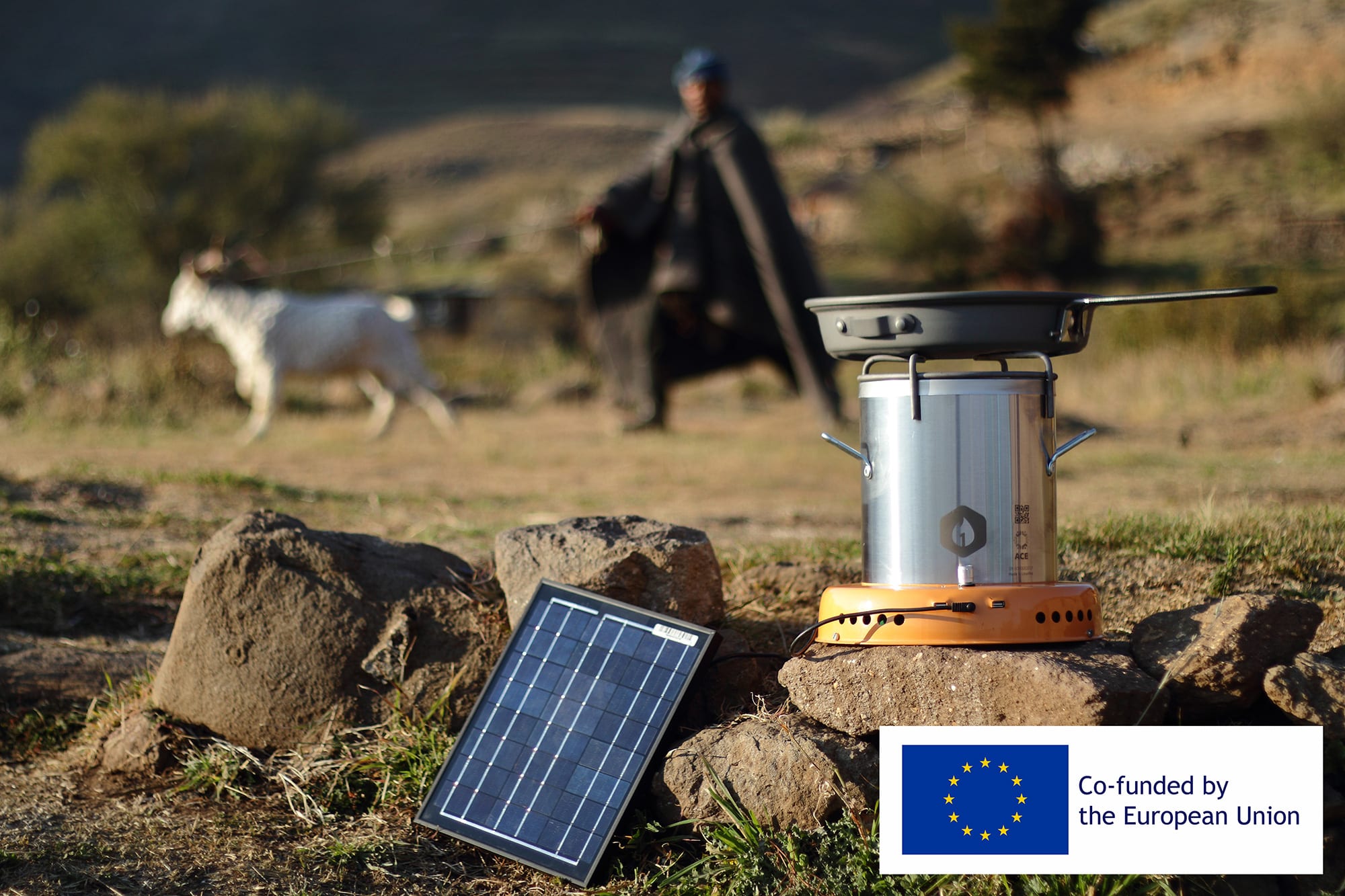
Thankfully African Clean Energy (ACE), an international social enterprise, has developed an integral energy solution for off-grid communities in low income countries. The ACE One cook stove uses a combination of thermal and electric generation to provide a clean, smokeless cooking experience for its users. The solar-powered electricity it generates can also be used for LED lighting and phone charging, avoiding the need to purchase candles or pay to charge devices and providing the rural population with digital tools to improve their quality of life.

In a project co-funded by the European Union called the “Lesotho Rural Energy Hubs Programme”, ACE is developing a network of 25 hubs for the distribution of renewable energy products across all 10 districts of Lesotho. Through these hubs, ACE will distribute its renewable energy products, foremost the ACE One cook stove, and provide on-site customer and maintenance services as well as an after sales market for additional renewable energy goods. 

The bid to design and build 19 ACE hubs was a big challenge for our alumni. ACE is backed by the EU so there was a lot of due diligence that needed to be done.  In spite of all the challenges, we were excited that several groups of our alumni from 2018 and 2019 in loco fellowship cohorts put their design skills to the test and won the tender.  It goes to show that their design skills, accountability and attention to detail is up to the highest standards! 

The innovative design solution is able to be completely flat packed, so that it can easily be disassembled and transported around ANY part the country. We are also proud that every single part of the build has been assembled locally in Lesotho, from the steel structure shell to the wooden interior and even the solar power for some of the hubs will be installed by the skills building organisation for young local talent from the Bethel Centre in Lesotho

The hubs will not only put clean energy and solar power in the heart of the hardest to reach communities but will enable community members to run them as rural social enterprises. 

The first hub was installed last week as rise alumni rolled up their sleeves putting the technical skills they learnt in the fellowship to the test.  From steel fabrication to window and electrical installation, assembly and carpentry they are doing it all!  As well as working together to practise the softer skills of project management, problem-solving and working within a strict timeline to bring the project in on time!

The sky is the limit for these young entrepreneurs and we can’t wait to see what they achieve next. 

READ MORE
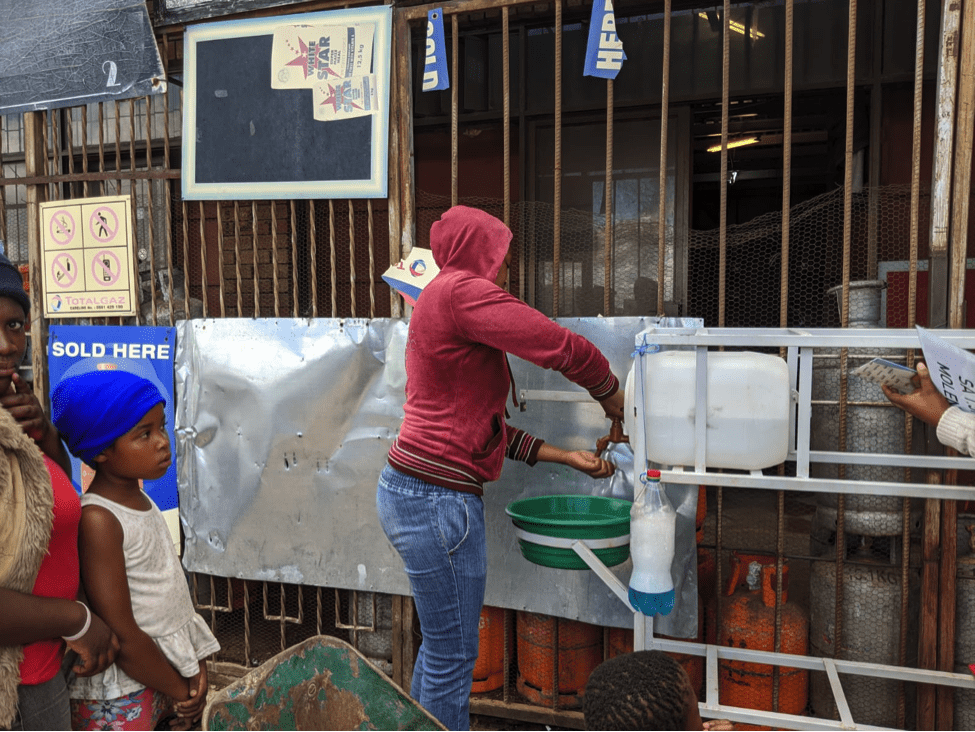
Community member using Hand Wash StationNews

in loco Alumni tackle deadly pandemic head on!

To date the deadly pandemic known as Covid-19 has spread across all 54 African countries except for two – Lesotho and Comoros! With no cure for the virus, the best prevention is isolation and good hygiene practices.  With a staggering one billion people around the world living in slum like conditions, the question would be how can African nations, especially a country on the lower end of the economic scale such as Lesotho, equip their people with adequate hand sanitation solutions to help fight the spread of Covid-19.

Single Hand Wash Station Prototype

To fill the void, a group of our very own in loco alumni, who have formed a company called xyz collaborative, have been working tirelessly to produce emergency hand-wash stations amidst the 21 day lockdown in Lesotho. Most members of vulnerable communities are without running water and as such are at risk of contracting the virus by coming into contact with contaminated surfaces.

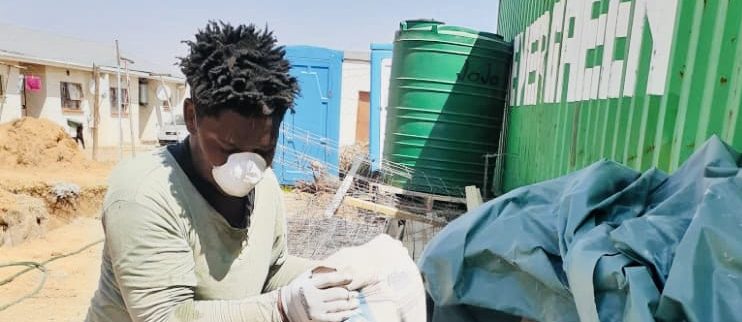
in loco alumni 2019 cohort formed xyz collaborative company working on thir first project

The first batch of hand wash stations was commissioned by an NGO called Sepheo who wanted to support the Motimposo communities in which they operate. Just before lockdown started on 29th March, 10 hand wash stations were made and distributed at strategic locations, by shops, which are maintaining the stations on an ongoing basis. 

Double Hand Wash Station in use by community members
Double Hand Wash Station in use by community members in Motimposo

We are so proud of what our in loco alumni who are managing to work in a very challenging environment; with limited resources since nothing can be imported from South Africa because of the lockdown and within tight deadlines given the imminent pandemic reaching Lesotho.  Moreover the procurement of the necessary materials is a logistical nightmare since hardware stores are closed due to the lockdown.

And transport, is also proving challenging as there are very few taxis and cars on the road and the taxi/ bus fares have sky rocketed, especially since one cannot share a car with so many people anymore.

Single Hands Free Hand Wash Station being developed

The struggles the in loco alumni have to face daily to make these mobile hand-wash stations for communities is a true testament to their determination, resilience and commitment to help their fellow citizens.

We are battling on and making more hand wash stations, constantly improving on the design by making them hands-free thanks to the finanical support from Action Ireland Trust. The next batch of hand wash stations are being sponsored by UNDP for the Ministry of Health with 50 stations being installed at Health Clinics and hospiatls as well as for Maseru City Council who will receive 15 hand wash stations which will be installed in bus stations and other busy areas around Maseru.

Hands Free Hand Wash Station 220L
Hands Free Hand Wash Sation

We will continue to make as many hand wash stations as we can before the funding and resources run out. It is vitally important we give these vulnerable communities the lifeline they need.

If you would like to donate? https://riseint.org/donate/
For more information contact [email protected] or go to https://riseint.org

READ MORE
2020

IN LOCO FELLOWS BLOG SERIES #13: MAKING THE DREAM A REALITY

YOU CAN DREAM, CREATE, DESIGN AND BUILD THE MOST WONDERFUL PLACE IN THE WORLD, BUT IT REQUIRES PEOPLE TO MAKE THE DREAM A REALITY – blog by Bokang TJakotja, in loco fellow 2019 cohort

He who works with his hands is a laborer. He who works with his hands and his head is a craftsmen. But an artist works with his hands, head and his heart. With my experience through the in loco fellowship program I’ve learned that anyone can become an artist.

In 2018, before I joined the fellowship program I was a freelance carpenter when I first heard about the fellowship through my ex-colleagues from college who also happened to be part of the in loco fellowship alumni and always went on and on about the opportunities the fellowship presented.

Bokang Tjakotja aka BK – in loco fellow and athor of this blog

I started following rise’s social media pages, and in May 2019 I heard  that rise was looking to recruit recent graduates to design and build a rehabilitation center for youth living with intellectual disability and autism. As the saying goes “it is in our hands to create a better world for those who live in it” and I made a pledge to work towards creating a better world making an impact in the lives of underprivileged communities and so I applied for the fellowship and I was admitted.

The first two weeks of the fellowship was about the participatory design workshops  and the transect walks to better understand the needs of the client and community so as to design and build what works for the client and not what we think will work for  them.

BK in front of the IDAL superstructure back in August 2019

After finalizing designs, construction immediately started, and my favorite part about the fellowship is being given a chance to learn about different roles within a short time. I was appointed as a plant and logistics manager then health and safety office and finally I was to oversee the whole construction process as a site manager.

I acquired both soft skills and technical skills during the fellowship, my communication skills, public speaking improved and  I acquired some management skills, sometimes making unpopular decisions which are in the best interest of the project and not individuals and developed some sharp problem solving skills. In the business part we held business trainings every Friday which helped us to perform well in our businesses and become better entrepreneurs.

I believe that all growth depends upon activity, and there is no development, physically or intellectually, without effort and effort means hard work.

BK spray painting the external walls of the IDAL Centre
READ MORE
2020

in loco fellows blog series #12: “A love in motion and a work in progress”

Everything we build ends up building us too, I feel that me being part of a social responsibility project to design and build an income generating facility centre for the youth of IDAL- Intellectual Disability and Autism Lesotho is showing love to others and a great platform for me to learn as a young Architect.

Starting from the beginning, my aspirations to study and practice architecture started at an early age in primary school after I won a second prize award of the Cashbuild Art at Heart primary school competition and ever since then, I knew I wanted to be nothing but an Architect.

Lesole Putsoane fondly known as Soulja

Alongside that love of craft and passion, I felt I was destined for greatness in this field. However, life being life, with nothing guaranteed or served on a silver platter, studying was not a breeze as I had imagined. I thought I had the right formula for it and had things under control but things were tough. Despite all my difficulties, I managed to manoeuvre through it all and managed to acquire a degree in Interior Architecture from Limkokwing University of Creative Technology.

After graduating, the pressures of life continued to press on, it’s been tough and stressful out here on field. In the practical world, one would find that the government and the private sector cannot provide jobs for everyone and that causes a lot of havoc.

Lesole Putsoane (sitting) with other fellows expecting an imminent storm

Being from an institution of Creative Technology, where I was taught from day 1 to create my own job, I started thinking of ways and strategies to escape poverty and I figured I could continue with freelancing as an Architect. It was something I was already doing while I was in school to make some extra income while I learn but projects would not come in as I wished, sometimes a month to 3 would pass by without a new client so I decided to use my time wisely when I still had it and started registering an Architecture and Construction firm (Far Beyond Imagination PTY LTD.)

This kept me busy but most projects would not be given to me because I was considered a rookie in this game so I had to scrape by and feed off the bottom of the chain. While in the process of proving myself and trying to win over clients one of my brothers sent me a poster of the rise in loco fellowship application and when I applied, I was fortunate enough be given an opportunity to be part of the 2019 design and onsite training fellowship programme.

Lesole Putsoane with the IDAL centre in the backgound

The 2019 cohort entails 13 recent graduates from different tertiary institutions and different fields of study (Architecture, Civil Engineering, Construction management, Water and Environmental Engineering, Carpentry, Education and Agriculture) who were given a chance to design and build a facility centre for the youth of IDAL from inception to completion. The most amazing part of the project was that it was a participatory design process so we had to know our clients well. The project kicked—off and as time went by things got tough because of the challenges on site, pressure and distance travelling to and from site. However, I have been learning a lot, enhancing my design skills and also obtaining experience on-site and learning how to use different tools and machines. During the fellowship I had the chance to work in 3 different roles each for 2 months, Plant and Logistics Coordinator, Site Architect & Health and Safety Officer which have exposed me to different disciplines too.

Almost every Friday we have business trainings as a way to guide us into better future entrepreneurs, and to become job creators rather than job seekers. Not only have I learned technical but also soft skills that include public speaking, negotiating and many more.

Lesole Putsoane

Finally, there are a couple of projects that I also got a chance to work on during the fellowship apart from IDAL which have also contributed in developing my design and detailing skills. My experience with rise International has been a great journey and a great learning platform for me and I’m grateful for the opportunity.

READ MORE
2020

in loco fellows blog series #11: Sojourner’s reflections

As a civil engineering final year student my greatest disconcertment was becoming one of the rising unemployment statistics in Lesotho, inexperienced in a country where you need to have experience to find a job, and need a job to get experience, which is pretty much a catch-22 situation.  I first learned about rise’s in loco fellowship program through Lerotholi Polytechnic 2019 open day expo where there was also a call for fellowship applicants, without any hesitation I submitted my application and I got admitted into the program. Fearful of being an inexperienced graduate faded away, as the program presented recent graduates with opportunity to work on a project from inception to completion.

Some of the in loco fellows 2019 cohort

Being a fellow in the in loco program gave me a chance to build my capacity which is an essential prerequisite to both personal and career growth, being equipped with abilities to perform in a complex environment. I was privileged enough to work with wonderful individuals from different disciplines and crafts, when working in this kind of environment I developed not only the technical skills but also the soft skills of which the importance is often undervalued and far less training is provided for them but are rather useful personal attributes. I have developed strong work ethics and leadership skills, which will play a key role for me as a young and aspiring entrepreneur.

Selebalo Tseko in loco fellow & author of this blog

Five months into the program have been both interesting and intense as we had to work on the design, manage the construction and also be the labour on site; however the burden of responsibilities was not to torture but to shape me into a capable leader. We have had “HaHa” and sad moments on site but we all knew the importance of working collaboratively as a team to achieve the common goal which is to finish the project on time.

The greatest thing for me about rise will forever be the social impact it has on the communities and the entrepreneurship program aimed at shifting job seeking mindset to job creating mindset.

Selebalo (right) with two other fellows Mojalefa (left) and Retsepile (centre)

Five months into the program have been both interesting and intense as we had to work on the design, manage the construction and also be the labour on site; however the burden of responsibilities was not to torture but to shape me into a capable leader. We have had “HaHa” and sad moments on site but we all knew the importance of working collaboratively as a team to achieve the common goal which is to finish the project on time.

The greatest thing for me about rise will forever be the social impact it has on the communities and the entrepreneurship program aimed at shifting job seeking mindset to job creating mindset.

READ MORE
in loco program

in loco fellows blog series #10: WE ARE THE CHANGE WE SEEK

Everybody can be great. Because anybody can serve. You don’t have to have a college degree to serve. You don’t have to know the second law of thermodynamics in physics to serve. You only need a heart full of grace. A soul generated by love.” –Martin Luther King, Jr.

Drawing my inspiration from a strong belief that volunteerism is a powerful way of engaging people in tackling development challenges, I first heard of rise (Relationships Inspiring Social Enterprise) back in 2017 when they were calling for applicants to their first ever cohort in Lesotho. Unfortunately I could not apply at the time because I had just landed a new job at one of the design and construction companies in the country but that did not stop me from following rise on social media. It was through the social media platforms where my interest in the organization and its volunteer program grew greatly as I realized what the organization was doing not only for recent graduates through the entrepreneurship trainings but also for the disadvantaged children at God’s Love Centre and the surrounding community.

Finally, in 2019 another call for applicants into the second cohort was out. I did not have to think twice about submitting my application because by then I knew for sure that I wanted to be part of the rise family, so without hesitation I submitted my application and I got admitted into the program.

Being a fellow in the in loco program was a dream come true because as an Architectural Technology graduate I have always believed that great architectural design is a result of collaborative effort combined with innovative and sensitive values that transform spaces and places into creative and unique solutions for the betterment of people’s lives and earth as a planet.

What really fascinated me about the program is rise’s design approach, which involves the client from the very early design stage so that we can better understand the needs and problems of the client. This approach allows us to work with the client and come up with solutions that the client understands and has ownership of; in this way the designer acts as a facilitator while the client designs.

It has been four months into the program and I am proud to say that I have acquired so much knowledge about different disciplines. This is all due to the fact that the in loco fellowship programenables multi-disciplinary interactions between different professions in the built environment.

rise’s in loco-fellowship programis such a great platform because it also acts as a positive space where recent graduates can have fun, exchange ideas on how to build a better tomorrow,  help each other grow  while also serving their communities.

READ MORE
in loco program

in loco fellows blog series #9: At school it’s just the basics. The real learning is on site by doing

My name is Ntina (Peter) Makhetha. I am a 2017 Construction Management graduate. I first knew about rise’s in loco fellowship program in mid-2018 from one of my ex-tertiary colleagues who was one of the fellows in the first pilot program. Immediately after graduating we were all over the place looking for jobs. By the time I got to know about the opportunity applications were already closed. I saw how the in loco program gave them not only on site experience, but also the business training sessions turning them from being jobs seekers into job creators.  I couldn’t wait for the recruitment of the second cohort so I followed rise on social media to be updated about second in loco fellowship applications. 

Fast forward mid-2019 a post was published, I couldn’t miss it as I had been waiting for it, I applied and got lucky and was admitted. August came, we began our 6-month fellowship with my first ever experience, the participatory design workshop of the IDAL project, which was all about designing involving the client to understand and cater for their needs into the design. Within that 2 weeks workshop I took part in the Quantity Surveying Team, doing the Bills of Quantities. I learned more about teamwork as we had to work hand in hand with the design team and understand their drawings.

Later we went to site, for the commencement of the construction phase, as a Site Manager, it was such a huge opportunity and exposure to have taken a lead in the execution of a timber structure from its foundations to the top. Amongst all, the most critical tasks that I got my hands dirty on was setting out, excavation, levelling, reinforcement, concreting, raising up the pillars and roof trusses which are the major structural elements of the project. As the in loco program is about learning by doing, I switched roles 3rd month into the fellowship and took on the Events Coordinator. role I wanted to improve my soft skills, especially  my communication skills and be a confident public speaker which I managed to strengthen and now it’s safe enough to say I’m way better than before I joined in loco 2019.

 At the moment I’m working as a Plant and Logistics Manager as well as a Quality Control Officer. I did learn a lot of things in a short time. I learned more than I anticipated, multitasking and working under pressure. Many thanks to rise through its in loco program for all the valuable experience and entrepreneurship skills which has enable me to start developing my own Construction Company.

READ MORE
in loco program

in loco fellows blog series #7: Never lose hope, Give it a try

Some time after I completed my diploma in construction management in search for job opportunities, valuable skills and experience in the design and build industry, i come across one of my ex-classmates who introduced me to the impact of the in loco fellowship program. I never let the opportunity pass me by, I applied for the fellowship and was called for an interview. Guess what, today I am enrolled amongst the in loco fellows at rise International (Relationships Inspiring Social Enterprise).

We are currently working on the project of IDAL (Intellectual Disability & Autism Lesotho) Centre. The first thing we did for the project was to conduct a Participatory Design Workshop, the aim being to understand the clients and their needs and thereof come up with solutions to their problems with the in loco materials and talent.

The first week of the program I had to work on the tendering process where i did the costing of the project by preparing the bill of Quantities. It was an enjoyable time for me to enhance the skills and knowledge I had prior to school by using the necessary tools introduced to us by the rise team which were the bills of quantities templates, schedule of works and the rise database. Such tools are necessary in managing time, cost and effort.

Two weeks later it was my time to get to experience the role of being the site manager. Very challenging moments to execute the project, giving tasks to the other fellows and the application of the managerial skills and knowledge I got at school, conducting site meetings, preparing site reports, schedule of works and many others.

 The fellowship has changed me from being a job seeker to an entrepreneur through the business sessions we are getting, fire is burning inside me to bring tremendous changes into people’s lives. I gained a lot of both soft and technical skills in the managerial system by collaborating with the fellows and the rise team who I regard are my mentors.

READ MORE
in loco program

in loco fellows blog series #6: When opportunity presents itself, don’t be afraid to go after it

It’s a friday afternoon and my tertiary ex-classmate whom I hadn’t spoken to in a while drops me a WhatsApp text. To my surprise, the text is an invitation to the in loco fellowship which at the time, I had not heard of. This was my cue to do a little research. I searched it on Facebook and guess what? I got so excited about the fellowship and wished I had known about it earlier and applied. Before I knew it, I was called for an interview and here I am today, an in loco fellow at rise International.

Amo varnishing the IDAL pavillion

From my research, I saw the fellowship as an integral part of my long-term career or academic life goal. I saw it as an ideal way of taking my civil engineering expertise from one level to the next. However, the greatest reason I wanted to pursue the fellowship was my desire to change my current path towards something I’m passionate about- Entrepreneurship.

Few weeks into the fellowship at the participatory design workshop, I’m all excited, learning but eager to go on site. And now we are on site as three girls from thirteen fellows. How challenging!

Through the fellowship I have learnt to work with different personalities, although it hasn’t been easy. But now that we know each other, I know how to handle each of them.

Amo in the back with other two fellows – Lits’oanelo (left) and Peter (right)

 By nature, I am an introvert and having to work with other fellows was a bit challenging at the beginning. I struggled to express myself but as I get to know them, I’m opening up a bit and I love how they have changed my perspective on a lot of things and on life in general.

 One of the most beautiful things about this cohort is that we motivate each other but with a dash of humour attached. I remember this other time when I forgot where a file in the Google Drive was located, and they said, ‘Really Amo?! A month into the fellowship and you still don’t know where the file is?’ From that moment onwards, I made sure I knew where every file is saved and paid attention to even the smallest details. Funny thing is, they also couldn’t remember where the file was!

Three months into the fellowship and I have acquired soft and technical skills I never thought I would have. I have acquired communication and negotiation skills and carpentry to name a few. I now know a bit more about construction from foundations up to the roof and I’m excited about my experience.

READ MORE
in loco program

in loco FELLOWS BLOG SERIES #5: Living the dream

‘’My passion and great enjoyment for architecture, and the reason the older I get the more I enjoy it, is because I believe we-architects can affect the quality of life of the people.’’ Richard Rogers

As an architectural graduate, I first got introduced to rise way back in 2015, at Limkokwing University when rise held their first lecture at my university. From that day, my admiration for architecture and perception about the built environment specifically with building with local materials was activated. I realized that I knew less about various methods of construction that existed in other African countries. From that day, I started following rise’s lectures, after seeing their impact and the drive about helping out less developed countries with resources they have.

Sello overseeing the installation of one of the wing frames

Fast forward, my senior architecture students got enrolled into the in loco program, where they worked on GLC*(God’s Love Centre Orphanage) in 2018 in Sekamaneng. This in loco program was ‘a learn by doing;.’ program, where graduates are equipped with all necessary skills (construction skills) before being introduced to the industry. I was very inspired and hoped they’ll recruit other graduates after the first cohort. It was a dream come true when I realized they were recruiting again this year (2019). I didn’t hesitate, I applied with the hope of being admitted, and my prayers were answered, I was accepted into the fellowship.

 The project we are working on as the second cohort of fellows is the IDAL (Intellectual Disability & Autism Lesotho) Center, where we designed and are currently building a pavilion, a timber-made structure, which is so intriguing to work with, because it’s one of the rare methods of construction in the country for big projects like this.

Sello getting his hand dirty!

 As an architecture graduate, I have learned more than I had anticipated about construction and by actually not just designing and handing over a project to be constructed by a construction professional, but also getting my hands dirty. I also learned concrete mixing, to using a concrete mixing machine, timber construction and tools, detailing, business and entrepreneurial and interpersonal skills.

At first I was appointed to be a buyer or procurement officer, which entails a lot of paper work and buying construction materials and equipment in this context. This was a challenging role, but I got used to it as time went on. Currently I’m working as a site architect, which entails, reporting progress on site, faults, daily tasks and weekly reports.

Lastly, I’d like to thank rise for recruiting us into the fellowship, it has been really amazing and a very valuable experience of reaching out to the communities and empowering youth as fresh graduates before being introduced to the industry to pursue our dreams. And our slogan is, if you want to go fast go alone, but if you want to go far, go together.

READ MORE
in loco program

in loco fellows blog series #4: Grab every opportunity that comes your way because you never know where it will lead

Being a fellow changed the way I perceived myself and the world around me. After a car accident I experienced in 2015, which made me lose my memory, I never thought I would ever be myself again.

I am that nice lady, an extrovert nurturer who always wears a smile on her face, creates a peaceful environment and enjoys working with other people. Feeling incompetent because of the accident, I turned to selling printed t-shirts, caps and so on, and promoting developing companies to be well known in and out of the country. Divine Ginger Company and Tlotsa Company are my life examples.

This way of life grew into my love for working and made me think that I could become a better businesswoman because I could fend for myself and also feed my family through this business. While I was doing all these duties, I never thought I would go back to my profession as an Agricultural Education graduate. I had a fear of meeting with other people of the same profession, thinking I am no longer good enough to be in the professional world due to my memory loss during accident.

In July, when I was browsing FaceBook and advertising my stuff, I saw an advertisement for a job application from rise. It caught my attention when I found that it partnered with God’s Love Centre orphanage because as a nurturer, I gain satisfaction by helping others. So I knew it would be a great idea to be part of the in loco program.

Berny on site

This is my third month in rise and I feel very lucky to be part of this fellowship because it is more like a family than a job to me. Rise does not only care about work related issues but is also concerned about personal issues for each fellow. This is because I met a problem health wise, where the pin metals inserted on my pelvis after the accident broke and a doctor prescribed walking less than a kilometer a day. And I thought that day was an end of my fellowship with rise. But to my surprise, they looked for a better way for me to work so that I do not further disturb my fractures. This made me feel at home with the in loco program though this hinders me from exploring more on site works as it is a design and built environment.

I am now an office administrator. It wasn’t easy at first, but it is getting fun with time. I am learning a lot more computer literacy than before and all office administration tasks within the office environment. It is within a short period of time but I have learned so many skills. I am now an Agricultural Education graduate with office administration skills, improved computer literacy, report writing skills, events coordinating skills, quantification skills in the construction industry, carpentry skills and yet to master entrepreneurial skills and many more.

Berny in the site office

One of in loco’s goals is to transform job seekers into job creators, so this can only be accomplished by starting own businesses. In As part of the in loco fellowship rise, we are provided with business trainings every most Fridays, and this is amazing to me for it is the most important part I enjoy. Ever since I could remember, starting a business has been my dream. So I just want to put it out there that it feels amazing to be part of this fellowship. All in all, after the fellowship, I believe one becomes a better version of themselves holistically.

Berny with one of the 100 trees she managed to get donated to the project
READ MORE
in loco program

Lesotho, a land with a big smile

Lesotho, a land with a big smile enclosed in too narrow borders to release its strong energy. For me this is the sentence that best describes my experience in this beautiful country. I’m an architect, I’m from Italy and it was my first time in Africa.

The choice to fly to Lesotho and be part of the in loco fellowship came very spontaneously thanks to a dear architect friend, Luca Astorri, for whom Africa is his second home. I didn’t ask questions, I didn’t know what to expect, I trusted him and the joy on his face while speaking about it. It was enough for me to buy the ticket.

Clarissa Orsini with rise’s Founder, Daniela Gusman and Program Director, Luca Astorri

Once arrived, I was welcomed with open arms by a world completely unknown to me. It was not easy at all to have the courage to let myself free to fall in this great and profound embrace. After the first moment of dizziness the emotions overwhelmed me, everything was impregnated of joy and suffering in the same moment, I didn’t know how to behave.

Ha Sekantsi, Community Meeting

It is necessary to get rid of many mental patterns and preconceptions in order to be in tune with this country and make a tangible contribution. It wasn’t easy at first but the guys from the fellowship were wonderful in helping me with this process. Being in contact with them I realized that it is not important where you come from and how you are used to doing things, there is always something new to learn and there is always a different way to teach others, there is no right or wrong approach.  The only thing that matters is that you have to be open to challenges and not be scared, this is the only universal language and for me it was the only language to communicate with them and feel part of something much bigger then myself. It seems simple and for me it was, but only thanks to the people I met who have always transmitted love and understanding towards me. The first few weeks were just about this: teaching and learning.

Participatory Design Workshop with IDAL – Intellectual Disabilities & Autism Lesotho

As an architect I taught them what they needed to know at that time, we followed them step-by-step to convey the important notions and procedures to the world of work. As wonderful human beings they taught me the practicality of life, the ability to always (almost) smile, despite the surrounding conditions.

They are participating in  this fellowship because they have great faith in the world and they want to make it better with their contribution for themselves, their families and their country. When they speak about something, they never do so in the singular form, the speech always includes their loved ones and their community in which they welcomed me and they made me feel part of it and I will never stop to thank them for all of this.

in loco fellows 2019 and Clarissa

I feel really grateful to all this.I came back to Italy with a great joy that accompanies me every day. Even in difficult times, thinking back to Lesotho reorders priorities and makes fatigue much more bearable. It is a country that has also given me incredible landscape memories but without the people who live there it would not be the same.

Foundations at IDAL Centre

I left from there with the certainty that I would come back and I would like to come back soon to be really useful for whatever is needed. One of the most important lessons I have learned is that, every now and then it is good to leave the emotions aside and bring yourself  into the capacity of being practical, pragmatic, doing what is needed where and when it is needed without asking too many questions, and making yourself completely available.

READ MORE
in loco program

in loco fellows blog series #2: Becoming who, I will

For too long a time, I believed that success in the construction industry in the tiny Kingdom of Lesotho had been reserved for prominent professionals who have grown with stature in the country. That employment didn’t include all but those individuals for whom the society has great reverence. To an extent, there is truth to that; experience definitely sets precedence in a sense of surety, especially when we consider the amount of knowledge one should have when creating something as complex as a house. Even so, this is only a part of a large whole.

I got introduced to rise through one of the lecture series they run at my school. What caught my attention about these series, along with the film debate sessions, was the creation of an interactive space for people of predominately students and recent graduates of different disciplines within the built environment. This habitat was a rare yet an exciting setting to be part of, and a much needed one at that.

Kole taking a selfie with some of the other in loco fellows

My interest in the organization of rise grew amicably with each interaction, whether it be social media, or community donation drives. Then finally, I came upon an advertisement of a job application for the next cohort. I was religiously following the cohort progression of the GLC Centre by then, and I did not want to miss out on the amazing opportunity to become part of their pilot program, in loco. Without hesitation, I took a leap of faith, and after a couple of, what seemed all too long, weeks, I became part of the 2019 cohort fellowship.

Kole sitting on scaffolding with Retsepile – another Architecture fellow

In this venture I have learnt so many skills and trades that I had not thought I would have known in such a short space of time. The profound opportunity to amass a network of skillsets from young and eager individuals has truly been a mind changing experience. By going against the norm where people assume that in order to create a well built structure you have to be very experienced, but that’s not really the case because we are young graduates with not much experience, but we are erecting an iconic building in the country. I have been able to consistently challenge myself while harnessing plenty of techniques including carpentry, social media marketing, as well as my architectural designing craft.

Kole learning by doing

The cohort has taught me that with the removal of a miniature mindset persona of having the experienced gain all the power, it invites a conversation that indulges with not just the freshly eager to work graduates, but also that these creative minds can also learn to create opportunities for  themselves and others as well. Entrepreneurship is vital in our communities, and rise has helped me to learn how to harness that power to invoke a positive shift in a life of more than many.

My believes grown from rise can be combined in three words: challenge, change, cohesion.

Kole hard at work

Blog by Nkhole Thakhisi, fondly known as Kole.

READ MORE
News

Turning Steel into Solutions:

rise International’s Innovative Use of Shipping Containers for Sustainable Community Spaces

In its continued pursuit of sustainable design and community empowerment, rise International has pioneered an innovative approach to construction — repurposing shipping containers into functional, affordable, and eco-friendly spaces of impact. Over the past year, this method has come to life through three remarkable community projects across Lesotho, each addressing critical social needs while showcasing the transformative power of sustainable architecture.

1. The Hub Morija Library – Creating Access to Knowledge through Innovation

Completed and officially opened in March 2024, the Hub Morija Library stands as a creative example of how design can fuel education and community engagement. Constructed using two repurposed shipping containers, the project was envisioned to offer a library, learning, and storage space for the Morija community.

What makes this initiative unique is not only its low-cost and resource-efficient design but also the collaborative process behind it. By transforming used shipping containers into an inviting learning hub, rise International and its partners have demonstrated that sustainability can go hand in hand with creativity and community development.

2. Mapholaneng Community Youth Center – A Model for Sustainable Architecture in Rural Lesotho

Further north in the Mokhotlong District, rise International completed the Mapholaneng Community Youth Center in March 2025 — a project that embodies both innovation and social impact. Built entirely from converted shipping containers, the center provides a safe, dynamic, and multifunctional space for young people to gather, learn, and grow.

This approach to construction offers multiple advantages: it significantly reduces environmental impact, minimizes material waste, and lowers overall construction costs. The result is a durable, adaptable structure that can withstand local climate conditions while remaining flexible to meet the evolving needs of the community. The Youth Center is a shining example of how modern sustainability principles can be applied to rural development without compromising on quality or purpose.

3. Makoanyane Primary School ECCD Center – Building a Bright Future for Young Learners

The third initiative showcasing this sustainable model is the Early Childhood Care and Development (ECCD) Center at Makoanyane Primary School. Here, two shipping containers were transformed into a healthy, safe, and stimulating environment for early learners.

The design emphasizes natural lighting, ventilation, and child-friendly interiors, creating a nurturing atmosphere where young children can thrive. By reimagining discarded materials into meaningful spaces, rise International continues to champion a circular economy — one that gives new life to old resources while directly benefiting the next generation.

A Sustainable Path Forward

These three projects highlight how rise International is redefining what sustainable construction means in the African context. By combining innovative design, community participation, and environmental responsibility, rise demonstrates that impactful infrastructure doesn’t have to come at a high financial or ecological cost.

Each shipping container project tells a story — of transformation, creativity, and hope. What was once industrial waste has become a vessel for learning, growth, and opportunity. Through initiatives like these, rise International continues to build not just structures, but the foundations of a more sustainable and empowered future for Lesotho.

READ MORE
Case Studies

Rebuilding Dignity Through Infrastructure: Seboka Primary School

Implemented by: rise International

In Partnership With: AIT— Action Ireland Trust and Quinn Family Foundation

Date: 30/09/2025

Full View of Seboka Primary School

Full View of Seboka Primary SchoolWritten By: Minah Lekau & Pusetso Booi

Background: A Community’s Hope, Challenged by Reality

Nestled in the heart of Ha Matala, a peri-urban area on the outskirts of Maseru, Lesotho, Seboka Primary School stands as a vital centre of education and hope. Serving more than 700 children from neighbouring villages, the school is more than just a place to learn; it’s a lifeline for hundreds of families who dream of a brighter future for their children. But for years, the daily reality inside Seboka’s gates painted a different, troubling picture.

Everyday Struggles: The Hidden Crisis

Despite the dedication of its teachers and the determination of its students, Seboka Primary School was plagued by unsafe and undignified learning conditions:

Nutritional Deficiency: For many learners, the school meal is the only food they receive all day, yet the lack of vegetables and balanced nutrition means it often fails to meet their basic dietary needs. This not only affects their physical development but also their ability to concentrate and learn. 

Unsafe Kitchen: Meals, essential for young learners’ health and focus, were prepared in an open, unsanitary space exposed to the elements. Rain or strong winds often brought meal preparation to a halt, leaving students hungry or forcing them to eat late, interrupting their studies and sapping their energy. Beyond these immediate challenges, the cooks themselves suffered from constant smoke inhalation due to the reliance on open wood fires, a serious health hazard, such as chronic respiratory issues, eye irritation, and long-term lung damage. This method of cooking also had environmental consequences, requiring the regular cutting down of trees for firewood and contributing to air pollution and deforestation.

Seboka Primary School kitchen 

Lack of Sanitation: The school’s few old pit latrines were overcrowded, unsafe, and lacked even the most basic privacy. Long queues formed at break time, and many children, especially girls, were forced to sacrifice their dignity or miss school during menstruation due to the lack of running water, privacy, and secure toilets.

Seboka Primary School toilets

Basic Needs Unmet: Every day, students arrived at Seboka without the guarantee of clean water, safe sanitation, or a reliable meal. These daily hardships not only affected their health and learning but also eroded their self-worth and hope for the future.

These conditions created a vicious cycle: unsafe facilities led to poor attendance and disengagement, further straining the school’s limited resources. Yet, throughout it all, Seboka’s staff and learners showed incredible resilience, refusing to give up on their right to a safe, nurturing environment. View the video here.

Turning the Page: A Call for Change

Seboka Primary School’s story is not unique—many schools across Lesotho face similar challenges. But it’s also a story of a community ready for transformation. At rise International, we believe that every child deserves to learn in safety and dignity.

What did we do next?

Discover how the Seboka story turned from neglect to hope—and how partnership, innovation, and community action made a difference.

Methodology: Needs-Based Implementation

The Seboka Primary School project used a rigorous, evidence-driven methodology focused on real needs, community participation, and sustainable change.

Needs Assessment: On-site evaluation identified urgent health, safety, and dignity gaps for 700+ students.

Participatory Design: Teachers, parents, students, and technical experts co-designed every solution, ensuring practical results and local ownership.

Evidence-Based Planning: Facilities were fully designed for durability, accessibility, and hygiene before construction.

Sustainable Implementation: Eco-friendly building methods and local capacity ensured long-term benefit.

Policy Alignment: The project advances Lesotho Ministry of Education’s National Guidelines for WASH in Schools (2022), School Health and Nutrition Policy (2019), and Education Sector Plan (2016–2026)—delivering on national goals for safe, healthy, and inclusive learning environments.

SDG Impact: Seboka’s upgrade directly supports the United Nations Sustainable Development Goals:

Participatory design workshop held before project implementation

The Solution: School Infrastructure Upgrade

Action Ireland Trust – AIT at Seboka Primary School

Recognising the urgent need, rise International, thanks to the support of Action Ireland Trust and the Quinn Family Foundation, delivered a holistic infrastructure upgrade for Seboka Primary School. The project focused on sustainable, practical, and high-impact solutions to restore dignity and safety for every learner.

Key Upgrades Delivered:

A New Kitchen

A modern kitchen was built using sustainable sandbag construction methods, was designed and constructed by the in loco fellows in collaboration with Ubu, a leading sandbag construction company from South Africa. This new facility now allows for safe, clean, and efficient food preparation for all students.

Kitchen built with sandbags

🚻 Flushing Toilets with Handwashing Stations

Three new toilet blocks—separate facilities for boys, girls, and teachers—were constructed. Each block is equipped with flushing toilets and handwashing stations, finally providing safe, private, dignified, and hygienic sanitation for all.

💧 Reliable Borehole Water System

A borehole water system was installed, ensuring a reliable and clean water supply for drinking, sanitation, and daily school operations. This is a foundational shift for health, hygiene, and overall school functioning.

Borehole water system

💧Rainwater harvesting System 

A rainwater harvesting system was implemented to promote water sustainability on site. Collected rainwater is used for everyday needs such as hand washing, cleaning, and watering plants, reducing reliance on external water sources and supporting a more self-sufficient and eco-friendly environment.

🌱 Greenhouse Food Garden

Two new greenhouses and food gardens now support the school’s feeding program, providing fresh vegetables for meals. Excess produce is sold in local markets, raising some income for the school. Beyond nutrition and generating some income for the school, the garden serves as a practical, hands-on educational tool—teaching students about sustainability, agriculture, and environmental stewardship.

Impact Highlight

🌟Number of Lives Impacted;

Over 700 students and staff now benefit from improved school infrastructure, including access to safe sanitation, clean water, and hygienic food preparation facilities, and a food garden that supports nutrition and learning

  • The kitchen contributes to improved efficiency and reduced food insecurity by streamlining food preparation and ensuring better resource utilisation

The kitchen has completely changed the way we serve our students. Meals are now clean, safe, and always ready on time. It’s such a relief to know our children are eating healthy food every day, it gives them the strength to focus, learn, and grow without the constant worry of hunger.”

                                           Teacher, Victor Mosheoa

🪑 Improved Health, Hygiene, and Dignity

The construction of new separate toilet blocks and handwash station facilities for girls, boys, and teachers has dramatically improved sanitation and privacy at Seboka Primary School. They are hygienic, safe, and accessible for all students.

Thanks to your support, our new toilets have changed everything! I feel safe, comfortable, and proud to be at school every day. Your help has made my school a place where I want to be, thank you, Student, Ts’epo Molise

🍽️ Financial Impact

The school’s new greenhouse food garden is transforming lives. Fresh vegetables like cabbage and peppers not only boost our school feeding program, but also generate over M1,000/$60 per month in income each month through community sales.                                

📈 Infrastructure Resilience

The kitchen is fully functional and structurally sound; however, high electricity costs pose a challenge to its regular use. Similarly, while the toilets are in good condition, the borehole does not yield enough water to support daily use. As a result, the toilets are only usable when sufficient rainwater is collected through the harvesting system. 

“I want to express my deepest gratitude to Rise International, AIT, and the Quinn Family Foundation for the incredible transformation they’ve brought to our school. The new kitchen, toilets, borehole, and greenhouse have changed our daily lives, giving us dignity, safety, and hope. What you have given us is so much more than infrastructure; you’ve given our children a real chance to learn, grow, and dream. We are truly thankful for your support.” Principal Mafaesa Mosia

            What’s Next?

While Seboka Primary School’s transformation is a powerful example of what’s possible, hundreds of schools across Lesotho remain in urgent need of similar support.

  • Out of approximately 1,478 primary schools in Lesotho, at least 15% still lack basic toilet facilities, and many more operate without reliable water or safe, hygienic kitchens.
  • Large-scale initiatives are underway, but the gap remains significant, especially for schools in rural and underserved communities.
    rise International is committed to scaling this impact.

Our Next Steps:

  • Expanding Reach: We aim to replicate Seboka’s success by upgrading infrastructure at more schools most in need, with a focus on safe sanitation, clean water, and resilient kitchens.
  • Strengthening Partnerships: Working with Lesotho’s Ministry of Education, local communities, and committed partners, as we seek to leverage resources and expertise for greater, lasting change.
  • Ensuring Sustainability: Training local teams and embedding maintenance plans to keep new facilities in excellent condition for years to come.
  • Measuring Impact: Ongoing monitoring and feedback will help us continually improve and demonstrate real, long-term benefits for learners.

With your support, we can help ensure that every child in Lesotho learns in safety and dignity—one school at a time.

READ MORE
News

Big wins, bold steps & brighter futures with rise

As we continue our journey of building sustainable communities and empowering entrepreneurs, we’re excited to share some of our most recent milestones and updates with you. From global recognition to local impact, these highlights remind us of the power of collaboration and innovation.

rise International is proud to announce that one of the biggest projects we have worked on, the Kick4Life ‘Stadium of Life’ project has been shortlisted for the prestigious 2025 Built by Nature Award. This recognition celebrates projects around the world that use nature-based solutions in construction to create a positive climate and social impact. Being among the shortlisted organizations is a true testament to the dedication of our team and partners.

Biodiversity Stand Featured in SA Landscape

The Biodiversity Stand, a key feature of the Stadium of Life by Kick4Life has been highlighted in SA Landscape Magazine. The feature showcases how this innovative timber structure not only provides seating but also celebrates environmental stewardship through its unique design and materials.   
The ‘Theatre of Life’, is an outdoor amphitheater which forms part of the FSC Stadium of Life’s Biodiversity Stand, designed by Park Associati and constructed by rise.
This exciting feature – connecting sport, art, education and nature – will enable us to deliver a wide range of community programmes and cultural activities, surrounded by indigenous plants and with the 11-a-side football pitch providing a unique backdrop!

Makoanyane ECCD Centre – Handover

We were delighted to officially handed over the newly completed Early Childhood Care and Development (ECCD) Centre at Makoanyane Primary School Maseru | Lesotho 🇱🇸. This facility provides young learners with a safe, nurturing space to learn and grow. Made possible by the generous support of Action Ireland Trust, this initiative under the 5 Hub Schools -AIT Project, will provide a safe and nurturing learning environment for young learners and it  forms part of our collective effort to improve education infrastructure and early learning outcomes.

rise at the Sebabatso Conference

Our team recently participated in the Sebabatso Youth and Entrepreneurship Conference, where we engaged with thought leaders, entrepreneurs, and change-makers. The event provided a platform to showcase our work in sustainable construction and social enterprise, while also learning from inspiring voices across sectors.

Thank you for being part of our journey!
Whether you’re a donor, partner, pioneer, or supporter, YOU make these stories of hope, growth, and transformation possible.
READ MORE

Building Dignity, Sharing Knowledge!

If 2024 Had A Theme, It Would Be CONSISTENCY!

Annual Report 2024

At rise International we have been moving steadily forward, improving, inspiring, building, learning, and growing. Has it been tiring? At times, yes. But more than anything, it has been energizing and deeply rewarding.

We invite you to pour yourself a warm cup of coffee or tea and join us on a journey through the highlights of 2024 through the Annual Report.

Building Better Futures at Leqele, Makoanyane Primary Schools

August brought exciting progress at Makoanyane and Leqele Primary Schools, where new toilet blocks are well underway. Led by rise International Pioneers PRO Construction and XYZ Contractors, these facilities are more than just buildings, they are a promise of dignity, safety, and a healthier school environment for hundreds of learners.

Thanks to the generous funding by Action Ireland Trust (AIT) these are the last schools of the 5hub Schools project which has seen 5 schools get new flushing toilets, food gardens, rain water harvesting and kitchens with pressure cookers. 

💬 “We are excited to see the toilets taking shape. Our learners will finally have the safe facilities they deserve, which will give them dignity and proper sanitation” shared a teacher at Leqele Primary School.

Motimposo Primary School Celebrates New Urinals

A major highlight during this month was the completion of new urinals at Motimposo Primary School, built as part of our International Workshop Project.

The 2025 International Workshop came to a conclusion having successfully constructed a much needed urinal at Motimposo Primary School in the beginning of August! 

Participants from ARUP, University International Catalonia (UIC Barcelona), local volunteers, and the rise team came together to construct new urinals for the boys, using eco-friendly Interlocking Compressed Earth Blocks (ICEBs). This initiative not only will improve sanitation infrastructure but also promote sustainable and community-led development.

Designed to serve nearly 900 boys, the urinals address a long-standing need for proper sanitation at the school. The spirit of teamwork culminated in a joyful handover ceremony, where students, teachers, and community members came together to celebrate this milestone.

💬 “These new facilities will change the daily lives of our boys,” said Principal Mabokang Lehoeleha.

INSPIRING LECTURE ON HOLISTIC SUSTAINABILITY

During this month, we were so honored to host a special lecture by one of our international interns from the University International Catalonia in Barcelona, Spain ‘Nafeesa Clarke’. The session was held in partnership with Limkokwing University of Creative Technology (Lesotho), focused on holistic sustainability — how architecture can weave together environmental responsibility, social inclusion, and community empowerment.

The lecture sparked lively discussions and fresh ideas among our fellows, students, and local practitioners, strengthening rise’s commitment to learning and knowledge exchange that goes beyond borders.

The work doesn’t stop here. From new school facilities to sustainable innovation, we’re excited about what lies ahead. Thank you for standing with us as we build futures of dignity and opportunity.

READ MORE
News

Impact in Motion: July Highlights from Lesotho & Zambia

Empowering Communities Through Action – Our July rise Recap
As we move through the heart of the year, we’re excited to share some of the incredible progress and activities that took place in July across our projects in Lesotho and Zambia. From groundbreaking workshops to cross-border collaborations, July has been a month of action, learning, and impact.

Progress on the Play it Forward Project – Zambia


We’re proud to announce that the Masterplan and Concept Design for the Play it Forward (PIF) project in Zambia have been successfully completed. This marks a significant milestone in our cross-border collaboration. We now await the appointment of a Zambian architect by PIF for the official design handover and presentation, which will usher in the next exciting phase of this transformative community project.

“We are growing together” – Peter from PRO Construction Shares His Testimony

This month, we had the pleasure of capturing a heartfelt testimonial video from Peter Makhetha, founder of PRO Construction and one of our dedicated in loco alumni. His powerful story speaks to the growth, skills, and confidence he’s gained through his partnership with rise:

“Through rise, I’ve been able to grow my business, expand my team, and take on bigger projects with purpose. We are not just building structures—we’re building livelihoods.” – Peter, PRO Construction.

International Workshop Launches at Motimposo Primary School
The 2025 International Workshop officially kicked off at Motimposo Primary School this July! Participants from ARUP, University International Catalonia (UIC Barcelona), local volunteers, and the rise team came together to construct new urinals for the boys, using eco-friendly Interlocking Compressed Earth Blocks (ICEBs). This initiative not only improves sanitation infrastructure but also promotes sustainable and community-led development.

ICEB Training for Fired Brick Manufacturers
To advance our mission of sustainable building, rise International hosted an introductory ICEB training for 30 fired brick manufacturers this month. Facilitated by Thato Nkikana, rise’s Project and Construction Manager, the session focused on how ICEB machinery works and how traditional brickmakers can adopt more eco-friendly and cost-effective practices in their work. It was an eye-opening experience for many, laying the groundwork for more sustainable construction practices across the sector.

ICEB Certification at Motimposo Primary School

As part of our commitment to promoting sustainable and innovative building methodologies, we also concluded an intensive training week focused on Interlocking Compressed Earth Block (ICEB) production. The training took place at Motimposo Primary School, where 14 participants of our International Workshop received their Certificates of Completion after successfully completing the program.

The participants engaged in a comprehensive learning experience that combined theoretical instruction, hands-on practical training, and collaborative knowledge sharing. From understanding the science behind earth-based construction to manufacturing and laying ICEBs, the workshop provided a robust foundation in this sustainable building technique.

READ MORE
Fellows Blogs

My Experience at the rise International Students Workshop:

A Journey of Learning, Innovation, and Collaboration

From July 21st to August 1st, I had the privilege of attending an international workshop hosted by rise International, designed to promote skills transfer for emerging professionals in the built environment. As a Candidate Engineering Technologist, this experience significantly enriched both my technical knowledge and practical skills, deepening my understanding of foundational and advanced construction techniques.

The workshop was a dynamic blend of learning, creativity, and professional exchange, facilitated by local and international experts in architecture, engineering, and construction.

One of the most impactful aspects of the experience was learning how to conduct foundation setting out — a critical step in the construction process. This involves accurately marking the positions and depths of foundations on the ground to ensure structural stability and proper alignment. Gaining hands-on experience with experienced professionals boosted my confidence and gave me clarity on this fundamental stage, which often determines the overall success of a project.

Another key focus area was soil evaluation. We explored different methods of assessing soil properties through field tests, which help determine soil suitability and inform appropriate design strategies. Engaging in these trials alongside international practitioners gave me invaluable insight into global best practices and industry standards.

The spirit of innovation was ever-present throughout the workshop. One particularly memorable exercise involved using clay to redesign an existing urinal system. This task challenged me to think creatively, applying engineering principles in a hands-on and unconventional way.

With my background in materials testing — especially in soil, cement, and sand — I was able to contribute meaningfully to group discussions by sharing insights on quality control and material behavior. This knowledge exchange highlighted the workshop’s collaborative spirit and helped establish strong professional relationships.

A major highlight for me was learning how to produce Interlocking Compressed Stabilized Earth Blocks (ICSEBs), an environmentally friendly alternative to conventional bricks. This sustainable construction technique utilizes locally sourced soil, offering a cost-effective and low-carbon building solution. I was involved in every stage of the process: soil excavation, drying, sieving, testing, batching, and operating the hand-press machine used to produce the blocks.

Collaborating with peers and experts from diverse backgrounds fostered a rich learning environment that strengthened my technical abilities and inspired new ways of thinking. I am confident that the skills and insights I’ve gained will positively influence my future work, equipping me to contribute to more efficient, sustainable, and innovative engineering projects.

READ MORE
Fellows Blogs

Thato Nkikana: Rising Through the Ranks in a Male-Dominated Industry

Born and raised in Maputsoe, Lesotho, Thato Nkikana is forging new paths in an industry where women remain underrepresented. As the founder and Managing Director of Basa Architects and Contractors a growing architecture and construction firm based in Maseru Nkikana is not only building infrastructure but also opportunities for women in the built environment.

Armed with a National Diploma in Architectural Technology from Lerotholi Polytechnic, Thato entered the construction field with bold determination. Her journey led her to rise International’s in loco fellowship, where she stood out as a leader among peers. The fellowship sharpened her hands-on experience and deepened her commitment to transforming how infrastructure is planned and delivered in Lesotho.

Today, she also serves as Construction and Projects Manager at rise International. In this capacity, she leads on-site construction teams, coordinates with partners and consultants, manages procurement, and ensures projects are completed on time, on budget, and to high quality standards. From sustainable school buildings to pioneering social infrastructure, Thato plays a vital role in making rise’s built projects a reality.

Since stepping into the role, she has managed some of the organisation’s most ambitious and high-profile projects. These include:

  • The Stadium of Life for Kick4Life—Africa’s first FSC-certified timber stadium,
  • The Biodiversity Stand, a key legacy feature of the stadium project,
  • Flushing toilet blocks at Lithabaneng Primary School,
  • A pavilion kitchen built from Interlocking Compressed Earth Blocks (ICEBs) at Motimposo Primary School,
  • And the ongoing construction of a Community Hall and Youth Health Centre in collaboration with Solidarmed.

Each of these projects has required a high level of coordination, problem-solving, and leadership, skills Thato brings to every site she steps onto. Beyond construction, she is deeply committed to building inclusive spaces not only for the end users of the buildings, but also for the people who build them.

Founding Basa Architects and Contractors was not just a personal achievement for Thato—it was a statement. She created the company to open doors for other women in architecture, engineering, and construction—industries traditionally dominated by men. Her firm aims to provide inclusive job opportunities, mentorship, and a workplace where women can thrive without bias.

Women belong on site, at the drawing board, and in the boardroom,” Thato often says. “We’re not here to compete; we’re here to contribute.

Her vision for equity and her ability to lead with both empathy and precision make her an inspiring force within rise, and across Lesotho’s construction sector. Thato Nkikana is not just managing projects, she’s laying the foundations for a more inclusive future.

READ MORE
News

From Toilets to Testimonies: Your Support is Changing Lives

PROGRESS THROUGH PARTNERSHIP:

We are proud to share the progress of the ongoing construction of new school toilet blocks at Leqele and Makoanyane Primary Schools, in Maseru as part of the 5 Hub Schools Project. This essential infrastructure was made possible through a generous donation by Action Ireland Trust and its partners. The contractors on the ground working on the project are two of rise Pioneers XYZ Collaborative and PRO Construction, driving community transformation. These safe, clean sanitation facilities are expected to significantly improve the learning environment for hundreds of students, especially young girls.

VOICES OF IMPACT: 

Pioneer Incubation Program beneficiary Seabata Motanya’s Journey 

In our latest testimonial video, rise Pioneer Seabata Motanya of XYZ Collaborative shares how the in loco and Pioneer Incubation Program has transformed his life and career. His inspiring journey reflects the true spirit of rise: building people, not just projects.

Through generous donations to rise International, Seabata received vital mentorship, training, workspace, access to the internet, and tools to grow his construction business which continues to employ other job seeking young people.

rise IN KENYA: EMPLOYABILITY PROGRAM

June marked a major milestone in our expansion across Africa with the largest cohort to date of our Employability Program in Kenya (East Africa). A vibrant group of 14 participants (12 young women and 2 young men) from Jacaranda and Watamu joined the program to gain practical skills and hands-on experience through rise’s “learning-by-doing” model.

The Employability Program equips youth with CV writing skills, time management skills, interview skills, and getting ready for the workplace. All this before they begin internships across Watamu and Jacaranda for 1 – 3 months.

DESIGNING THE FUTURE: 

UCL Students Present Affordable Housing Solutions 

Architecture students from University College London (UCL) recently delivered their second presentation of sustainable affordable housing designs tailored to the contexts of Maseru (urban) and Mokhotlong (rural).In collaboration with rise, the students explored innovative approaches that incorporate local materials, eco-friendly technologies, and community-centric designs to tackle Lesotho’s housing challenges. This designs will help in the way we approach sustainable construction going forward in our efforts of community projects.

Thank you for being part of our journey!
Whether you’re a donor, partner, pioneer, or supporter, YOU make these stories of hope, growth, and transformation possible.
 

READ MORE
Case Studies

Restoring Dignity and Opportunity at Phelisanong Children’s Centre

Implemented by:  rise International | Funded by Sentebale Project

🏡 Background: A Community Rooted in Resilience

Phelisanong Children’s Centre, located in the remote mountains of Pitseng, Northern Lesotho, Southern Africa, was founded in 2001 by a group of villagers living with disabilities and HIV/AIDS. Their vision was bold: to create a safe, inclusive space for orphans, children with disabilities, and those affected by chronic illness. Today, the centre provides care and support to over 200 vulnerable children with disabilities and their families.

Despite its inspiring mission, the centre faced critical infrastructure challenges. Meals for hundreds of children residing at the centre and learners at the school on site, were prepared outdoors, every day, rain, snow, or shine! Caregivers woke at 4 a.m. to collect firewood and cook under harsh conditions, placing immense strain on already overburdened staff. Moreover, the centre’s main water supply was cut off, forcing children to bathe in basins and rendering bathroom facilities unusable.

The situation compromised not only operational efficiency but also the hygiene, dignity, and well-being of the children.

Cooking station: Before

🛠️ The Solution: Dignity Through Design

In 2019, an NGO called Sentebale commissioned rise International, to undertake a comprehensive infrastructure upgrade tailored to Phelisanong’s needs. 

 Newly upgraded kitchen featuring modern finishes and enhanced functionality

Reliable water supply: The foundation of community well-being

New upgraded bathroom

🧳 Methodology: Community at the Centre

From the beginning, the project followed a participatory approach. rise conducted a detailed baseline assessment in consultation with community members and caregivers. Local voices informed every step—from design to construction to operations — ensuring the intervention was relevant, community-owned, and resilient.

Following the Participatory Design process, the scope of the project was decided upon and it entailed:

  • Designing and constructing a fully equipped, weatherproof kitchen, including a bakery to sell bread to the local community, which would generate income for the centre.
  • Installing a new water supply system so the centre had running water once again in all its bathrooms, kitchen, and school.
  • Renovating old plumbing, pipes, and fixtures in the bathrooms and restoring bathroom functionality.
  • Introducing a community-driven social enterprise through a conference hall and bakery catering service.

These solutions addressed both immediate and systemic needs, creating long-term value through increased safety, improved health outcomes, and sustainable income generation.

Participatory design process by community members

🌟 Impact Highlights

✅ Job Creation and Local Empowerment

  • Over 26 jobs were created, 10 being permanent and 16 temporary jobs, increasing staff capacity in childcare and catering functions.
  • Staff reported improved ability to support their families and contribute to local economic activity.

“I used to cook for 200 children outside. Now, even in the rain, I can prepare meals in a safe kitchen.
— Mamello Mokholokoe, Director

🍽️ Social Enterprise and Financial Sustainability

  • The Conference Hall Catering Business has hosted 18+ events over 3 years.
  • Generated M15,000+/$800 in revenue, which has been reinvested into the child nutrition program.
  • Supports daily meals for over 200 children.

“The money we raise from catering pays for food for the children. It’s not just a business; it’s a lifeline.”
Mathekiso Tsoke, Kitchen Manager

🪑 Improved Health, Hygiene, and Dignity

  • Bathrooms are now fully functional, restoring privacy and sanitation.
  • Children with disabilities can use facilities independently, improving self-esteem and reducing reliance on caregivers.

“Children now use the bathrooms without needing help. It gives them dignity.”
Mats’oanelo Monaheng

📈 Infrastructure Resilience

  • The kitchen was rated 100% structurally sound.
  • Minor issues with ceiling repairs and water tank blockages were addressed through local maintenance.
  • Infrastructure remains in good condition and fit for purpose.

🌐 Before vs. After Snapshot

Before InterventionAfter  Intervention
Meals prepared outside in harsh and unhygienic conditionsSafe, indoor hygienic kitchen used daily
3 staff membersOver 26 jobs created
No income generationM15,000+ raised via catering
Inaccessible sanitationInclusive bathrooms have been fully restored

                                    🧡 A Human Story: Meet Mpho

Mpho, aged 11, has a mobility impairment. Before the project, she had to wait for help every time she needed to use the bathroom. Today, thanks to the accessible facilities, she moves independently. Her joy and confidence reflect the dignity and freedom now restored to many at Phelisanong.

🚀 What’s Next?

  • Expand the catering enterprise to increase income and train more local staff.
  • Strengthen preventive maintenance for kitchen and water systems.
  • Replicate the model in other vulnerable communities across Lesotho
READ MORE
News

Building the Future Sustainably: rise International at the Kick4Life Forum 2025

rise International was honored to participate in the Kick4Life Sustainability Forum 2025, held earlier this month in Maseru, Lesotho. The forum brought together a diverse group of stakeholders, including civil society organizations, local educators, private sector representatives, and change-makers, to discuss the future of climate resilience and innovation.

The primary focus of the forum was to promote and advocate for eco-friendly practices, particularly in the areas of waste management, environmental conservation, and the preservation of natural resources in response to climate change.

Representing rise International, Construction and Project Manager Thato Nkikana delivered a compelling presentation on the Stadium of Life, a flagship project built using Forest Stewardship Council (FSC)-certified sustainable timber. She outlined the construction process and highlighted the project’s positive impact on the surrounding community, especially through job creation and local development.

Nkikana emphasized the role of recent university graduates engaged through rise International’s in loco fellowship program, which equips young professionals in the built environment with hands-on experience. She also stressed the importance of collaborative design, noting that rise International worked closely with the Kick4Life football team during participatory design workshops to ensure the stadium’s layout reflected the team’s input and vision.

“During the participatory design workshop, we worked closely with the Kick4Life soccer team to share ideas about the pitch layout. This ensured we, as rise International, didn’t impose our ideas, but rather reached a design aligned with our client’s needs,” she explained.

Speaking on behalf of their former cohort, Liteboho Korea and Lintle Mofolo—members of the fifth in loco fellowship cohort—shared their experiences during the construction phase, which spanned from March 2023 to April 2024. Their group of nine fellows worked on key elements of the stadium, including posting rails, a six-meter seating stand prototype, and a retaining wall for a 5-a-side pitch.

The duo discussed both challenges and successes, citing harsh weather conditions, the importance of teamwork, and the development of problem-solving and time management skills as significant learning experiences.

Korea, who served primarily as a Quantity Surveyor, also took on the role of Site Manager, thanks to rise International’s culture of cross-role learning.

“As team lead, I took on various responsibilities relevant to my field of study, including ensuring compliance with FSC timber regulations and overseeing community members who were employed during the construction,” Korea noted. “I am thankful for the in loco program, which allowed me to build lasting professional relationships.”

Mofolo, who acted as both Site Architect and Site Manager, reflected on the challenges of working with timber—a less common construction material in Lesotho.

“Initially, I was skeptical about the sustainability of using large quantities of timber,” she admitted. “But after learning about FSC and the planned construction methods, I understood how the project would protect and responsibly use timber resources.”

Mofolo concluded by sharing her personal growth through the experience, especially in teamwork, networking, and building confidence.

“I am truly grateful to rise International and Kick4Life for involving us in such a significant project,” she said.

The forum concluded with a guided tour of the stadium, led by Site Manager Keketso Sula. Attendees had the opportunity to experience the stadium first-hand, examine the timber structures, and explore how different sections of the facility are designed to accommodate people with disabilities.

A Q&A session followed the tour, providing a platform to address attendees’ questions and concerns and deepen understanding of the sustainable choices made in constructing the Stadium of Life

READ MORE